Murray Stein: The Architect of Individuation

by | Dec 25, 2025 | 0 comments

Murray Stein: The Architect of Individuation

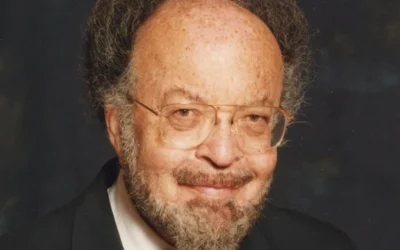
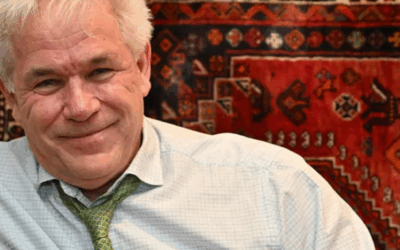
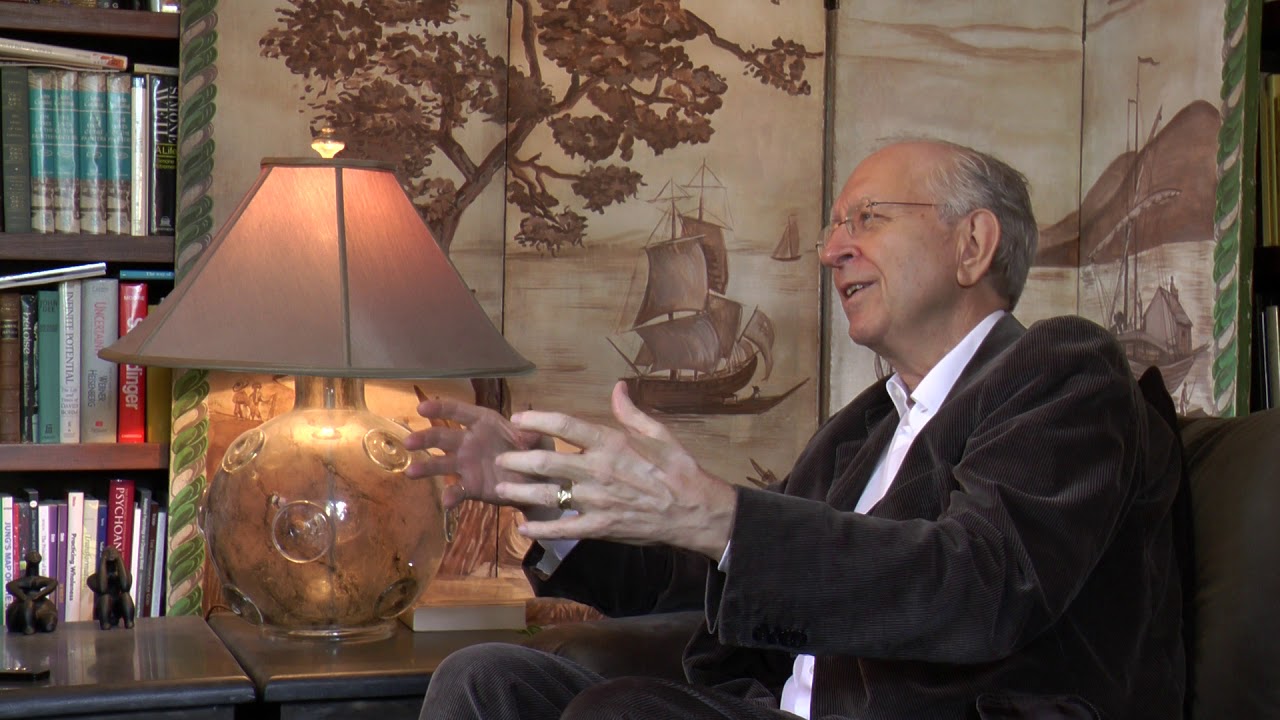
If Carl Jung discovered the continent of the unconscious, Murray Stein is the cartographer who drew the map so the rest of us wouldn’t get lost. A senior analyst at the International School of Analytical Psychology in Zurich (ISAP Zurich), Stein is arguably the most influential living Jungian thinker. He serves as a vital bridge between the classical era of Jung’s inner circle and the modern world of clinical practice. While many post-Jungians drifted into mysticism or specialized niches, Stein has remained steadfastly committed to the structural integrity of the psyche. His work is characterized by a lucid, almost architectural understanding of how the components of the self—Ego, Persona, Shadow, Anima/Animus, and Self—fit together. For the contemporary reader, Stein offers the most accessible yet rigorous explanation of what it actually means to become a whole person.

Murray Stein was born in Canada and educated at Yale University and the University of Chicago before training at the C.G. Jung Institute in Zurich. This dual background in theology and clinical psychology gives his work a unique resonance; he understands the soul as both a psychological reality and a spiritual imperative. He is best known for his masterwork, Jung’s Map of the Soul, which has become the standard text for students of analytical psychology worldwide. In this work, Stein de-mystifies Jung. He strips away the esoteric language and presents the psyche as a dynamic, self-regulating system. He explains that the ego is not the master of the house but a fragile island of consciousness floating on a vast ocean of the unconscious. The goal of life, according to Stein, is not to strengthen the island’s walls (which leads to rigidity and neurosis) but to build bridges to the mainland of the Self.

Stein’s most clinically significant contribution, however, is his work on the midlife crisis. In his book In Midlife, Stein reframes this turbulent period not as a disaster but as a necessary “liminal” space—a threshold between two lives. He argues that the first half of life is governed by the Hero archetype, where the goal is to build a strong ego, establish a career, and fit into society (the Persona). But somewhere around age 40, this structure begins to crumble. The values that drove the first half of life—success, money, approval—suddenly feel empty. Stein views this collapse as a “burial” of the old identity. It is a terrifying but fertile period where the soul demands that we retrieve the parts of ourselves we sacrificed to fit in. This is the beginning of true individuation.

For Stein, individuation is not a linear climb to perfection but a circumambulation—a circling around the center. He draws heavily on the imagery of alchemy (specifically the work of Hermes) to describe this process. The psyche must undergo separatio (separation from collective norms) and conjunctio (the union of opposites). Stein’s brilliance lies in his ability to apply these ancient metaphors to modern clinical issues. He helps patients see that their depression or anxiety is often a symptom of being “stuck” in a developmental stage. They are clinging to the values of the morning of life while the afternoon has already arrived. His work gives dignity to the suffering of transition, framing it as a “night sea journey” that leads to rebirth.

In recent years, Stein has turned his attention to the collective psyche, analyzing the political and social upheavals of our time through a Jungian lens. He argues that the world is currently going through a collective “eclipse of God”—a loss of the central organizing myth that holds civilization together. In this vacuum, primitive shadow energies erupt, leading to polarization and violence. Stein’s prescription for the collective is the same as for the individual: we must hold the tension of the opposites. We must resist the urge to project our shadow onto “the other” and instead do the hard work of integrating our own darkness. By doing so, Murray Stein remains the steady hand at the wheel of Jungian psychology, guiding it safely through the storms of the 21st century.

Timeline of Major Works and Life Events

  • 1943: Born on September 2 in Canada.
  • 1973: Receives his Diploma in Analytical Psychology from the C.G. Jung Institute in Zurich.
  • 1983: Publishes In Midlife: A Jungian Perspective, establishing his reputation as an expert on adult development.
  • 1998: Publishes Jung’s Map of the Soul: An Introduction, which becomes a global bestseller and standard textbook.
  • 2001: Becomes a founding member of the International School of Analytical Psychology (ISAP) in Zurich.
  • 2003: Serves as President of the International Association for Analytical Psychology (IAAP).
  • 2019: Featured prominently in the BTS album Map of the Soul: Persona, introducing Jungian concepts to a massive global pop culture audience.
  • 2020: Publishes The Bible as Dream, continuing his exploration of the intersection between religion and psychology.

Select Bibliography

  • Stein, M. (1998). Jung’s Map of the Soul: An Introduction. Open Court.
  • Stein, M. (1983). In Midlife: A Jungian Perspective. Spring Publications.
  • Stein, M. (2006). The Principle of Individuation. Chiron Publications.
  • Stein, M. (1995). Practicing Wholeness. Continuum.
  • Stein, M. (Ed.). (1982). Jungian Analysis. Open Court.
  • Stein, M. (2019). Map of the Soul – Persona: Our Many Faces. Chiron Publications.
 

Explore the Other Articles by Categories on Our Blog 

Hardy Micronutrition is clinically proven to IMPROVE FOCUS and reduce the effects of autism, anxiety, ADHD, and depression in adults and children without drugsWatch Interview With HardyVisit GetHardy.com and use offer code TAPROOT for 15% off

Who was Theodore Millon?

Who was Theodore Millon?

The Grand Unifier: Theodore Millon and the Mathematical Architecture of the Self In the fragmented landscape of 20th-century psychology, where clinicians pledged loyalty to competing schools of thought like feudal lords, Theodore Millon (1928–2014) stood as a rare...

What is a Diagnosis Anyway: Is the DSM Dying Part 2

What is a Diagnosis Anyway: Is the DSM Dying Part 2

The Archaeology of a Label: What We Forgot About Diagnosis and Why It Matters Now By Joel Blackstock, LICSW-S | Clinical Director, Taproot Therapy Collective Part II of A Critical Investigation into the Document That Defines American Mental Health Contents...

Is the DSM Dying? Rethinking Suffering

Is the DSM Dying? Rethinking Suffering

A Critical Investigation into the Document That Defines American Mental Health—and Why It May Have Already Failed By Joel Blackstock, LICSW-S | Clinical Director, Taproot Therapy Collective Contents Introduction: The Controversial Bible Part I: The History of a...

Understanding How the Different Types of Therapy Fit Together

Understanding How the Different Types of Therapy Fit Together

You've tried therapy before. Maybe it helped a little. Maybe you spent months talking about your childhood without anything changing. Maybe you learned coping skills that worked until they didn't. Maybe the therapist was nice but you left each session feeling like...

Insights into Therapy Through Quantum Neuroscience

Insights into Therapy Through Quantum Neuroscience

Something extraordinary is happening in consciousness research right now. After decades of incremental progress and philosophical stalemate, 2025—designated by the United Nations as the International Year of Quantum Science and Technology—has delivered a cascade of...

The Metamorphosis of the Sufferer: From Neurotic Soul to Digital User

The Metamorphosis of the Sufferer: From Neurotic Soul to Digital User

From “neurotic soul” to “digital user”: How insurance companies, Big Pharma, and Silicon Valley systematically dismantled the depth of psychotherapy—and why the BetterHelp scandal was just the beginning. A critical history for therapists who refuse to become technicians.

The Neuroscience of Disassociation

The Neuroscience of Disassociation

The unitary nature of consciousness is the most persistent intuition of human experience. We feel like a single protagonist in a continuous narrative. Yet, for the trauma survivor, this intuition is often a lie. As therapists, we are often the first to witness the...

Bill O’Hanlon: The Therapist Who Asked “How Do People Get Happy?”

Bill O’Hanlon: The Therapist Who Asked “How Do People Get Happy?”

Bill O’Hanlon, MS, LMFT, studied with Milton Erickson as his only work/study student (serving as Erickson’s gardener) before co-founding Solution-Oriented/Possibility Therapy in the 1980s. Author of nearly 40 books including the Oprah-featured “Do One Thing Different” and foundational “In Search of Solutions” with Michele Weiner-Davis, O’Hanlon delivered over 3,700 presentations worldwide teaching his collaborative, non-pathologizing approach asking “How do people get happy?” rather than “What’s wrong?” He retired from clinical practice in 2020 to pursue professional songwriting from Santa Fe, New Mexico.

Diane Poole Heller: From Trauma Survivor to Pioneer of Attachment Healing

Diane Poole Heller: From Trauma Survivor to Pioneer of Attachment Healing

Diane Poole Heller, PhD, transformed her own 1988 traumatic car accident into a pioneering career developing DARe (Dynamic Attachment Re-patterning experience), a somatic approach integrating attachment theory and trauma resolution now taught worldwide. After 25 years as Senior Faculty for Peter Levine’s Somatic Experiencing Institute, she created Trauma Solutions and authored The Power of Attachment, teaching that regardless of childhood history, people can develop Secure Attachment Skills through attuned relationships, body-based interventions, and recognizing we’re all biologically hardwired for connection and healing.

Laurence Heller: The Clinical Psychologist Who Mapped How Developmental Trauma Distorts Identity

Laurence Heller: The Clinical Psychologist Who Mapped How Developmental Trauma Distorts Identity

Laurence Heller, PhD, spent over 40 years in private practice recognizing that developmental trauma creates not just nervous system dysregulation but fundamental identity distortions—pervasive shame, self-judgment, and disconnection from authentic self. He developed the NeuroAffective Relational Model (NARM), now taught worldwide, mapping five adaptive survival styles arising from disrupted developmental needs (Connection, Attunement, Trust, Autonomy, Love-Sexuality) and providing framework for healing through disidentification from survival-based identities while working simultaneously with psychology and physiology within attuned therapeutic relationships.

Bruce Perry: From Branch Davidian Waco to “What Happened to You?” – Three Decades Translating Neuroscience into Healing for Maltreated Children

Bruce Perry: From Branch Davidian Waco to “What Happened to You?” – Three Decades Translating Neuroscience into Healing for Maltreated Children

Bruce Perry developed the Neurosequential Model after treating children who survived the 1993 Branch Davidian siege in Waco. His three decades translating neuroscience into practical trauma treatment culminated in the #1 bestseller What Happened to You? with Oprah Winfrey. Perry’s fundamental insight: childhood behavior reflects developmental adaptation to environment rather than defect requiring correction, revolutionizing how thousands of professionals understand trauma.

Judith Herman: The Psychiatrist Who Named Complex Trauma and Challenged a Field’s Convenient Amnesia

Judith Herman: The Psychiatrist Who Named Complex Trauma and Challenged a Field’s Convenient Amnesia

Judith Herman, Harvard psychiatrist, transformed trauma treatment by distinguishing complex PTSD from single-incident trauma and articulating the three-stage recovery model emphasizing safety, remembrance, and reconnection. Her 1992 Trauma and Recovery challenged psychiatry’s “convenient amnesia” about sexual violence, while 2023’s Truth and Repair reimagines justice as healing rather than punishment, asking what survivors actually need: acknowledgment, validation, and community witness rather than retribution.

Gabor Maté: From Budapest Ghetto to Voice of Compassion in Addiction’s Darkest Corners

Gabor Maté: From Budapest Ghetto to Voice of Compassion in Addiction’s Darkest Corners

Gabor Maté, Holocaust survivor turned physician, spent twelve years treating severe addictions in Vancouver’s poorest neighborhood, asking “why the pain?” rather than “why the addiction?” His revolutionary recognition that addiction serves to escape unbearable emotions rooted in childhood trauma, detailed in bestseller In the Realm of Hungry Ghosts, transformed understanding of substance abuse from moral failing to developmental injury.

David Grand: From EMDR Trainer to Brainspotting Pioneer Through a Champion Skater’s Frozen Gaze

David Grand: From EMDR Trainer to Brainspotting Pioneer Through a Champion Skater’s Frozen Gaze

David Grand discovered brainspotting in 2003 when a figure skater’s eye wobble revealed where trauma was stored in her brain. By maintaining fixed eye position on that “brainspot” rather than using bilateral movement, processing accelerated dramatically. His development of this approach, now used by 13,000+ therapists worldwide, demonstrates how careful clinical observation combined with willingness to deviate from protocol can produce genuine therapeutic innovation for treating trauma, the yips, and performance blocks.

0 Comments

Submit a Comment

Your email address will not be published. Required fields are marked *