
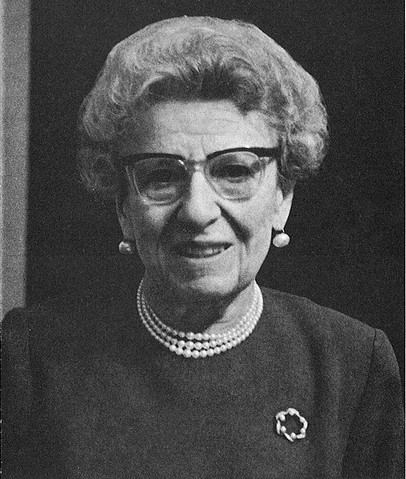
The Great Systematizer of the Soul
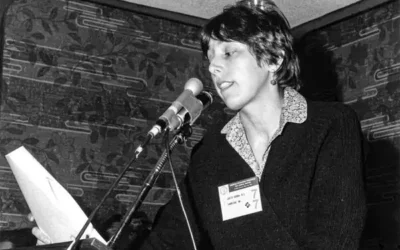
Carl Jung was a visionary, a mystic, and a genius, but he was notoriously disorganized. His concepts were scattered across thousands of pages of letters, seminars, and dense books. It was Jolande Jacobi (1890–1973) who took the volcanic eruption of Jung’s ideas and built the aqueducts to carry them to the world.
Jacobi was not just a student; she was the architect of Jungian pedagogy. She wrote The Psychology of C.G. Jung, the first systematic overview of analytical psychology, which Jung himself endorsed. For the modern reader, Jacobi is the essential bridge to understanding complex concepts like the Complex, the Symbol, and the Archetype. Without her, much of Jung’s work would remain inaccessible.
Biography & Timeline: Jolande Jacobi (1890–1973)
Born in Budapest to a Jewish family, Jacobi lived a life of dramatic transformation. She was a cultured intellectual in Vienna before fleeing the Nazi annexation of Austria. She arrived in Zurich in 1938, a refugee who had lost everything but her brilliant mind. There, she met Jung and began a collaboration that would define the rest of her life.
Jacobi was instrumental in founding the C.G. Jung Institute in Zurich. She fought for rigorous training standards, insisting that analysts must not only have intuition but also intellectual discipline. She was a “Sensation Type” who grounded the often flighty intuitive leaps of the Jungian circle.
Key Milestones in the Life of Jolande Jacobi
| Year | Event / Publication |
| 1890 | Born in Budapest, Austria-Hungary. |
| 1938 | Flees Nazi persecution in Vienna; arrives in Zurich and begins analysis with Jung. |
| 1942 | Publishes The Psychology of C.G. Jung, the definitive introduction to the field. |
| 1948 | Co-founds the C.G. Jung Institute in Zurich. |
| 1959 | Publishes Complex/Archetype/Symbol, her major theoretical contribution. |
| 1973 | Dies in Zurich, leaving a legacy of academic rigor. |
Major Concepts: The Anatomy of the Psyche
1. The Complex (The Emotional Knot)
Jacobi provided the clearest definition of the Complex. She explained that a complex is an “emotionally charged group of ideas” centered around an archetype.
Example: A “Mother Complex” is not just about your mom; it is a cluster of memories, feelings, and biological instincts that cluster around the Archetype of the Mother. When a complex is triggered, we lose our free will and become “possessed.”
2. The Symbol vs. The Sign
She rigorously distinguished between a Sign (which points to a known thing, like a stop sign) and a Symbol (which points to an unknown, transcendent reality).
Clinical Application: In dream analysis, we must treat images as symbols. A snake in a dream is not just a phallus (Freud); it is a symbol of transformation, healing, and danger (Jung).
3. The Way of Individuation
Jacobi mapped the Individuation Process not as a straight line, but as a spiral. We revisit the same issues (trauma, relationships) at higher levels of consciousness. The goal is not perfection, but wholeness—the integration of the Shadow and the Self.
The Conceptualization of Trauma: The Autonomous Complex
Jacobi’s work on the Autonomous Complex is vital for trauma theory. She argued that when a person is traumatized, a piece of the psyche “splinters off” and forms a separate personality.
Possession by the Complex
In trauma, the complex becomes autonomous. It has its own will. It can “attack” the ego, causing panic attacks, flashbacks, or sudden rages.
The “Not-I” within the “I”: The patient feels, “I didn’t want to do that, but something took me over.” Jacobi taught that we cannot just “get rid” of these complexes. We must enter into a relationship with them. We must interview the complex to find out what it wants.
Healing through Symbolic Life
Because the complex is rooted in an archetype, it has a “core of meaning.” Trauma is not just damage; it is a distorted attempt at meaning. Healing involves finding the Symbol that can unite the conscious mind with the energy of the complex. For example, painting the trauma or enacting it in ritual allows the energy to flow back into the ego.
Legacy: The Teacher of the Tradition
Jolande Jacobi was the “Schoolmistress” of Jungian psychology. She ensured that the tradition did not dissolve into vague mysticism. Her insistence on structure, definitions, and diagrams provided the scaffolding that allowed Analytical Psychology to become a teachable profession.
For the modern therapist or seeker, Jacobi offers clarity. She hands us the map of the psyche so that we do not get lost in the labyrinth of the unconscious.
Further Reading & Resources
- Yale University Press: The Psychology of C.G. Jung.
- Princeton University Press: Complex/Archetype/Symbol.
- C.G. Jung Institute Zurich: History of the Institute.
















0 Comments