
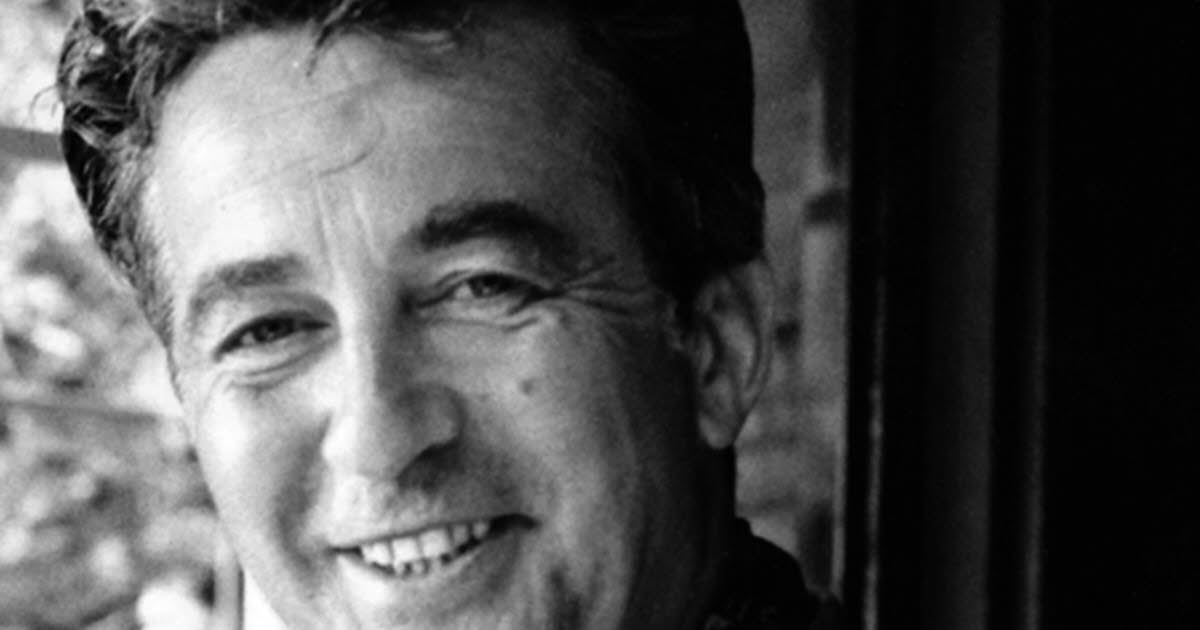
Gilbert Durand (1921–2012) was a French philosopher and anthropologist whose 1960 book Les Structures anthropologiques de l’imaginaire argued that human images are organized responses to time and death. He sorted them into a diurnal regime of combat, separation and ascent and a nocturnal regime of intimacy, descent and cycles, and he rooted both in bodily reflexes and in culture.
The book’s working claim is that every image is a way of facing the passage of time, and that no single way is enough. Burnout was not Durand’s subject, and the application is mine, but his categories describe it precisely: a life locked into the heroic posture of fighting, cutting and climbing, held in place by a cultural myth of endless growth, with the nocturnal images of shelter, nourishment and return out of reach. On this reading burnout is also a narrowing of the images a person and a culture have for living with time, and therapy is one place where the missing ones can come back.
Who Gilbert Durand was
Durand was born in Chambéry, in Savoie, on 1 May 1921 and died on 7 December 2012.1,2 He fought in the Resistance during the Second World War, passed the agrégation in philosophy in 1947, taught at the Lycée Vaugelas in Chambéry until 1956 and defended his doctoral thesis in Paris in 1959. From 1962 until he retired in 1982 he taught sociology and cultural anthropology at the University of Grenoble.1,2 In 1966 he co-founded Grenoble’s Centre de recherche sur l’imaginaire with Léon Cellier and Paul Deschamps, the seed of an international network of research groups on the imaginary.1,3,4
Three relationships shaped the work. The first was with Gaston Bachelard, under whom Durand pursued doctoral studies at the Sorbonne from 1947 to 1951.5 Bachelard had written five books on the reveries of fire, water, air and earth (see Gaston Bachelard’s psychology of the elements). Durand’s early essay “Psychanalyse de la neige” (1953) is dedicated to him and opens by teasing that Bachelard, a man from Champagne, forgot snow.6
The second was with Henry Corbin, the French scholar of Islamic philosophy who translated Suhrawardi and gave currency to the word “imaginal” for the mundus imaginalis of Suhrawardi and Mulla Sadra, which he refused to reduce to the merely imaginary.7,8,9 Corbin brought Durand into the Eranos circle at Ascona in 1964, where he took part until 1988 alongside Mircea Eliade, Gershom Scholem and Adolf Portmann, and in 1974 Durand became first vice-president of Corbin’s new Université Saint-Jean de Jérusalem, an international center for comparative spiritual research.1,7 A separate post covers Henry Corbin and the imaginal world.
The third relationship, with Jung, is the one most often overstated. Durand located the work of Jung, the classicist Karl Kerényi, James Hillman, Eliade, Bachelard, Corbin and Georges Dumézil at the level of what he called the “great images,” and offered his archetypology as a way to bring such research into one focus.3 But Jung was not his starting point. “It was not from Jung that we set out, thirty years ago,” he wrote in 1989 (my translation), “but from the most down-to-earth, the most empirical results of Russian reflexology,” the Leningrad school of Vladimir Bekhterev and Aleksei Ukhtomsky. Contemporary ethology, he added, later confirmed the idea.3
The argument of the Anthropological Structures
Les Structures anthropologiques de l’imaginaire, subtitled Introduction à l’archétypologie générale, was published in 1960 by Presses universitaires de France and has been reissued many times, including a twelfth French edition from Armand Colin in 2020. An English translation appeared only in 1999.10,11,12 Its question is old: why do the same images, the dragon, the sword, the ladder, the cave, the cup and the wheel, turn up in cultures that never met? Its answer has three parts.
First, images answer anxiety about time. The book opens with what Durand called “the faces of time,” the devouring animal, the darkness and the fall, and each structure that follows is a different way of meeting that terror.5 At Durand’s death his disciple Jean-Jacques Wunenburger put it in one line: the imaginary was “our ultimate parry against death.”4
Second, images are anchored in the body. Durand took three “dominant” reflexes from Russian physiology: the postural dominant of standing upright, the digestive dominant of swallowing, and the sexual dominant with its rhythms.13 Upright posture grounds images of exploring and conquering the world outside oneself. Digestion grounds images of assimilation, comfort and intimate warmth. The generative dominant grounds images of exchange and reconciliation between the other two.11
Third, the body never acts alone. Durand’s “anthropological trajectory” names the traffic between these reflex patterns and the natural and social world; an image can be described starting from the individual or from the society.13 Accused of a crude “reflexological psychologism,” he placed the imaginary between culture and “reflexological nature, which escapes consciousness,” in that trajectory.14
The diurnal and nocturnal regimes
Durand grouped the images into two regimes and three structures. The postural dominant produces the diurnal regime; the digestive and sexual dominants, which he deliberately classed together, produce the nocturnal regime. He compared the split to Ruth Benedict’s contrast between Apollonian and Dionysian cultures, and he even sorted the tarot suits into it: scepters and swords to the heroic, cups to the mystical, coins to the dialectical.13
The diurnal regime has one structure, which Durand called heroic or schizomorphic. Its gesture is the upright body that sees clearly and divides; its images are vertical and luminous, and its emblems are the scepter and the sword. Its enemy is the dark face of time, pictured as the devouring beast, the night and the fall, and its response is combat without negotiation, the knight against the dragon.5,11 Durand coined “schizomorphic” on the model of “schizophrenia,” because he saw his classification converge with the descriptions of the major psychoses by Eugen Bleuler, Eugène Minkowski, and Hermann Rorschach and his followers.13 The name describes a style of imagining, not an illness, but the borrowing shows that Durand saw a kinship between the heroic style and what psychiatry had described in the psychoses.
The nocturnal regime does not fight time. It works by what Durand called euphemism, softening the terrifying image or turning it inside out. Its first structure, the mystical or antiphrastic, turns the fall into a slow, safe descent and the terror of being devoured into the comfort of being held inside. Its images are the house, the womb, the cave, the tomb and the labyrinth, swallowing and being swallowed, one thing nested inside another.5 Its second structure, the synthetic or dramatic, reconciles opposites through time itself: the cycles of moon and season, ritual sacrifice and renewal, the alchemical work and, eventually, the myth of history moving toward fulfillment. Some summaries present this synthetic structure as a third regime added later, but in the 1960 book it belongs to the nocturnal regime; by Catarina Sant’Anna’s count the book gives about 150 pages to the diurnal regime and 214 to the nocturnal.5 The theory is about how opposites meet, not which one wins.11
Mythanalysis: reading a whole culture
Durand turned the same categories outward. “Mythocritique” was his name for tracing the recurring myths in one author or text; “mythanalysis” extended the reading to the whole social, political, everyday and ideological discourse of a society and a period.3 It is a method for cultural history, not a clinical technique, worked out through Grenoble studies of writers from Baudelaire to Faulkner and in his 1979 book Figures mythiques et visages de l’œuvre.3
Two ideas from this work matter for a therapist. The first is that a society, like a psyche, has a topography. In a 1981 essay Durand borrowed psychoanalytic language: some myths rise into collective consciousness and wear out by being acted on, while others, repressed, stay latent “in the collective id.” His example was Prometheus, who emerged in the Enlightenment as the myth of “secular, material progress, confused with every kind of growth,” while Faust, Orpheus, Dionysus and Hermes waited underneath and resurfaced at the end of the nineteenth century with the Symbolists, Wagner and Nietzsche.15 He later modeled these cycles as “semantic basins,” in river metaphors running from first trickles to the deltas of decline, each lasting at most about two centuries.3
The second is his charge that the West is iconoclastic. He did not mean that it lacks pictures, since it invented photography and cinema, but that it has repeatedly drained images of meaning. In a 1963 essay he traced three stages: medieval Aristotelianism read through Averroes, the Western church’s dogmatism set against the Byzantine icon, and the scientism that descends from Descartes.16 The argument runs parallel to Max Weber’s account of disenchantment, belongs to a longer defense of the symbol that includes Romantic mythographers such as Friedrich Creuzer, and assumes what the old formula says: myths are public dreams, dreams private myths.
A Promethean culture and the exhausted hero
Durand diagnosed cultures, not patients, and burnout was not his topic. His categories still name something clinicians see constantly. The modern career runs on diurnal images: climbing, staying on top, cutting losses, pushing through. It is held in place by something very like the Promethean myth he traced to the Enlightenment: progress confused with every kind of growth. Inside that frame the nocturnal images have nowhere to live. Rest reads as falling behind, needing others as weakness, and slowness, digestion and recurrence, the things the nocturnal regime exists to make bearable, as failure.
Burnout research describes the same shape from another angle. Christina Maslach and Michael Leiter define burnout as a prolonged response to chronic interpersonal stressors on the job, with three dimensions: overwhelming exhaustion, cynicism and detachment from the job, and a sense of ineffectiveness and lack of accomplishment. They trace it to six areas of working life, workload, control, reward, community, fairness and values, and note that chronic overload leaves little room to rest and recover.17 Byung-Chul Han makes the cultural version of the argument in The Burnout Society, treating exhaustion as a social and historical phenomenon of an age of excessive positivity, not only a personal one.18
The recovery literature gives the nocturnal regime a modest empirical cousin. A 2017 meta-analysis of 86 publications covering more than 38,000 employees found that psychological detachment from work during off-hours was associated with less exhaustion, better sleep and greater well-being, with small to medium effects, and that heavy work investment went with less detachment.19 Pooled correlations do not show that time off reverses burnout, but they suggest that stepping out of the work posture helps keep people well, and that those most invested in it find it hardest to leave.
None of this makes the heroic regime bad; it built science, medicine and most of what we admire in competence. The point, in my reading, is that any one regime held to exclusivity loses its power to answer time, and what it pushes down does not disappear. Durand said as much of myths: repressed ones wait in latency.15 Jung said something similar of the psyche, treating the unconscious as compensating for the one-sidedness of the conscious attitude.20 The overlap proves neither theory, but it is a useful clinical heuristic.
What this looks like in therapy
Durand did not design a therapy, and nothing in his work is a tested treatment. What carries over is a way of listening, plus a few practices with their own evidence.
Listening for the regime. People describe their lives in images without noticing. A life narrated entirely as battle, ascent and cutting off, with no image of shelter, nourishment or return, says something about the posture a person is holding and what it costs. This is a way of paying attention, not a diagnostic test.
Working with images directly. Emily Holmes and Andrew Mathews reviewed evidence that mental imagery evokes stronger emotional responses than verbal processing of the same material, and argued that imagery helps maintain emotional disorders and can be used to treat them.21 In imagery rescripting a person revisits a distressing image and changes what happens in it; a 2017 meta-analysis of 19 trials (seven randomized, 363 adults) found large symptom reductions across trials in PTSD, social anxiety and other conditions, though most comparisons were before-and-after and randomized trials were few.22 Rescripting is not Durand’s method, but it resembles what he called euphemism: the devouring image is not denied, it is transformed. Jungian depth therapy works with dreams and recurring images in a related spirit.
When images are scarce. Some people are not living the wrong myth; they have trouble making images at all. The psychologist Yves Durand built a test on Gilbert Durand’s structures, the AT.9: a person draws a scene with nine prescribed elements, among them a fall, a sword, a refuge and a devouring monster, and writes a short story about it.11 In a 1982 study of 49 hospitalized patients with psychosomatic complaints, all 36 who scored as alexithymic produced abnormal AT.9 protocols, and among the 18 highest scorers, 12 produced no mythic “micro-universe” at all.23 One small, old, uncontrolled study can only suggest a link. It fits a familiar pattern, though: for some people the work begins with naming sensations and feelings, often through the body, before symbols can be used.
Making room for the nocturnal. For someone living inside a Promethean frame, the work is rarely to stop striving. It is to give the nocturnal images a legitimate place: rest that does not count as falling, help that does not count as weakness, cycles that do not count as failure. In practice that can mean protecting real detachment from work, grieving what the heroic posture has cost, and noticing what shows up in dreams and the body when the fighting stops. Where burnout comes from workload, control or fairness, therapy cannot fix the job, and saying so is part of honest care. Our page on executive and professional burnout therapy says more about how this plays out at work.
Reading Durand critically
Durand’s foundations show their age. Few researchers today would derive a classification of culture from three reflexes described by early twentieth-century Russian reflexology, even with the later ethology of Konrad Lorenz and Niko Tinbergen added.3 Claims that his regimes line up with the brain’s hemispheres or with particular nervous-system states are not his and are not supported; the popular idea of left-brained and right-brained people did not hold up in a resting-state imaging study of 1,011 people, which found lateralization to be a local property of brain networks rather than a whole-brain trait.24
His universalism is also contested. A. J. Greimas, writing of Bachelard’s project, said it was “far from proven” that such a repertoire of imaginative forms is universal, and François Rastier argued that symbolic codes are relative to languages, genres and authors. The commentator who reports these objections also warns that some of Durand’s positions, and some followers’, step deliberately outside rational criticism into mysticism and Masonic esotericism.25 The biography gives the warning weight: Durand was a Freemason, wrote on the founding myths of Freemasonry, and sat on the jury, though absent from the defense, of the astrologer Élizabeth Teissier’s controversial 2001 sociology doctorate at the Sorbonne.1
None of this cancels the core insight. Durand’s value for a clinician is not a typology for sorting people but the reminder that images are how humans meet time, that they come in families, and that a person or a culture can lose access to one of them. For a fuller survey in French, start with Wunenburger’s 2013 chapter on Durand’s anthropology of the imaginary; in English, the 1999 translation is still the main way in.26,12
If you recognize yourself in the exhausted hero, or the images you live by have narrowed to a single register, that is worth bringing to a therapist. Taproot’s depth-oriented clinicians work with dreams, images and the body as well as the practical shape of a life. You can contact us to ask whether working together would be a good fit.
References
- Gilbert Durand. (2026). In Wikipédia, l’encyclopédie libre. Retrieved November 8, 2026, from https://fr.wikipedia.org/wiki/Gilbert_Durand
- Agence bibliographique de l’enseignement supérieur. (n.d.). Durand, Gilbert (1921–2012) (IdRef authority record 02684558X). Retrieved November 8, 2026, from https://www.idref.fr/02684558X
- Durand, G. (1996). Méthode archétypologique : de la mythocritique à la mythanalyse. In D. Chauvin (Ed.), Champs de l’imaginaire (pp. 133–156). ELLUG. https://doi.org/10.4000/books.ugaeditions.5166 (Original work published 1989)
- Wunenburger, J.-J. (2013). Gilbert Durand (1921–2012). Iris, 34, 9–11. https://publications-prairial.fr/iris/index.php?id=1859
- Sant’Anna, C. (2021). Le dramatique et ses enjeux dans les Structures anthropologiques de l’imaginaire de Gilbert Durand. Iris, 41. https://doi.org/10.35562/iris.2066
- Durand, G. (1996). Psychanalyse de la neige. In D. Chauvin (Ed.), Champs de l’imaginaire (pp. 9–33). ELLUG. https://doi.org/10.4000/books.ugaeditions.5148 (Original work published 1953)
- Durand, G. (1981). La pensée d’Henry Corbin et le Temple maçonnique. Villard de Honnecourt (2nd series), 3, 173–182. https://www.amiscorbin.com/wp-content/uploads/2012/06/Durand-1981-La-pens%C3%A9e-de-Corbin-et-le-temple-ma%C3%A7connique-Villard-H.-173-182.pdf
- Corbin, H. (1972). Mundus imaginalis, or the imaginary and the imaginal. Spring, 1–19.
- Durand, G. (1996). L’imaginaire, lieu de « l’entre-savoirs ». In D. Chauvin (Ed.), Champs de l’imaginaire (pp. 215–227). ELLUG. https://doi.org/10.4000/books.ugaeditions.5184 (Original work presented 1994)
- Durand, G. (1960). Les structures anthropologiques de l’imaginaire : Introduction à l’archétypologie générale. Presses universitaires de France.
- Laprée, R., Cherblanc, J., & Bergeron-Leclerc, C. (2022). Le thème du dragon chez les enfants au regard des structures anthropologiques de l’imaginaire chez Gilbert Durand. Iris, 42. https://doi.org/10.35562/iris.3114
- Durand, G. (1999). The anthropological structures of the imaginary. Boombana Publications. (Original work published 1960)
- Durand, G. (1996). Les catégories de l’irrationnel, prélude à l’anthropologie. In D. Chauvin (Ed.), Champs de l’imaginaire (pp. 49–64). ELLUG. https://doi.org/10.4000/books.ugaeditions.5154 (Original work published 1962)
- Durand, G. (1996). L’univers du symbole. In D. Chauvin (Ed.), Champs de l’imaginaire (pp. 65–80). ELLUG. https://doi.org/10.4000/books.ugaeditions.5157 (Original work published 1975)
- Durand, G. (1996). Le social et le mythique : pour une topique sociologique. In D. Chauvin (Ed.), Champs de l’imaginaire (pp. 109–131). ELLUG. https://doi.org/10.4000/books.ugaeditions.5163 (Original work published 1981)
- Durand, G. (2013). L’Occident iconoclaste : Contribution à l’histoire du symbolisme. Iris, 34, 15–31. https://doi.org/10.35562/iris.1874 (Original work published 1963)
- Maslach, C., & Leiter, M. P. (2016). Understanding the burnout experience: Recent research and its implications for psychiatry. World Psychiatry, 15(2), 103–111. https://doi.org/10.1002/wps.20311
- Han, B.-C. (2015). The burnout society. Stanford University Press. (Original work published 2010)
- Wendsche, J., & Lohmann-Haislah, A. (2017). A meta-analysis on antecedents and outcomes of detachment from work. Frontiers in Psychology, 7, Article 2072. https://doi.org/10.3389/fpsyg.2016.02072
- Jung, C. G. (1969). The structure and dynamics of the psyche (2nd ed., R. F. C. Hull, Trans.; The Collected Works of C. G. Jung, Vol. 8). Princeton University Press.
- Holmes, E. A., & Mathews, A. (2010). Mental imagery in emotion and emotional disorders. Clinical Psychology Review, 30(3), 349–362. https://doi.org/10.1016/j.cpr.2010.01.001
- Morina, N., Lancee, J., & Arntz, A. (2017). Imagery rescripting as a clinical intervention for aversive memories: A meta-analysis. Journal of Behavior Therapy and Experimental Psychiatry, 55, 6–15. https://doi.org/10.1016/j.jbtep.2016.11.003
- Demers-Desrosiers, L. (1982). Influence of alexithymia on symbolic function. Psychotherapy and Psychosomatics, 38(1), 103–120. https://doi.org/10.1159/000287619
- Nielsen, J. A., Zielinski, B. A., Ferguson, M. A., Lainhart, J. E., & Anderson, J. S. (2013). An evaluation of the left-brain vs. right-brain hypothesis with resting state functional connectivity magnetic resonance imaging. PLoS ONE, 8(8), e71275. https://doi.org/10.1371/journal.pone.0071275
- Kharbouch, A. (2016). Signification et imaginaire : un « entre-deux ». À propos des aspects sémiotiques de l’œuvre de Gilbert Durand. Iris, 37, 135–148. https://doi.org/10.35562/iris.1462
- Wunenburger, J.-J. (2013). L’anthropologie de l’imaginaire selon Gilbert Durand : Contextes, options, enjeux. In R. Laprée & C. R. Bellehumeur (Eds.), L’imaginaire durandien : Enracinements et envols en Terre d’Amérique (pp. 1–18). Presses de l’Université Laval. https://doi.org/10.1515/9782763717203-002








0 Comments