
The New Medications for Anxiety and Depression: A Plain-Language Guide to Bring to Your Prescriber
For most of the last fifty years, almost every medication for depression and anxiety worked on the same handful of brain chemicals. That has changed quickly. A wave of newer treatments now targets the nervous system in genuinely different ways. This guide is written to help you understand the landscape in advance, so you can walk into your prescriber's office with informed questions rather than a printout you cannot interpret.
Read this first. This article is educational and is not medical advice. It is not a substitute for evaluation by a licensed prescriber, and nothing here should be used to start, stop, or adjust any medication. Choices about medication belong to you and the clinician who prescribes for you.
Taproot Therapy Collective provides psychotherapy and nervous-system-focused care. We do not prescribe medication. We wrote this because our clients deserve to understand the whole map, and because the best outcomes happen when your prescriber and your therapist are working from the same picture.
Why the old model is being rethought
The standard antidepressants most people know, the SSRIs and SNRIs, raise the availability of serotonin and norepinephrine. For many people they help, and they remain a reasonable first step. But roughly a third of people with major depression never get full relief from them, and a large number who do respond still live with side effects that quietly erode the point of treatment: sexual dysfunction, weight gain, and a kind of emotional flatness that patients often describe as feeling switched off rather than better.
None of that is a personal failing, and it is not a matter of willpower. It is a sign that a single mechanism, applied to every person and every kind of suffering, was never going to fit everyone. The field is now moving toward matching a specific medication to a specific pattern of symptoms and a specific person. We think this is part of a larger correction, the same one that has pushed serious attention back toward the body and the nervous system, which we have written about in the shift away from one-size-fits-all care and in why the body keeps the score that talk alone can miss.
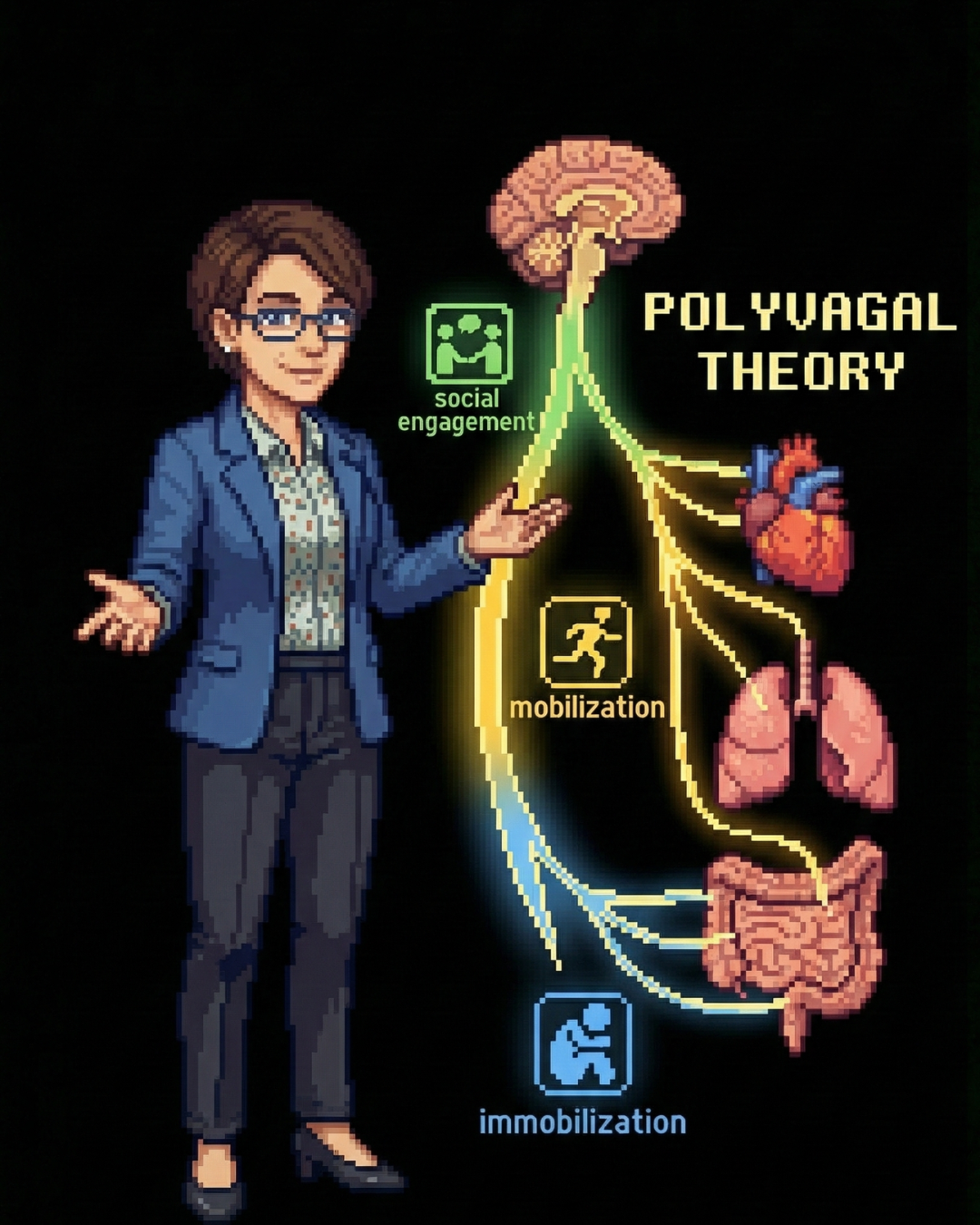
Persistent depression and chronic anxiety are not just low mood or worry. They involve real changes in how the brain regulates stress, sleep, and connection between neurons. Several of the newer medicines work by encouraging the brain to form new connections, a property called neuroplasticity, or by calming a nervous system stuck in overdrive. That same logic, working with the body rather than around it, is the basis of the polyvagal understanding of safety that informs our therapy work.
The newer options, grouped by how they work
The treatments below are organized by mechanism rather than brand name, because the mechanism is what usually determines who a medication suits. We have deliberately left out doses and titration schedules. Those are your prescriber's job to set for your body, your other medications, and your medical history, and a number carried in from a website tends to create more confusion than clarity.
Ketamine and esketamine
FDA approvedThese work on the brain's glutamate system and can lift severe depression within hours or days rather than weeks. Esketamine nasal spray (Spravato) has been approved for treatment-resistant depression since 2019, and in January 2025 it was approved to be used on its own, without a daily antidepressant alongside it. It is given in a clinic with monitoring afterward.
Ask: Am I a candidate, and what does the in-office monitoring actually involve? See our interview on ketamine for trauma and the Alabama legal update.Gepirone and triple-reuptake agents
Approved & in reviewSome newer agents aim for the benefits of serotonin medicines while avoiding their worst side effects. Gepirone (Exxua) is a once-daily option designed to spare sexual function and weight. Centanafadine, under FDA review for ADHD, is being watched for people whose attention problems, low mood, and anxiety overlap.
Ask: If side effects are why past medications failed me, is one of these a better fit? Relevant if you are exploring depression treatment or anxiety and panic.Next-generation add-on options
FDA approvedWhen an antidepressant only partly works, a second medication is sometimes added. Lumateperone (Caplyta) was approved in November 2025 as an add-on for major depression, notable for weight and metabolic effects close to placebo. Milsaperidone (Bysanti) was approved in early 2026 for bipolar I and schizophrenia and is being studied as a depression add-on.
Ask: If we add a medication, what are the trade-offs for weight, sleep, and movement over time?Orexin (sleep-system) medicines
In late-stage trialsOne of the bigger ideas in recent research is that broken sleep and a body stuck on high alert are not just symptoms of depression but can help drive it. Seltorexant works on the brain's wake system to quiet that overarousal. In studies it matched a standard add-on while causing far less next-day grogginess and weight gain.
Ask: Is my depression tangled up with insomnia and a wired, can't-settle feeling? That pattern connects to the window of tolerance.Allopregnanolone-based medicines
Approved & in trialsThese restore a calming brain chemical that drops sharply after childbirth. Zuranolone (Zurzuvae) was approved in 2023 as a short, time-limited course for postpartum depression, taken for two weeks rather than indefinitely. A newer oral candidate, GlyphAllo, is in mid-stage trials for broader depression with anxiety.
Ask: For postpartum depression, is a short defined course an option for me, and what are the precautions around feeding and sedation?LSD and psilocybin therapies
Investigational, not approvedThe most discussed and least settled area. A purified form of LSD (MM120) is in final-stage trials for generalized anxiety, and synthetic psilocybin is in trials for hard-to-treat depression. The hope is a single supervised dose with lasting effect. None of these is FDA approved, and a related drug, MDMA for PTSD, was turned down by the FDA in 2024.
Ask: What does the actual evidence show today, and what are the real risks, rather than the headlines?The part the marketing skips: what did not work
A guide that only lists promising drugs would mislead you. The same period produced some high-profile failures, and they are worth knowing, because a treatment being new, or being talked about, is not the same as a treatment being proven. A whole class of medications aimed at the brain's stress-and-reward system, the kappa-opioid antagonists such as navacaprant, collapsed in large 2025 and 2026 trials. A nasal spray for social anxiety, fasedienol, could not beat a placebo in its key 2026 study despite years of optimism.
The lesson is not cynicism. It is that the only honest question to ask of any new option, including the exciting ones, is what the evidence actually shows for someone like you. That same skepticism toward confident claims and tidy stories runs through how we think about diagnosis itself, which we explore in rethinking trauma diagnosis and in our plain-language dictionary of therapy models.
How medication fits with the work we actually do
Medication and therapy are not rivals. They tend to work on the problem from different directions, and for many people the combination is stronger than either alone. A medication can lower the volume of symptoms enough that the deeper work becomes possible. The therapy is what does that deeper work: helping a nervous system that learned to brace for danger slowly learn that it is safe now.
That bottom-up, body-first approach is what we specialize in. It includes Brainspotting and EMDR for processing trauma, Somatic Experiencing and other somatic approaches for the body's stored stress, Emotional Transformation Therapy, and qEEG brain mapping with neurofeedback and neurostimulation for a direct look at how your brain is regulating itself. If you want the mechanism, we explain how these work in the brain.
Our clinicians bring different specialties to that work. Joel Blackstock, LICSW-S, our clinical director, focuses on depth and Brainspotting. Dr. Jason Mishalanie leads our qEEG and neurotherapy work. Brittany Gray, LPC-S specializes in EMDR and trauma, and Marie Danner, LICSW-S in lifespan integration. Pamela Hayes, LMSW and Dr. Haley Beech provide statewide teletherapy and perinatal and medical-trauma care, alongside Robin Taylor, LICSW-S, Alice Hawley, LPC, and Kristi Wood, LICSW. If you do not yet have a prescriber, we can talk with you about coordinating with one.
Bring these questions to your appointment
You do not need to memorize drug names. You need a handful of good questions. These work for almost any medication conversation, whether you are starting fresh, switching, or weighing something new.
- Given my specific symptoms, which mechanism are we actually targeting, and why this medication over the alternatives?
- What does the evidence show for someone with my history, and is this option approved for my condition or still investigational?
- What side effects are most likely, which ones should I report right away, and how long until we know whether it is working?
- How will this interact with anything else I take, and what is the plan if it does not help or I want to stop?
- Can my therapist and I keep you in the loop, so the medication side and the therapy side stay coordinated?
You deserve to understand the whole picture
Taproot Therapy Collective is a depth-oriented trauma and neuro-therapy practice serving Birmingham, Hoover, Vestavia Hills, and all of Alabama by teletherapy. We do not prescribe, but we help you make sense of your options and we coordinate with your prescriber so nothing falls through the cracks.
Reach out to our team Explore our trauma careOn the science. Claims about the newer agents here reflect published trial results and FDA actions through mid-2026. For the peer-reviewed evidence behind the psychedelic-for-anxiety research, see the randomized trial of MM120 in generalized anxiety disorder in JAMA via the National Library of Medicine, and the analysis of single-dose treatment without required psychotherapy in the NIH PMC archive.
















0 Comments