

Karl Friston’s free energy principle says a living system stays alive by keeping its sensory states within expected bounds. A brain does this by predicting its own input and reducing the mismatch, either by revising its model of the world (perception and learning) or by acting so the world fits the model (active inference). “Free energy” is a computable quantity that caps how surprising those sensations can be.
That is a strong claim about how brains stay viable. It is not, by itself, a theory of consciousness. Friston’s 2010 review, sometimes cited as the source of his account of consciousness, mentions consciousness once, in parentheses. His later proposals about experience are speculative and still changing, and two leading proponents of predictive processing, Jakob Hohwy and Anil Seth, describe it as a basis for studying consciousness rather than a theory of it. What matters most in a therapy room is narrower and more practical: how much confidence the brain places in its old predictions, and what it takes for new evidence to get through.
What the free energy principle actually says
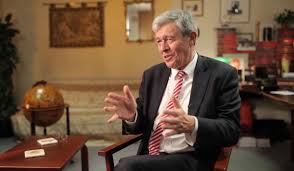
Friston, born in 1959, trained in medicine and psychiatry, invented statistical parametric mapping, a standard method for analyzing brain-imaging data, and is a professor of neuroscience at University College London. Early on he worked with Gerald Edelman, the Nobel laureate behind neural Darwinism, on how brains learn what is valuable, and his 2010 review still lists Edelman’s neural Darwinism among the brain theories the free energy principle might unify.1 This post stays with consciousness; the companion piece on how Friston’s predictive brain lines up with Carl Jung’s layered psyche covers the depth-psychology side.
The starting idea is older than Friston. Hermann von Helmholtz argued in the 1860s that perception is a kind of unconscious inference: the brain guesses at the causes of its sensations rather than simply recording them. Friston summarized the modern version in one sentence: “In essence, the Bayesian brain says that we are trying to infer the causes of our sensations based on a generative model of the world.”2 In 2005 he recast Helmholtz in the language of statistical physics, treating cortical responses as the brain’s attempt to minimize the free energy a stimulus induces.3 A year later, with James Kilner and Lee Harrison, he extended the same quantity to action: a system can lower free energy by changing what it believes (perception) or by changing how it samples the world (action).4
The 2010 review in Nature Reviews Neuroscience made the ambition explicit. “The principle is essentially a mathematical formulation of how adaptive systems (that is, biological agents, like animals or brains) resist a natural tendency to disorder.”1 Living things occupy a narrow band of states. A fish out of water, in Friston’s example, is in a surprising state “both emotionally and mathematically.” Surprise here has a technical meaning: how improbable a sensation is under the organism’s own model.
The difficulty is that an organism cannot calculate its surprise directly. It would need to know the true causes of its sensations, which is the very thing it is trying to infer. Free energy solves that bookkeeping problem. The review’s glossary defines it as “an information theory measure that bounds or limits (by being greater than) the surprise on sampling some data, given a generative model.”1 It can be evaluated because it depends only on things the system has: its sensory states and its current best guess about their causes. Push free energy down and surprise goes down with it. The name is borrowed from statistical physics, but the quantity is information-theoretic, not a measure of heat or metabolic energy.
Two more pieces make the scheme work. Active inference is the action half: rather than updating a belief, an organism moves so that its input matches the belief. Precision is the confidence assigned to a signal. In predictive coding it is thought to be carried by the gain on neurons that report prediction error, and it helps decide whether a surprising signal changes the model or gets ignored.5 Friston, Thomas Parr and Giovanni Pezzulo have since laid out the full machinery in a textbook.6 For therapy, precision turns out to be the most useful idea in the whole framework.
A principle, not a testable hypothesis
The free energy principle is often described as if it were an empirical finding. Friston himself draws a sharper line. In a 2018 interview he separated the principle from the theories built on it: “Like Hamilton’s Principle of Stationary Action, it cannot be falsified. It cannot be disproven.” Claims that the brain does Bayesian inference or predictive coding, by contrast, “are what they are—hypotheses.”7 Writing in the philosophy journal Synthese, Matteo Colombo and Cory Wright note that the principle has been called a postulate, an unfalsifiable principle, a natural law and an imperative, and that its epistemic status is unclear.8
This matters for anyone reading popular accounts. The principle is a way of describing self-organizing systems. Evidence bears on the process theories, such as hierarchical predictive coding, and that evidence is real but uneven. The mismatch negativity, a brain response to a broken auditory pattern, is one of the better-studied cases that predictive coding was proposed to explain.9 Self-produced touch is less ticklish than the same touch from someone else, and an fMRI study suggests the cerebellum predicts the sensory consequences of one’s own movement and supplies the signal used to cancel the response to it.10 Yet a 2020 review of the neurophysiological evidence concluded that support for each of predictive processing’s key hypotheses is mixed, that the predictions unique to the theory are hard to test, and that the framework is flexible enough to accommodate results that look contradictory. Clear counterevidence has also not appeared.11
Does the free energy principle explain consciousness?
Not on its own, and the 2010 paper does not claim to. Its single mention of consciousness is an aside about active inference: “An intuitive example of this process (when it is raised into consciousness) would be feeling our way in darkness.”1 The paper is about perception, learning, action and how several brain theories might be unified. Summaries that cite the 2010 review for the claim that consciousness emerges from minimizing prediction error misread it.
There is also a problem of scope. The mathematics applies far beyond brains. In “Life as we know it,” Friston argued that any ergodic random dynamical system with a Markov blanket, a statistical boundary between inside and outside, will appear to model and act on its world.12 Michael Kirchhoff and colleagues extended the treatment from single cells to human beings.13 If minimizing free energy were enough for experience, single cells would have experience.
Friston has, at times, accepted something close to that. Asked in 2018 whether an ant colony or a computer program could be conscious, he answered: “in my world—consciousness is a process and it is the process of inference. Therefore any system that minimizes variational free energy is conscious to a greater or lesser extent.” He added that self-awareness is a further step, and doubted that an ant colony takes it.7 In a paper published the same year he drew the line elsewhere. All biological processes can be read as inference, he wrote, so the question is at what point consciousness comes in, and his proposal is that “the mind comes into being when self-evidencing has a temporal thickness or counterfactual depth.” He concluded: “On this view, consciousness is nothing more than inference about my future; namely, the self-evidencing consequences of what I could do.”14 The essay opens by answering yes to whether self-consciousness is necessary for consciousness, an answer Friston himself calls polemic. These are serious proposals from a serious scientist. They are not results that follow from the principle, and they do not all point the same way.
Researchers sympathetic to predictive processing say as much. Jakob Hohwy and Anil Seth argue that the framework could give the search for the neural correlates of consciousness a systematic footing “precisely because it at the outset is not itself a theory of consciousness.”15 When Seth and Tim Bayne surveyed the field in 2022, they grouped re-entry and predictive processing theories as one family among four, alongside higher-order theories like David Rosenthal’s, global workspace theories and integrated information theory, and they noted that it is unclear whether these theories can yet be told apart empirically.16 For a tour of the wider field, see ten scientific theories of what makes you conscious. None of these theories has settled the hard problem David Chalmers set out in a 1995 paper: why any physical process is accompanied by experience at all.17
Where predictive theories of consciousness actually stand
Several research programs try to get from prediction to experience. They differ in what they think prediction explains.
Anil Seth, a neuroscientist at the University of Sussex, starts from the body. His interoceptive inference model treats emotions as the brain’s predictions about the causes of signals from inside the body, so that feeling is closer to a best guess than a readout.18 In Being You he calls perception a “controlled hallucination” and sets aside the hard problem in favor of what he calls the real problem: explaining, predicting and controlling why particular patterns of brain activity go with particular kinds of experience.19 That is a research strategy rather than a solution to the hard problem.
Mark Solms, a neuropsychologist and psychoanalyst, applies the free energy principle to the hard problem directly. He identifies the most basic form of consciousness as affect, locates its mechanism in the upper brainstem as an extended form of homeostasis, and proposes that rising and falling uncertainty is felt as unpleasure and pleasure.20 He develops the argument at book length in The Hidden Spring.21 It is one of the boldest attempts in this area, and its links to Freud are discussed in our piece on Solms and the conscious id. It also departs from the cortex-centered theories that dominate the field, since it makes the brainstem the source of experience.
Friston’s own collaborations keep producing new versions. With Wanja Wiese and Allan Hobson he proposed “Markovian monism,” which holds that any system with a Markov blanket has properties relevant to mind and consciousness.22 Christopher Whyte and Ryan Smith built an active inference model of Stanislas Dehaene’s global neuronal workspace that reproduces findings on inattentional blindness and makes testable predictions.23 Ruben Laukkonen, Friston and Shamil Chandaria proposed a “beautiful loop” theory in 2025 that rests on a world model, competition among inferences to enter it, and a recursive sharing of beliefs they call epistemic depth.24 In 2026 a group that included Friston, Seth and Hohwy argued that active inference models of consciousness share a small set of commitments amounting to a minimal, testable theory.25 Friston’s group also presents the principle as yielding “a Bayesian mechanics that can be read as a physics of sentience,” where sentient behavior means self-organization that can be read as self-evidencing.26
Three things stand out. These proposals are recent. They are still being revised by the people who wrote them. And their authors present them as theories to be tested, not as conclusions the free energy principle has delivered.
Markov blankets and the edges of the mind
Markov blankets carry a lot of weight in popular writing about Friston. Kirchhoff and colleagues define one this way: “A Markov blanket defines the boundaries of a system (e.g. a cell or a multi-cellular organism) in a statistical sense. It is a statistical partitioning of a system into internal states and external states, where the blanket itself consists of the states that separate the two.”13 Their paper argues that living systems are blankets nested within blankets and that these boundaries need not match the skin. It is a paper about life and autonomy. It makes no claim about where consciousness ends.
Philosophers have also questioned how much the blankets can carry. Jelle Bruineberg and colleagues distinguish “Pearl blankets,” the standard statistical tool from Bayesian networks, from “Friston blankets,” a newer metaphysical use that draws a physical line between an agent and its environment. They argue that using blankets to settle debates such as where the mind stops needs extra philosophical premises and cannot be justified by the success of the mathematics alone.27 The idea that mind can extend into tools comes from a different source: Andy Clark and David Chalmers’s 1998 paper “The Extended Mind,” which argued that objects such as a notebook can be part of a cognitive process.28 That was an argument about cognition, made without any appeal to free energy.
What this looks like in therapy
Set the consciousness debate aside and the predictive framework still has something to offer clinicians, mostly through precision. A prediction held with too much confidence will not be revised by evidence that arrives with little weight. A prediction held with too little lets every passing signal through.
Computational psychiatry has used this idea to model specific conditions. Rick Adams and colleagues described hallucinations, delusions and several other features of psychosis as expressions of “an aberrant encoding of precision.”5 In a small laboratory study of 59 people, Albert Powers, Christoph Mathys and Philip Corlett paired a checkerboard image with a faint tone until participants began reporting tones that were not played; people who hear voices were more susceptible to these conditioned hallucinations.29 Tobias Kube and colleagues proposed that depression involves too much precision on negative expectations, combined with a habit of reappraising or discounting good news that contradicts them.30 Martin Paulus, Justin Feinstein and Sahib Khalsa argue that several disorders involve overly precise predictions about the body and difficulty adjusting them when circumstances change.31 Mark Edwards and colleagues, including Friston, gave a Bayesian account of functional neurological symptoms in which body-focused attention gives a prior belief undue precision, producing a percept or movement that is then experienced as a symptom.32
Trauma has been modeled the same way. Adam Linson, Thomas Parr and Friston simulated stress responses and showed that prior beliefs about the outcomes of behavior, held with unduly high precision, can produce responses that closely resemble post-traumatic stress disorder. Central to the model is a trade-off: exploring a cue to find out whether it is safe competes with fleeing or freezing.33 It is a simulation, not a patient study. The game-theory side of that trade-off is taken up in the strategic self and trauma recovery.
In practice, several things follow, as working hypotheses rather than proven mechanisms.
- Insight is not updating. A person can understand that a room is safe and still have a body that braces in it. The prediction lives at a level that talk alone may not reach with enough weight. That is one reason therapists slow down and work with what is happening in the session: the breath, the posture, the moment the expected rejection does not come.
- Disconfirming evidence gets explained away. Kube’s model predicts that people with depression will reappraise or dismiss good news that contradicts a negative expectation. A therapist listens for that move (“that only went well because…”) and makes it visible, because the evidence cannot update a model that keeps discounting it.
- Attention changes weighting. If attention raises precision, narrowing onto a feared sensation can make it louder. Somatic work at its best widens context, pairing the sensation with what else is true in the body and the room, rather than drilling into the symptom.
- Safety comes before exploration. When danger is predicted with high confidence, checking whether a cue is actually dangerous feels unaffordable. Pacing and a reliable relationship make that checking possible.
Seth’s view of emotion as inference about the body gives body-focused therapies a useful vocabulary.18 It does not validate them. No therapy has been shown to work because it minimizes free energy, and the principle cannot certify EMDR, brainspotting, internal family systems or anything else. Even sympathetic reviewers, Friston among them, describe the clinical value of these models as potential; the work they review consists of conceptual models, formal models and their use in empirical research with clinical groups.34
What to keep from Friston, and what to leave
Keep the picture of the brain as a predictor that perceives by guessing and acts to make its guesses come true. Keep precision, which offers a plausible account of why a well-understood fear can still run the body. Keep the reminder from Friston himself that the principle is a framework, while the hypotheses built on it are where evidence does its work.
Leave the claims that the free energy principle has explained consciousness, that Markov blankets show the mind extending into tools or social systems, and that “free energy” is a form of physical energy the brain spends. Leave, too, any suggestion that a therapy is proven because it can be described in predictive terms. The most interesting live question is the one Friston, Seth, Solms and others are still arguing over: whether prediction explains why there is something it is like to be a creature at all.
If you recognize the pattern of a body still predicting danger that has passed, that is the kind of work we do in somatic therapy at Taproot in Hoover. When you want to talk about whether it fits, you can reach us here.
References
- Friston, K. (2010). The free-energy principle: A unified brain theory? Nature Reviews Neuroscience, 11(2), 127–138. https://doi.org/10.1038/nrn2787
- Friston, K. (2012). The history of the future of the Bayesian brain. NeuroImage, 62(2), 1230–1233. https://doi.org/10.1016/j.neuroimage.2011.10.004
- Friston, K. (2005). A theory of cortical responses. Philosophical Transactions of the Royal Society B: Biological Sciences, 360(1456), 815–836. https://doi.org/10.1098/rstb.2005.1622
- Friston, K., Kilner, J., & Harrison, L. (2006). A free energy principle for the brain. Journal of Physiology-Paris, 100(1–3), 70–87. https://doi.org/10.1016/j.jphysparis.2006.10.001
- Adams, R. A., Stephan, K. E., Brown, H. R., Frith, C. D., & Friston, K. J. (2013). The computational anatomy of psychosis. Frontiers in Psychiatry, 4, 47. https://doi.org/10.3389/fpsyt.2013.00047
- Parr, T., Pezzulo, G., & Friston, K. J. (2022). Active inference: The free energy principle in mind, brain, and behavior. MIT Press. https://doi.org/10.7551/mitpress/12441.001.0001
- Friston, K., Fortier, M., & Friedman, D. A. (2018). Of woodlice and men: A Bayesian account of cognition, life and consciousness. An interview with Karl Friston. ALIUS Bulletin, 2, 17–43. https://www.aliusresearch.org/library/pdfs/alius-bulletin/issue-02/alius-bulletin-issue-02-friston-of-woodlice-and-men-a-bayesian-account-of-cognition-life-and.pdf
- Colombo, M., & Wright, C. (2021). First principles in the life sciences: The free-energy principle, organicism, and mechanism. Synthese, 198(Suppl. 14), 3463–3488. https://doi.org/10.1007/s11229-018-01932-w
- Garrido, M. I., Kilner, J. M., Stephan, K. E., & Friston, K. J. (2009). The mismatch negativity: A review of underlying mechanisms. Clinical Neurophysiology, 120(3), 453–463. https://doi.org/10.1016/j.clinph.2008.11.029
- Blakemore, S.-J., Wolpert, D. M., & Frith, C. D. (1998). Central cancellation of self-produced tickle sensation. Nature Neuroscience, 1(7), 635–640. https://doi.org/10.1038/2870
- Walsh, K. S., McGovern, D. P., Clark, A., & O’Connell, R. G. (2020). Evaluating the neurophysiological evidence for predictive processing as a model of perception. Annals of the New York Academy of Sciences, 1464(1), 242–268. https://doi.org/10.1111/nyas.14321
- Friston, K. (2013). Life as we know it. Journal of the Royal Society Interface, 10(86), 20130475. https://doi.org/10.1098/rsif.2013.0475
- Kirchhoff, M., Parr, T., Palacios, E., Friston, K., & Kiverstein, J. (2018). The Markov blankets of life: Autonomy, active inference and the free energy principle. Journal of the Royal Society Interface, 15(138), 20170792. https://doi.org/10.1098/rsif.2017.0792
- Friston, K. (2018). Am I self-conscious? (Or does self-organization entail self-consciousness?). Frontiers in Psychology, 9, 579. https://doi.org/10.3389/fpsyg.2018.00579
- Hohwy, J., & Seth, A. (2020). Predictive processing as a systematic basis for identifying the neural correlates of consciousness. Philosophy and the Mind Sciences, 1(II). https://doi.org/10.33735/phimisci.2020.II.64
- Seth, A. K., & Bayne, T. (2022). Theories of consciousness. Nature Reviews Neuroscience, 23(7), 439–452. https://doi.org/10.1038/s41583-022-00587-4
- Chalmers, D. J. (1995). Facing up to the problem of consciousness. Journal of Consciousness Studies, 2(3), 200–219.
- Seth, A. K. (2013). Interoceptive inference, emotion, and the embodied self. Trends in Cognitive Sciences, 17(11), 565–573. https://doi.org/10.1016/j.tics.2013.09.007
- Seth, A. (2021). Being you: A new science of consciousness. Faber & Faber.
- Solms, M. (2019). The hard problem of consciousness and the free energy principle. Frontiers in Psychology, 9, 2714. https://doi.org/10.3389/fpsyg.2018.02714
- Solms, M. (2021). The hidden spring: A journey to the source of consciousness. W. W. Norton.
- Friston, K. J., Wiese, W., & Hobson, J. A. (2020). Sentience and the origins of consciousness: From Cartesian duality to Markovian monism. Entropy, 22(5), 516. https://doi.org/10.3390/e22050516
- Whyte, C. J., & Smith, R. (2021). The predictive global neuronal workspace: A formal active inference model of visual consciousness. Progress in Neurobiology, 199, 101918. https://doi.org/10.1016/j.pneurobio.2020.101918
- Laukkonen, R., Friston, K., & Chandaria, S. (2025). A beautiful loop: An active inference theory of consciousness. Neuroscience & Biobehavioral Reviews, 176, 106296. https://doi.org/10.1016/j.neubiorev.2025.106296
- Whyte, C. J., Corcoran, A. W., Robinson, J., Smith, R., Moran, R. J., Parr, T., Friston, K. J., Seth, A. K., & Hohwy, J. (2026). On the minimal theory of consciousness implicit in active inference. Physics of Life Reviews, 56, 4–28. https://doi.org/10.1016/j.plrev.2025.11.002
- Friston, K., Da Costa, L., Sajid, N., Heins, C., Ueltzhöffer, K., Pavliotis, G. A., & Parr, T. (2023). The free energy principle made simpler but not too simple. Physics Reports, 1024, 1–29. https://doi.org/10.1016/j.physrep.2023.07.001
- Bruineberg, J., Dołęga, K., Dewhurst, J., & Baltieri, M. (2022). The emperor’s new Markov blankets. Behavioral and Brain Sciences, 45, e183. https://doi.org/10.1017/S0140525X21002351
- Clark, A., & Chalmers, D. (1998). The extended mind. Analysis, 58(1), 7–19. https://doi.org/10.1093/analys/58.1.7
- Powers, A. R., Mathys, C., & Corlett, P. R. (2017). Pavlovian conditioning–induced hallucinations result from overweighting of perceptual priors. Science, 357(6351), 596–600. https://doi.org/10.1126/science.aan3458
- Kube, T., Schwarting, R., Rozenkrantz, L., Glombiewski, J. A., & Rief, W. (2020). Distorted cognitive processes in major depression: A predictive processing perspective. Biological Psychiatry, 87(5), 388–398. https://doi.org/10.1016/j.biopsych.2019.07.017
- Paulus, M. P., Feinstein, J. S., & Khalsa, S. S. (2019). An active inference approach to interoceptive psychopathology. Annual Review of Clinical Psychology, 15, 97–122. https://doi.org/10.1146/annurev-clinpsy-050718-095617
- Edwards, M. J., Adams, R. A., Brown, H., Pareés, I., & Friston, K. J. (2012). A Bayesian account of “hysteria.” Brain, 135(11), 3495–3512. https://doi.org/10.1093/brain/aws129
- Linson, A., Parr, T., & Friston, K. J. (2020). Active inference, stressors, and psychological trauma: A neuroethological model of (mal)adaptive explore-exploit dynamics in ecological context. Behavioural Brain Research, 380, 112421. https://doi.org/10.1016/j.bbr.2019.112421
- Smith, R., Badcock, P., & Friston, K. J. (2021). Recent advances in the application of predictive coding and active inference models within clinical neuroscience. Psychiatry and Clinical Neurosciences, 75(1), 3–13. https://doi.org/10.1111/pcn.13138















0 Comments