
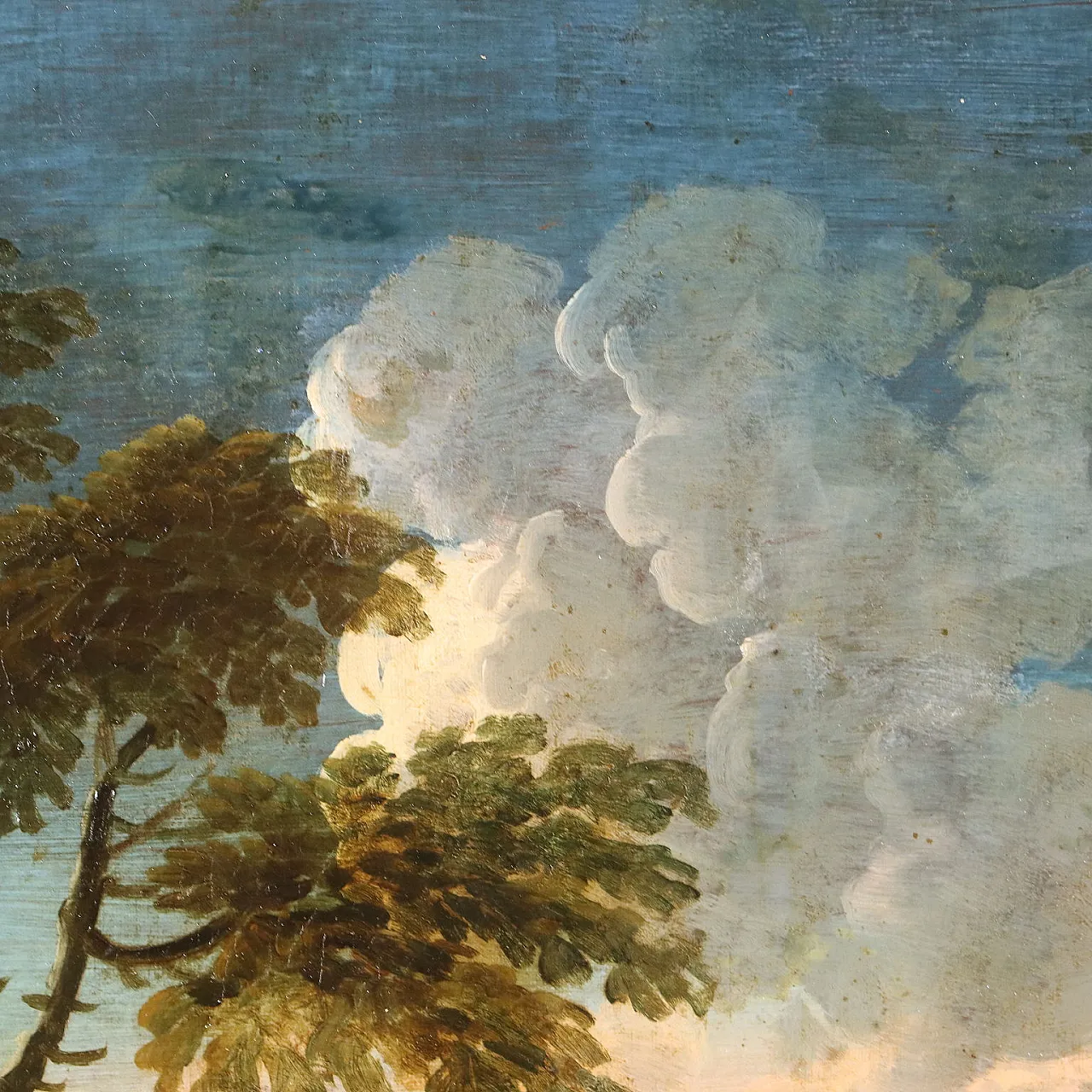
The Tree of Life is a symbol found in Mesopotamian, Egyptian, Norse, Hindu, Jewish, Christian, Islamic and Mesoamerican traditions: a tree that joins the underworld, the earth and the heavens and gives life, wisdom or immortality. Psychologically it matters because it pictures growth from hidden roots, and Carl Jung read it as an image of the Self and of individuation.
Key takeaways
- The Tree of Life appears across Mesopotamian, Egyptian, Norse, Hindu, Jewish, Christian, Islamic and Mesoamerican traditions as an axis joining underworld, earth and sky.
- Many versions tie the tree to life itself: Gilgamesh’s lost plant of rejuvenation, the Egyptian sycamore goddess who feeds the dead, and the guarded tree of Eden.
- Kabbalah turned the tree into a diagram of ten sefirot, a map both of how the Infinite becomes manifest and of the soul’s inner ascent.
- Carl Jung read the tree as the Self seen in profile, growing in time, and so as a natural image of individuation.
- In therapy, a tree in a dream or drawing can show how a person is rooted, what has been cut back and where new growth is starting.
Why does the Tree of Life appear in so many cultures?
A tree is the largest living thing most people ever stand beside. It outlives several human generations, it renews itself every spring, and its structure is easy to read as a picture of the cosmos: roots in the dark soil, a trunk in the human world, a crown in the sky. Cultures with no contact with each other used that shape to describe how the levels of reality connect.
The historian of religion Mircea Eliade called this the cosmic tree or axis mundi, the world axis that stands at the centre and lets a shaman, a god or a soul travel between worlds.7 His comparative work on the sacred and the world axis showed the same structure in Siberian, Indian and Near Eastern material. The tree’s annual cycle adds a second meaning: leaves fall, seeds drop and the same tree flowers again, so it carries ideas of death and renewal as well as connection.
For a depth psychologist these two meanings, vertical connection and cyclical renewal, are the reason the symbol keeps turning up in dreams, drawings and art. A person who dreams of a tree is often dreaming about how their own life is rooted, how it is growing, and what has been cut back.
The Tree of Life in ancient mythologies
Mesopotamia and the Epic of Gilgamesh
Mesopotamia gives some of the oldest material. In the Standard Babylonian version of the Epic of Gilgamesh, the flood survivor Utnapishtim tells Gilgamesh of a plant growing at the bottom of the Apsu, the fresh waters beneath the earth. Gilgamesh ties stones to his feet, dives down and pulls it up. He names it “Old Man Grows Young.” On the way home he stops to bathe in a pool, a snake smells the plant and carries it off, shedding its skin as it goes.1 The plant of rejuvenation is reached and then lost through a moment of ordinary inattention, which is the story’s bitter point about mortality.
An older Sumerian poem, “Gilgamesh, Enkidu and the Netherworld,” has a real tree at its centre: the huluppu tree that the goddess Inanna plants in her garden, in which a snake nests at the roots, the Anzu bird in the crown and a demonic maiden in the trunk. Gilgamesh drives them out and cuts the tree to make furniture for her.1 Assyrian palace reliefs of the ninth century BCE, such as those of Ashurnasirpal II at Nimrud, show a stylized “sacred tree” flanked by winged figures and the king. The Assyriologist Simo Parpola argued that this tree was a diagram of the divine order and of the perfected human being, and that it anticipates the later Kabbalistic tree of the sefirot.2
Egypt: the sycamore and the persea
In Egyptian mythology the sycamore fig was a tree of the goddesses. Hathor was called Lady of the Southern Sycamore, and tomb paintings show the sky goddess Nut, or a tree goddess, leaning out of a sycamore to give bread and water to the dead. The Book of the Dead places two turquoise sycamores at the eastern gate of the sky, between which the sun god Ra rises each morning. A second sacred tree, the persea at Heliopolis, was the tree on whose leaves the gods wrote the king’s name and the years of his reign.
The ankh, the hieroglyph meaning “life,” is a separate sign. Gods hold it to the nostrils of kings in temple reliefs as the breath of life, and its origin is uncertain; the Egyptologist Alan Gardiner thought it showed a sandal strap. Erich Neumann, in The Origins and History of Consciousness, read the nourishing tree goddess as one of the oldest faces of the Great Mother, the containing and feeding side of the unconscious.
Norse mythology: Yggdrasil
In Norse mythology the world tree is Yggdrasil, an ash whose branches spread over the nine worlds. The poems of the Poetic Edda and Snorri Sturluson’s Prose Edda, written around 1220, describe its three roots: one over the well of Urd, where the Norns water the tree; one over Mimir’s well of wisdom; and one over Hvergelmir, where the dragon Nidhogg gnaws at it.3 An eagle sits in the crown, and the squirrel Ratatosk runs up and down carrying insults between the eagle and the dragon. The tree is alive, suffering and holding everything together at once.
In the Havamal, Odin says that he hung on a windy tree for nine nights, wounded with a spear, “given to Odin, myself to myself,” without food or drink, until he looked down, took up the runes and fell back.3 The name Yggdrasil is usually read as “Ygg’s horse,” Ygg being one of Odin’s names and “horse” a poetic word for the gallows. Wisdom here costs a voluntary ordeal on the tree, a pattern Jungians recognise as an initiation.
Hinduism: the inverted ashvattha
The ashvattha is the sacred fig, Ficus religiosa, the same species as the Bodhi tree under which the Buddha awakened. The Katha Upanishad and chapter 15 of the Bhagavad Gita describe an eternal ashvattha with its roots above and its branches below, whose leaves are the Vedic hymns.4 The roots are in the divine source and the branches spread downward into the world of action and desire.
The Gita then says something many summaries leave out: the tree is to be cut down “with the strong axe of detachment,” so that the seeker can find the place from which there is no return (15.3-4).4 The inverted tree is the world of samsara, the cycle of rebirth, rooted in Brahman. Shankara’s Advaita school read that world as a kind of illusion laid over the one reality, while other commentators, such as Ramanuja, treated it as real but dependent on God. The inverted tree also appears in Kabbalah and in alchemy, and Jung collected all three. The post on Hindu mythology as parts of self follows this tradition further.
What does the Tree of Life mean in the Bible?
In Genesis 2:9 God plants two trees in the middle of Eden: the tree of life and the tree of the knowledge of good and evil. Adam and Eve may eat from every tree except the second. After they eat from it, God expels them “lest he put forth his hand, and take also of the tree of life, and eat, and live for ever,” and sets cherubim with a flaming sword to guard the way to it (Genesis 3:22-24). The text never says they ate from the tree of life; what is lost is access to it. The post on what the Garden of Eden symbolizes reads the expulsion as the birth of self-consciousness.
Christian theology, above all St. Augustine, read this story as the origin of original sin and of a lost unity with God. Jewish interpretation never adopted the doctrine of original sin and tends to read Eden as a story about moral choice and human limits.
The Book of Proverbs turns the tree into a metaphor for wisdom: “She is a tree of life to those who take hold of her; those who hold her fast will be blessed” (Proverbs 3:18). Proverbs uses the image three more times, for the fruit of the righteous (11:30), for a longing fulfilled (13:12, “Hope deferred makes the heart sick, but a longing fulfilled is a tree of life”) and for a gentle tongue (15:4). In synagogue the Torah is called etz chayim, a tree of life, and the wooden rollers of the Torah scroll carry the same name.
The Kabbalistic Tree of Life
In Kabbalah, the Jewish mystical tradition, the Tree of Life is a diagram of ten sefirot, the emanations through which Ein Sof, the Infinite, becomes manifest. The ten are Keter (crown), Chokhmah (wisdom), Binah (understanding), Chesed (loving-kindness), Gevurah (strength or judgment), Tiferet (beauty), Netzach (endurance), Hod (splendour), Yesod (foundation) and Malkhut (kingship, the presence of God in the world). They are connected by 22 paths, matched to the 22 letters of the Hebrew alphabet.
The ten sefirot first appear as numbers in the early Sefer Yetzirah. The twelfth-century Bahir already speaks of a cosmic tree, and the Zohar, composed in Castile in the late thirteenth century and attributed by scholars to Moses de Leon, developed the system in full.5 The sefirot are at once attributes of God and structures of the human soul, so the diagram works as a map of the cosmos and as a map of inner ascent. Gershom Scholem showed how the sixteenth-century school of Isaac Luria in Safed turned it into a drama of exile and repair, tikkun.5
The Tree of Life in Christianity and Islam
Christianity linked the tree of Eden to the cross. The Acts of the Apostles already speaks of Jesus as “hanged on a tree” (Acts 5:30), and the sixth-century hymn of Venantius Fortunatus calls the cross the one noble tree. The Old English poem The Dream of the Rood lets the cross itself speak as a tree, and Bonaventure’s meditation Lignum Vitae, from around 1260, arranges the life of Christ as the branches of a tree. Medieval legend said the wood of the cross grew from seeds of the tree of Paradise, so the tree that was lost through the first fruit returns as the tree of redemption. The twelfth-century apse mosaic of San Clemente in Rome shows the cross growing out of a living vine.
The Bible closes where it opened. In Revelation 22:2 the tree of life stands on either side of the river of the water of life in the street of the New Jerusalem, bearing twelve kinds of fruit, one each month, “and the leaves of the tree were for the healing of the nations.”
In Islam the closest parallel is the Sidrat al-Muntaha, “the lote tree of the utmost boundary,” named in the Quran in Surah 53, verses 14 to 16, as the place near the Garden of Refuge where Muhammad saw the angel Gabriel.6 Hadith accounts of the Mi’raj, the Prophet’s ascent through the heavens around 621 CE, place the tree in the seventh heaven, mark it as the limit beyond which Gabriel goes no further, and say that the five daily prayers were given there. The Quran itself was revealed over some 23 years, until shortly before Muhammad’s death in 632. The Quran’s Eden story has its own tree: Satan tempts Adam with “the tree of immortality” (20:120).6 Hadith also describe Tuba, a tree in Paradise so large a rider could travel in its shade for a hundred years, and a cosmological treatise on the “Tree of Being” is attributed to the Sufi master Ibn Arabi.
The Tree of Life in Mesoamerican and South American cultures
The Maya ceiba
For the Classic Maya the world tree was the ceiba, the kapok tree, called yaxche, the “first” or “green” tree. It stood at the centre of the world, its roots in Xibalba, the underworld, and its crown in the sky, with four more trees at the cardinal directions. The lid of King Pakal’s sarcophagus at Palenque, carved after his death in 683 CE, shows Pakal at the base of the cross-shaped world tree with a celestial bird perched on top, and the tablets of the Temple of the Cross repeat the image. Linda Schele and David Freidel argued that the Maya king embodied this tree in ritual, standing as the axis that held the realms in balance.8
The Popol Vuh, the K’iche’ Maya book of creation, adds a tree of life in a literal sense. After the Lords of Xibalba kill the hero One Hunahpu, they hang his head in a calabash tree, which bursts into fruit. When the maiden Blood Moon reaches for it, the skull spits into her hand and she conceives the Hero Twins, who later defeat death.9 In the same book the gods’ second attempt at humanity is a race of wooden people, who have no hearts and do not remember their makers, and they are destroyed. True humans are made of maize.
Aztec Tamoanchan and the four directional trees
In Aztec thought Tamoanchan was the paradise of origin, a garden with a flowering tree. In some accounts the tree is broken when goddesses pick its flowers, and the gods are cast out, a fall story that has often been compared with Eden. The Aztecs did not say humanity was made from its wood: in the Legend of the Suns, Quetzalcoatl brings the bones of an earlier race up from Mictlan and the gods bleed on them to make people. The frontispiece of the Codex Fejervary-Mayer shows the cosmos as four directional trees, each with a bird, around the fire god at the centre. A colonial codex also describes Chichihuacuauhco, a tree whose fruit was breast-shaped and nursed the souls of infants who died, a direct image of the tree as feeding mother.
The Andes and the Amazon
Andean cosmology joins the worlds with water more than with a tree. In the Quechua community of Misminay, Gary Urton recorded that the Milky Way is Mayu, the celestial river that lifts water from the cosmic sea and returns it as rain, with dark cloud shapes such as the llama and the serpent along its course.10 Andean thought divides the cosmos into the upper world, this world and the inner world, and the river of the sky connects them.
In Amazonia, tree spirits are central to healing. Shipibo healers in Peru describe learning from master plants and great trees during long diets, and they sing healing songs, icaros, while seeing the geometric kene designs that cover Shipibo textiles and pottery. Tukanoan peoples of the northwest Amazon, studied by Gerardo Reichel-Dolmatoff, tell origin myths of an ancestral anaconda canoe and use plant visions to read the order of the cosmos. The post on psychedelic therapy and shamanism looks at how these traditions are being read by modern clinicians.
What did Carl Jung say about the Tree of Life?
For Jung, the tree was one of the clearest images of the Self, the archetype of wholeness that orders the whole psyche, and of individuation, the lifelong process by which a person becomes who they are. His long essay “The Philosophical Tree,” first written in 1945 and expanded in 1954, is in volume 13 of the Collected Works, Alchemical Studies.11 In it he set drawings of trees made by people in analysis beside the arbor philosophica of the alchemists, the tree of metals and of the philosopher’s stone.
Jung made a simple comparison. The mandala, the circular image of wholeness he saw in so many patients’ pictures, shows the Self in cross-section. The tree shows the same Self in profile, as something that grows in time.11 A mandala says “here is the whole”; a tree says “the whole is becoming.” That is why Jung tied the tree so closely to individuation, and why the image belongs next to the labyrinth in Jungian psychology as a picture of a path rather than a fixed state.
Jung also discussed the inverted tree with its roots in heaven, drawing the parallel with the Upanishads and Kabbalah, and he read the tree as a bridge between the personal unconscious and the collective unconscious, the layer of inherited patterns and universal symbols. His method was comparative and phenomenological: he did not claim the tree is “really” one thing, he gathered its appearances until a pattern showed. The series on how to understand Jung’s method explains that approach.
What do trees symbolize in dreams?
In Jungian dream interpretation a tree is rarely just a tree. Jungian analysts usually treat it as an image of the dreamer’s own life process and ask concrete questions. Is the tree healthy or dying? Are the roots exposed, cut or deep? Is it bare, blossoming or bearing fruit? Is someone cutting it down? Is the dreamer climbing it, sheltering under it or lost in a forest of them?
Roots tend to point to origins: family, ancestry, the body and what the dreamer comes from. The trunk points to the shape of the present life, and the crown to aspiration and spirit. A felled or lightning-struck tree often comes in times of grief, divorce or illness, and a sapling or a tree regrowing from a stump comes when something is starting again. The meaning is never fixed in advance; the dreamer’s associations decide it, and the collective images from myth only widen what those associations can hold.
The Tree of Life in modern spirituality, art and design
Contemporary spiritual movements, which are often confused with Jung’s psychology, use the tree as an image of grounding and of belonging to nature. A common meditation asks a person to imagine roots growing from the soles of the feet into the earth and branches opening from the crown of the head. Western esoteric groups from the Hermetic Order of the Golden Dawn onward also adopted the Kabbalistic tree as a map for ritual and visualisation, often with little connection to its Jewish setting.
In art, Gustav Klimt’s Stoclet Frieze, designed between 1905 and 1911 for the dining room of the Palais Stoclet in Brussels, is the best-known modern Tree of Life. Its spiralling golden branches run between two figures, a solitary dancer called Expectation and an embracing couple called Fulfilment, so that the tree mediates between longing and union of male and female. The Swedish painter Hilma af Klint painted a series of watercolours called The Tree of Knowledge between 1913 and 1915, using the tree to diagram spiritual development in Theosophical terms.
In architecture, the biologist E. O. Wilson’s idea of biophilia, an inborn human affinity for living things, helped launch biophilic design, which brings trees, daylight and branching, fractal forms into buildings.12 Biomimetic engineers copy the branching of trees for structural supports, and the old symbol becomes a working pattern.
How do therapists use the Tree of Life?
At Taproot we treat the tree as a living image the psyche produces on its own, not a decoration. In Jungian therapy, when a tree appears in a dream, a drawing or a memory, we ask the client to stay with it: describe it, draw it, notice where it stands and what is happening to it. Tracking that image across months often shows the shape of change more honestly than a person’s own account of how therapy is going.
The tree is especially useful with clients who feel uprooted: after a move, a divorce, a loss of faith or the death of a parent. Asking “where are your roots now?” opens questions about family history, inherited trauma and belonging that a symptom checklist never reaches. With people whose growth has been stunted by early trauma, the image of a tree that grew around damage, rather than a tree that was never damaged, often gives them a more realistic and kinder picture of themselves.
The image also has a bodily side. Roots, trunk and crown map readily onto felt sensation: the feet and legs, the spine, the head and chest. In Brainspotting and other somatic work, a client may notice a felt sense of being rooted or uprooted while processing a memory, and we let that image guide where attention goes. The work is to let the image grow at its own pace.
Learning to listen to trees
The Tree of Life has served as a cosmic axis, a map of the soul, a ladder of wisdom and a picture of the life that feeds every other life. Each tradition used it to hold together what a human being cannot hold alone: the dark below, the ordinary middle, the open sky, and the cycle of loss and return that runs through all three.
The German novelist Hermann Hesse, who was in analysis with the Jungian J. B. Lang in 1916 and 1917, wrote about trees in his 1920 book Wandering as teachers of patience and of rootedness in one’s own law. In the English translation he writes:13
“Trees have long thoughts, long-breathing and restful, just as they have longer lives than ours.”
Hesse’s point is that the tree’s slowness is the cure for our haste. If you are looking for a place to work with the images your own psyche keeps producing, our therapists at Taproot work with dreams, symbols and the body as part of ordinary therapy.
Frequently asked questions
What does the Tree of Life symbolize?
The Tree of Life usually symbolizes the connection between the underworld, the human world and the heavens, along with life, wisdom and renewal. Its roots, trunk and crown give a ready picture of the levels of reality, and its yearly cycle of losing and regrowing leaves carries ideas of death and rebirth. Jungian psychology adds that it pictures the Self growing through time.
Is the Tree of Life in the Bible?
Yes. The Tree of Life stands in the middle of Eden in Genesis 2:9, and after the fall God guards the way to it with cherubim and a flaming sword (Genesis 3:22-24). Proverbs calls wisdom a tree of life (3:18), and Revelation 22:2 places the tree beside the river of life in the New Jerusalem, its leaves for the healing of the nations.
What is the Tree of Life in Kabbalah?
In Kabbalah the Tree of Life is a diagram of the ten sefirot, the emanations through which Ein Sof, the Infinite, becomes manifest, joined by 22 paths matched to the Hebrew letters. It runs from Keter, the crown, to Malkhut, the divine presence in the world, and serves both as a map of creation and as a map of the soul’s ascent.
What is the Norse tree Yggdrasil?
Yggdrasil is the giant ash tree of Norse mythology whose branches spread over the nine worlds. The Eddas give it three roots, over the well of Urd, Mimir’s well and Hvergelmir, where the dragon Nidhogg gnaws it. Odin hung on the tree for nine nights, wounded by a spear, to win the runes, so it is a tree of both suffering and wisdom.
What does a tree mean in a dream according to Jung?
Jungians usually read a tree in a dream as an image of the dreamer’s own life process and of the Self growing over time. Roots tend to point to origins, family and the body, the trunk to the present life and the crown to aspiration. Whether the tree is healthy, felled, bare or fruiting matters, and the dreamer’s own associations decide the meaning.
Related reading
- From Skepticism to Science: How Emotional Transformation Therapy is Revolutionizing Mental Health Treatment – A Deep Dive with MJ Denis
- From Words to Swords: The Psychology of Mastery and Self-Discovery Through Craft
- Marriage Counseling: The Parts we Miss
- How do Animals Show Up In Dreams Through Archetypes?
- Understanding the Beebe Model: A Deep Dive into Your Psyche’s Hidden Architecture
- The Perennial Philosophy and Depth Psychology: Uncovering Universal Patterns of Wisdom and Healing
References
- George, A. (Trans.). (2003). The epic of Gilgamesh: The Babylonian epic poem and other texts in Akkadian and Sumerian. Penguin Classics.
- Parpola, S. (1993). The Assyrian tree of life: Tracing the origins of Jewish monotheism and Greek philosophy. Journal of Near Eastern Studies, 52(3), 161-208. https://doi.org/10.1086/373622
- Larrington, C. (Trans.). (2014). The Poetic Edda (Rev. ed.). Oxford University Press. https://doi.org/10.1093/owc/9780199675340.001.0001
- Miller, B. S. (Trans.). (1986). The Bhagavad-Gita: Krishna’s counsel in time of war. Bantam Classics.
- Scholem, G. (1941). Major trends in Jewish mysticism. Schocken Books.
- Abdel Haleem, M. A. S. (Trans.). (2004). The Qur’an. Oxford University Press.
- Eliade, M. (1964). Shamanism: Archaic techniques of ecstasy (W. R. Trask, Trans.). Pantheon Books/Bollingen Foundation.
- Schele, L., & Freidel, D. (1990). A forest of kings: The untold story of the ancient Maya. William Morrow.
- Tedlock, D. (Trans.). (1985). Popol Vuh: The definitive edition of the Mayan book of the dawn of life and the glories of gods and kings. Simon & Schuster.
- Urton, G. (1981). At the crossroads of the earth and the sky: An Andean cosmology. University of Texas Press.
- Jung, C. G. (1967). The philosophical tree. In Alchemical studies (R. F. C. Hull, Trans.; Collected Works Vol. 13). Princeton University Press. (Original work published 1954)
- Wilson, E. O. (1984). Biophilia. Harvard University Press. https://doi.org/10.4159/9780674045231
- Hesse, H. (1972). Wandering: Notes and sketches (J. Wright, Trans.). Farrar, Straus and Giroux. (Original work published 1920)











0 Comments