
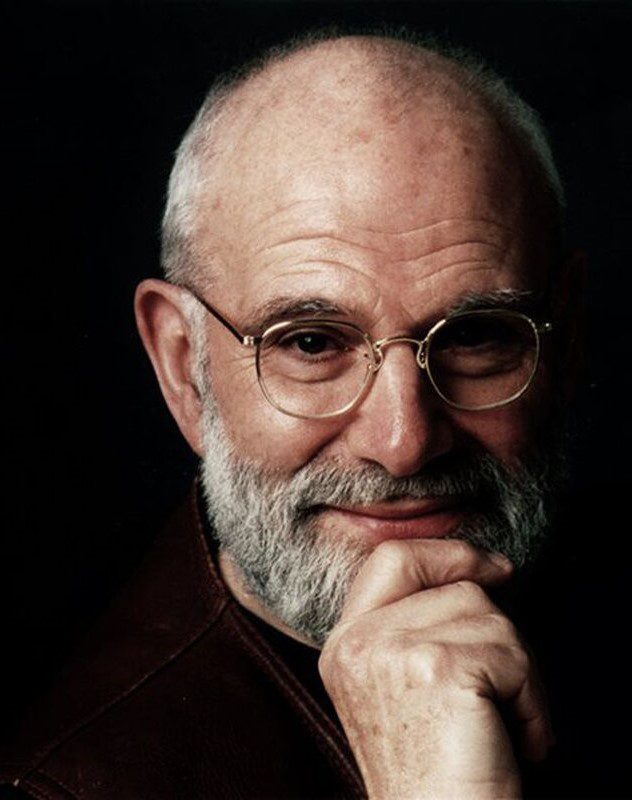
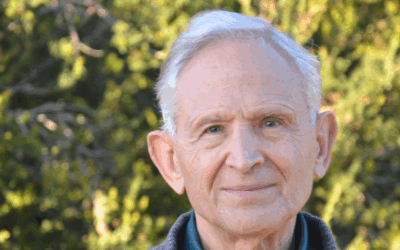
James F. T. Bugental (1915 to 2008) was an American psychologist who helped found humanistic psychology and became the leading teacher of existential-humanistic psychotherapy. He argued that therapy changes lives when the therapist is fully present and the client learns to attend to their own living, inner experience in the moment, rather than talking about themselves from a safe distance.
Key takeaways
- James F. T. Bugental (1915-2008) was a founder and first president of the Association for Humanistic Psychology and the leading teacher of existential-humanistic psychotherapy.
- Bugental held that the therapist’s full presence, being aware of oneself and the client at once, is the foundation of any therapy that changes a life.
- His books, from The Search for Authenticity (1965) to Psychotherapy Isn’t What You Think (1999), move therapy from talking about experience to working in the living moment.
- He treated resistance as protection of a person’s self-and-world construct system, something to be understood and chosen about rather than broken down.
Who was James Bugental?
James Frederick Thomas Bugental was born on 25 December 1915 in Fort Wayne, Indiana, and died at his home in Petaluma, California, in September 2008, at 92.1 He took a master’s degree at George Peabody College in Nashville and a Ph.D. in psychology at Ohio State University in 1948, then joined the psychology faculty at UCLA.
He did not stay in academic life for long. In 1953 he and colleagues opened Psychological Service Associates in Los Angeles, one of the early group private practices run by psychologists, and he remained a partner there until the late 1960s. The consulting room, not the laboratory, was where he did his thinking for the rest of his career.1
Bugental later moved to Northern California. He was emeritus professor at Saybrook Institute, the graduate school built around humanistic psychology, and taught as a clinical faculty member in the Department of Psychiatry at Stanford University Medical School. He kept seeing clients, teaching and writing into his eighties, and his last book appeared in 1999.1
Bugental and the founding of humanistic psychology
In the early 1960s Bugental was one of the small group, with Abraham Maslow, Carl Rogers and others, who set up the Association for Humanistic Psychology, and he served as its first president.1 His 1963 paper in American Psychologist, “Humanistic psychology: A new breakthrough,” made the case to the profession at large.2
A year later, in “The third force in psychology,” he set out five basic postulates of the movement: a person is more than the sum of their parts; a person lives in a human context of relationships; a person is aware; a person has choice; and a person is intentional, living toward goals and meaning.3 Those postulates are still the most quoted summary of what humanistic psychology stood for against behaviourism and classical psychoanalysis. In 1967 he edited Challenges of Humanistic Psychology, which gathered the movement’s main voices in one volume.4 For the wider story of how these schools arose, see our brief history of psychotherapy.
What is existential-humanistic psychotherapy?
Existential-humanistic therapy joins two traditions. From existential philosophy, from Søren Kierkegaard through Martin Heidegger and Jean-Paul Sartre, it takes the facts every life must face: death, freedom, isolation and the need to make meaning. From humanistic psychology it takes trust in the person’s capacity to grow and choose.13
Bugental’s version is distinctly American and clinical. Where European existential analysts such as Ludwig Binswanger began from philosophy, Bugental began from what happens between two people in a room. His close colleague Rollo May supplied much of the theory; Bugental supplied a detailed account of how a therapist actually works. Kirk Schneider and Orah Krug, who trained with him, describe existential-humanistic therapy today largely in the terms he set: presence, the client’s inner searching, and the work with resistance.13
What did Bugental mean by authentic presence?
For Bugental, presence was the foundation of the work. He defined it as the quality of being in a situation with as much of one’s awareness, feeling and responsiveness as possible: present to oneself and to the other person at once. It is more than empathy or active listening. The therapist brings a whole self into the hour, stays open to whatever arises, and meets the client with honesty and some courage.8
He thought presence mattered whatever technique a therapist used, because technique without presence turns into a performance. When the therapist is actually there, the client is invited to be actually there too. That mutual presence is what makes deep exploration possible.
Presence also asks something of the therapist’s own life. In “The person who is the psychotherapist” (1964) Bugental argued that the therapist’s own development, fears and blind spots enter every session, so ongoing self-examination and personal therapy are part of the job.11 Later researchers took up the same idea. Shari Geller and Leslie Greenberg studied therapeutic presence directly and described it as grounded, immersed, expansive awareness that clients can feel, and which supports the alliance.14 The same thread runs through Eugene Gendlin’s work on the felt sense.
What are life-changing moments in therapy?
Bugental distinguished therapy that helps people cope better from what he called life-changing therapy: work deep enough to alter how a person experiences themselves and their world. His 1990 book Intimate Journeys: Stories from Life-Changing Therapy describes this kind of work as he practised it.9
In this kind of therapy, change tends to gather in particular moments. A client stops reporting on their life and suddenly feels it: grief arrives, a long-held decision comes loose, or they see a choice they have been refusing to see. Bugental treated these moments as the heart of the process, the times when a person touches their own truth and their unused possibilities.
What makes such moments possible?
He named several conditions. The therapist’s presence comes first. The client’s own readiness matters, which he connected to how much pain or longing has brought them in. And the fit between this therapist and this client matters, since a person opens only where they feel met.7 The therapist’s task is to notice such a moment when it comes, slow down, and help it unfold rather than rushing to interpret it.
These moments were not only events inside therapy. Bugental saw them as practice. A client who learns to stay with an intense, clear moment of choice in the session is learning to live that way outside it, with more self-awareness, more self-acceptance and more capacity to direct their own growth.
The living moment
His final book makes this the whole point. Its title is Psychotherapy Isn’t What You Think: Bringing the Psychotherapeutic Engagement into the Living Moment (1999). He contrasted therapy that collects information about a person with therapy that works in what the person is actually experiencing right now. Talking about anger yields facts about anger; noticing how one is clenching while saying the word yields change.10
What is The Search for Authenticity about?
Behind presence and the living moment lies Bugental’s concern with authenticity: the lifelong task of being and expressing who one actually is, against inner fear and outer pressure. He did not treat it as a fixed achievement. Authenticity, for him, is a choice made moment by moment to be aware, to take responsibility for one’s life, and to act with integrity.
His first book, The Search for Authenticity (1965), set this out in existential terms.5 He described the basic conditions of human existence, among them finitude, the need to act, choice and separateness, and argued that each brings an anxiety that belongs to being human. People flee that anxiety into self-deception, conformity and what Sartre called bad faith. The flight itself produces neurotic anxiety and symptoms. Facing that existential anxiety with courage, in the tradition of Paul Tillich, brings vitality, creativity and real connection with others.
The therapist’s role follows. The therapist supports the client’s search, challenges the patterns and beliefs that keep life small, and encourages the risks of a more genuine way of being. The idea has deep roots; our post on the daimon and the authentic self traces it back to the Greeks. A later book, The Search for Existential Identity (1976), shows these themes in extended exchanges between patient and therapist.6
What is in Psychotherapy and Process?
Psychotherapy and Process: The Fundamentals of an Existential-Humanistic Approach (1978) is Bugental’s compact statement of method.7 Its central move is from content to process: less attention to what the client says, more to how they are saying it and whether they are present while they say it.
Two terms carry much of the book. The self-and-world construct system is Bugental’s name for the set of beliefs a person holds about who they are and what the world is like. Resistance is whatever protects that system from change. He did not treat resistance as an enemy to be broken. It once kept the person safe, so the therapist helps the client notice it, feel what it guards against, and choose whether to keep it.12
What is The Art of the Psychotherapist about?
The Art of the Psychotherapist (1987) is Bugental’s longest account of the personal qualities and skills the work requires.8 He describes the therapist as a catalyst for change and gives detailed chapters on presence, on searching (the client’s own turning inward to discover what they feel and want), on the levels at which people communicate, and on how much interpersonal pressure a therapist puts on a client at any given moment.
He saw psychotherapy as a vocation that needs empathy, courage, humility and deep respect for the client’s autonomy and potential. He insisted that the depth and integrity of the therapist’s own inner work is a key factor in how much they can help others.
Across the book he keeps returning to presence as the foundation of skill. The therapist’s capacity to attend to the client’s moment-by-moment experience with openness, flexibility and depth is, for Bugental, the necessary condition of the healing relationship. Without it, the other skills have nothing to work on.
How did Bugental influence psychotherapy?
Bugental’s influence runs mainly through the people he trained and the existential-humanistic tradition they carry. Schneider and Krug’s American Psychological Association volume on existential-humanistic therapy rests on his ideas of presence and inner searching.13 Krug’s comparison of Bugental and Irvin Yalom found that both cultivate presence, but Bugental attends more to the client’s inner, intrapersonal process and Yalom more to the interpersonal process between client and therapist.12
He also kept American psychotherapy in conversation with existential philosophy, showing how freedom, responsibility and the search for meaning appear in ordinary sessions. That conversation now includes Viktor Frankl on meaning and Emmy van Deurzen on the dimensions of existence. The broader family of humanistic and experiential therapies he helped found has a substantial outcome literature; Robert Elliott’s meta-analysis found large pre-to-post changes and effects comparable with other therapies.15
Most of all, he left a picture of psychotherapy as a human encounter: two people meeting with honesty, courage and hope to explore the depths of the psyche and the possibility of a fuller life. In a culture that often feels fragmented and hurried, his work calls attention back to the lived present, to real contact between people, and to the daily struggle to live with integrity and purpose.
How does Bugental’s approach shape therapy today?
At Taproot, Bugental’s ideas show up most clearly in how we sit with people. In existential therapy we pay attention to what a client is experiencing as they speak, not only to the story. When someone says “I’m fine” with a tight jaw, we may slow down and ask what is happening in their body right now. That is Bugental’s living moment in practice.
This way of working suits people who have tried to fix themselves from the outside: those with a life that looks right but feels empty, those in midlife questioning everything, and those facing loss or mortality, which our post on existential therapy after loss covers. Jungian writers such as James Hollis describe the same midlife summons from another angle.
Bugental’s emphasis on presence also fits brain-based trauma work. In Brainspotting, the therapist’s attuned presence holds a space in which the client can follow their own inner process as it unfolds, which is close to what Bugental called searching. We treat resistance much as he did: a protection to be understood, not a wall to knock down.
Bugental believed the most useful thing a therapist offers is the honest presence of one person with another. That conviction sits under the work at Taproot Therapy Collective, and you can contact us to begin.
Frequently asked questions
Who was James Bugental?
James F. T. Bugental (1915-2008) was an American psychologist, born in Fort Wayne, Indiana, with a Ph.D. from Ohio State University. He helped found the Association for Humanistic Psychology, served as its first president, and spent decades in private practice and teaching at Saybrook and Stanford, developing existential-humanistic psychotherapy.
What is presence in Bugental’s therapy?
For James Bugental, presence means being in the therapy hour with as much awareness, feeling and responsiveness as possible, attending both to oneself and to the client. He saw it as the precondition for every other therapeutic skill, because a client can only be fully present where the therapist is fully present too.
What are Bugental’s postulates of humanistic psychology?
In his 1964 paper The Third Force in Psychology, James Bugental set out five postulates: a person is more than the sum of their parts, lives in a human context, is aware, has choice, and is intentional. They became the standard short statement of what humanistic psychology meant.
What books did James Bugental write?
James Bugental’s main books are The Search for Authenticity (1965), The Search for Existential Identity (1976), Psychotherapy and Process (1978), The Art of the Psychotherapist (1987), Intimate Journeys (1990) and Psychotherapy Isn’t What You Think (1999). He also edited Challenges of Humanistic Psychology (1967).
How is Bugental different from Irvin Yalom?
Both James Bugental and Irvin Yalom are existential therapists who cultivate presence. Orah Krug’s 2009 comparison found that Bugental focuses more on the client’s inner, intrapersonal process, such as how they experience themselves in the moment, while Yalom focuses more on the interpersonal relationship between client and therapist.
Related reading
- The Pragmatic Turn: William James, the Architecture of Consciousness, and the Roots of Modern Psychotherapy
- The Emperor’s Inner Work: Marcus Aurelius, Meditations, and the Roots of Psychotherapy
- St. Augustine and the Foundations of Depth Psychology: How a Fourth-Century Bishop Became a Forefather of Modern Psychotherapy
- Finding Beauty in America’s Forgotten Corners: Toby Huss on Photography, Acting, and the Art of Authentic Seeing
- Breaking Free from the Patterns of Narcissistic Abuse: Understanding the Lasting Impact
- The Psychology of Advertising
References
- Schneider, K. J., & Greening, T. (2009). James F. T. Bugental (1915-2008). American Psychologist, 64(2), 151. https://doi.org/10.1037/a0014551
- Bugental, J. F. T. (1963). Humanistic psychology: A new breakthrough. American Psychologist, 18(9), 563-567. https://doi.org/10.1037/h0048666
- Bugental, J. F. T. (1964). The third force in psychology. Journal of Humanistic Psychology, 4(1), 19-26. https://doi.org/10.1177/002216786400400102
- Bugental, J. F. T. (Ed.). (1967). Challenges of humanistic psychology. McGraw-Hill.
- Bugental, J. F. T. (1965). The search for authenticity: An existential-analytic approach to psychotherapy. Holt, Rinehart and Winston.
- Bugental, J. F. T. (1976). The search for existential identity: Patient-therapist dialogues in humanistic psychotherapy. Jossey-Bass.
- Bugental, J. F. T. (1978). Psychotherapy and process: The fundamentals of an existential-humanistic approach. Addison-Wesley.
- Bugental, J. F. T. (1987). The art of the psychotherapist. W. W. Norton.
- Bugental, J. F. T. (1990). Intimate journeys: Stories from life-changing therapy. Jossey-Bass.
- Bugental, J. F. T. (1999). Psychotherapy isn’t what you think: Bringing the psychotherapeutic engagement into the living moment. Zeig, Tucker & Theisen.
- Bugental, J. F. T. (1964). The person who is the psychotherapist. Journal of Consulting Psychology, 28(3), 272-277. https://doi.org/10.1037/h0049013
- Krug, O. T. (2009). James Bugental and Irvin Yalom: Two masters of existential therapy cultivate presence in the therapeutic encounter. Journal of Humanistic Psychology, 49(3), 329-354. https://doi.org/10.1177/0022167809334001
- Schneider, K. J., & Krug, O. T. (2010). Existential-humanistic therapy. American Psychological Association. https://doi.org/10.1037/12050-000
- Geller, S. M., & Greenberg, L. S. (2012). Therapeutic presence: A mindful approach to effective therapy. American Psychological Association. https://doi.org/10.1037/13485-000
- Elliott, R. (2002). The effectiveness of humanistic therapies: A meta-analysis. In D. J. Cain & J. Seeman (Eds.), Humanistic psychotherapies: Handbook of research and practice (pp. 57-81). American Psychological Association. https://doi.org/10.1037/10439-002












0 Comments