
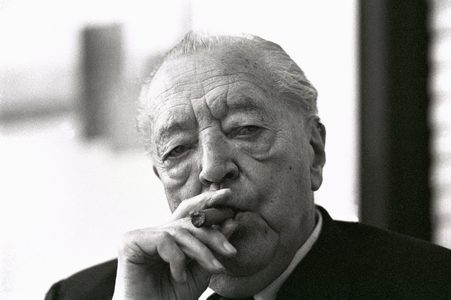
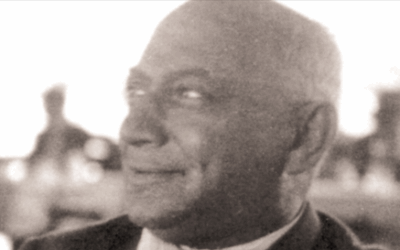
Medard Boss (1903-1990) was a Swiss psychiatrist who built Daseinsanalysis, a form of psychotherapy grounded in Martin Heidegger’s philosophy of human existence. Instead of explaining symptoms through hidden mental machinery, Boss asked how a person is open to the world and where that openness has narrowed. His approach reshaped how therapists understand anxiety, guilt, dreams, the body and the healing relationship.
Key takeaways
- Medard Boss (1903-1990) was a Swiss psychiatrist who built Daseinsanalysis, a psychotherapy grounded in Martin Heidegger’s account of human existence as being-in-the-world.
- Boss kept Freud’s clinical observations and much of his setting but rejected the mechanistic theory, replacing the psychic unconscious with what a person has not yet let show itself.
- In Daseinsanalysis, symptoms, dreams and bodily illnesses are understood as narrowed ways of existing, and therapy aims to open a person’s possibilities again.
- Heidegger’s Zollikon Seminars, held for physicians from 1959 to 1969 mostly in Boss’s home, shaped the school and remain a clear introduction to Heidegger’s thought.
- Boss treated the therapeutic relationship as a real human encounter that frees the patient to take up their own life, not as a vehicle for technique.
Who was Medard Boss?
Boss was born in St. Gallen, Switzerland, on 4 October 1903 and died in Zollikon, near Zurich, on 21 December 1990. He studied medicine in Zurich and Vienna, and in Vienna in 1925 he spent a period in analysis with Sigmund Freud. He then trained in psychiatry at the Burghölzli, the Zurich university hospital, under Eugen Bleuler, the psychiatrist who coined the word schizophrenia.12
His early career was conventionally psychoanalytic. His first major book, Sinn und Gehalt der sexuellen Perversionen (1947), translated as Meaning and Content of Sexual Perversions (1949), already pushed against Freud’s drive theory by asking what a sexual pattern meant within a person’s whole way of loving and relating, rather than which instinct it discharged.2
In the 1940s Boss read Heidegger’s Being and Time (1927) and wrote to its author in 1947. That letter began a friendship and working partnership that lasted until Heidegger’s death in 1976. Boss took the philosopher’s analysis of human existence and turned it into a clinical method, which he called Daseinsanalysis. He became titular professor of psychotherapy at the University of Zurich in 1956, travelled to India in 1956, 1958 and 1966, an experience of Indian thought he described in A Psychiatrist Discovers India (1965), and spent the rest of his life teaching, writing and training analysts in Zurich.612
What Boss offered was an alternative to the two dominant pictures of the human being in mid-century psychology: the psychoanalytic picture of a psychic apparatus driven by instincts, and the behaviourist picture of an organism shaped by conditioning. Both, he argued, treated a person as a thing among things. Daseinsanalysis treats a person as the place where things show up and matter at all.
What are the main ideas of Daseinsanalysis?
- Boss developed Daseinsanalysis in close dialogue with Martin Heidegger, reorienting psychotherapy toward a careful description of how a person actually exists.
- He rejected the mechanistic and reductionist side of Freudian metapsychology and of natural-scientific psychology, arguing that their models hide lived experience instead of revealing it.
- At the centre is Heidegger’s concept of Dasein, “being-there”: human existence as relational, temporal and open to a world of meaning.
- Boss criticised the split between an inner subject and an outer object world, holding that a person and their world form one structure of meaningful relations.
- Existence is always situated in a particular history, culture and set of relationships that shape what a person can see and do.
- Freedom and responsibility belong to human existence itself, even in the middle of suffering.
- Symptoms are restricted ways of being-in-the-world, not broken mechanisms.
- Therapy helps a person notice how their way of existing has narrowed, so that more of their possibilities can open.
- Dreams are not disguised wishes but direct showings of the dreamer’s way of being.
- The therapeutic relationship is a real encounter marked by presence, openness and shared exploration.
- Bodily illness can be understood as a mode of existing, which made Boss an early figure in psychosomatic medicine.
- His work raises wider questions about medicine, technology and what it means to be human.
How did Boss move from psychoanalysis to Daseinsanalysis?
Boss’s formation passed through the major schools of his time. After his analysis with Freud and his training under Bleuler, he took part for about ten years, from the late 1930s, in the working group Carl Jung led in Zurich. He was therefore one of the few clinicians of his generation who knew both Freudian and Jungian practice from the inside.12
What troubled him was not Freud’s clinical observation but its theoretical clothing. Freud explained the phenomena he saw on the couch through constructs such as the unconscious, repression, cathexis and psychic energy, borrowed from nineteenth-century physics and physiology. Boss came to see these as mechanistic metaphors laid over experience. They told the patient what was “really” going on behind what they lived, when what they lived was already full of sense.
Martin Heidegger gave him another starting point. Being and Time sets out to describe human existence before any theory is imposed on it, using the phenomenological method Heidegger had learned from Edmund Husserl.1 For Boss this promised a psychology that would stay with what shows itself.
Boss was not the first psychiatrist to read Heidegger clinically. Ludwig Binswanger (1881-1966), director of the Bellevue sanatorium in Kreuzlingen, had already developed a psychiatric Daseinsanalyse, set out in Grundformen und Erkenntnis menschlichen Daseins (1942) and in case studies such as “Ellen West.” Boss’s version differed. Binswanger used Heidegger to found a scientific psychiatry and added a dimension of love that he felt Heidegger lacked. Boss stayed closer to Heidegger’s own thinking and aimed at the practice of psychotherapy. In the Zollikon seminars Heidegger himself said that Binswanger had misread him, which is part of why the two forms of Daseinsanalysis became separate schools.9
From 1959 to 1969 Heidegger held seminars for psychiatrists and physicians, mostly in Boss’s house in Zollikon. These meetings, often two weeks at a time, are known as the Zollikon Seminars. Boss recorded the protocols, Heidegger reviewed and corrected them, and the volume published in German in 1987 and in English in 2001 also contains Boss’s notes of their private conversations and excerpts from the hundreds of letters Heidegger wrote him between 1947 and 1971.913 Many readers find these seminars the clearest introduction to Heidegger, because the philosopher had to explain himself to doctors who kept asking what his ideas meant for a patient.
Boss set out his own position in Psychoanalyse und Daseinsanalytik (1957), translated as Psychoanalysis and Daseinsanalysis (1963), and later in his major theoretical work, Grundriss der Medizin (1971), translated as Existential Foundations of Medicine and Psychology (1979).58 In both he kept Freud’s clinical discoveries and practice while rejecting the scientific worldview Freud had used to explain them.
What are the philosophical foundations of Daseinsanalysis?
Dasein and being-in-the-world
Dasein is an ordinary German word for existence; read literally it means “being-there.” Heidegger used it for the kind of being humans have. A stone is simply present. A person is the one for whom things are present, to whom the world is disclosed and for whom their own existence is an issue.1
The Cartesian picture, which still shapes much psychology, starts with an isolated thinking subject that must somehow reach an outside world. Heidegger reversed the order. We do not first exist as self-contained minds and then form connections. To be human is to be already involved in a world of tasks, people, places and meanings. He called this basic structure “being-in-the-world,” written with hyphens to show that it cannot be pulled apart into a self plus a world.
Boss made being-in-the-world the core of his understanding of health and illness. Psychological difficulty, in his view, does not come from collisions between hypothetical structures inside the head, such as id, ego and superego. It comes from constrictions in the ways a person relates to the world, to others and to themself. The question shifts from “what mechanism is broken?” to “how has this person’s world become smaller?”
Boss also used Heidegger’s image of the clearing (Lichtung), the open space in a forest where light falls and things become visible. Human existence, for Boss, is such a clearing: the place where beings can appear as what they are. Health is the freedom of that clearing to let things show themselves; illness is the dimming or narrowing of it.8
Beyond the subject-object split
Traditional psychology, Freudian psychoanalysis included, assumed a gap between an inner, subjective realm and an outer, objective one. Mental health could then be defined as the ego’s successful adaptation to external reality. Boss thought this dualism misdescribed experience from the start.
Following Heidegger, he held that we do not first meet neutral objects and then add meaning to them. We meet things already in terms of what they are for and how they matter. Heidegger’s famous example is the hammer: in use, it is not perceived as a lump of wood and iron with certain properties but as something to hammer with, and it becomes a mere object only when it breaks or goes missing.1 A pen is encountered as something to write with, a doorway as a way out, a phone as a link to someone.
This changes how emotions look. Anxiety is not just an inner feeling caused by an outer stimulus. It is a way of being attuned to the world in which certain possibilities appear threatening. Heidegger’s word for this attunement is Befindlichkeit, often translated “state of mind” or “situatedness”: moods are not coloured glasses over a neutral world but the very way the world first shows up for us.
The same idea runs through the work of Maurice Merleau-Ponty, who described perception as the body’s practical grip on its surroundings. Boss and Merleau-Ponty worked independently, but both rejected the image of a mind looking out at a world of objects.
Temporality and historicity
Heidegger also argued that human existence is temporal in a way clock time does not capture. Clock time is a sequence of identical “nows.” Lived time is a single movement in which we are always ahead of ourselves toward possibilities, carrying a past we did not choose, and engaged with a present situation.1 Heidegger called the way our past is taken up into a self-understanding “historicity.”
Boss drew a clinical point from this. A symptom is not simply the effect of a past cause, in the way one billiard ball moves another. It shows how past experience currently shapes the way a person exists, and how it narrows what future they can see. Therapy, accordingly, is less about digging up historical causes than about changing how a person relates to their past so that new possibilities appear.
This does not mean the past is unimportant. A person who grew up with an unpredictable parent may carry a world in which closeness always signals danger. Boss’s interest was in how that history is alive now, in the way this person meets each new relationship, and in whether the future they project is only a repetition of what came before.
How did Boss critique psychiatry and psychoanalysis?
The limits of the medical model
Boss criticised psychiatry’s reliance on a medical model that treated psychological disorders as analogous to physical diseases: malfunctions in a mental apparatus requiring technical repair. In Existential Foundations of Medicine and Psychology he argued that the natural-scientific approach can only see what can be measured and calculated, and so it leaves out what is most human: the way a person meaningfully relates to their world.8 Treating symptoms as mere dysfunctions to be corrected, he held, hides their meaning as expressions of a person’s way of existing.
The critique extended to purely biological explanations. Boss did not deny neurophysiology. His point was that brain processes can never fully account for the lived experience of suffering. To say that depression is a neurotransmitter imbalance, for example, says nothing about what the depressed person lives through: a world in which colours fade, the future closes, other people seem far away and nothing calls.
A guiding thought of the Grundriss was that modern science had become a stance in which the knower treats everything, sick and healthy people alike, as an object for technical control. He wanted medicine to return to letting the patient show themselves as they are.8
Rethinking Freudian concepts
Boss’s relationship with Freud was not simple rejection. He admired Freud’s clinical genius and his patience with patients, and he wanted to keep what Freud had seen while removing the mechanistic and deterministic assumptions Freud had used to explain it.5
The unconscious is the clearest case. Boss argued that a phenomenological restriction to what can actually be experienced makes the hypothesis of a “psychic unconscious,” a hidden storehouse of repressed contents, unnecessary. What appears unconscious is better described as aspects of a person’s relationship to the world that have not yet been disclosed to them, or that they have not yet taken up as their own.8
Repression received the same treatment. In Freud’s model, a psychic mechanism pushes unacceptable impulses down into the unconscious. Boss described instead a person’s own turning away from certain possibilities of existing that seem threatening or overwhelming. This turning away is not an event inside a mental apparatus but a change in how a person relates to the world. The clinical phenomenon Freud identified remains; what changes is the frame in which it is understood.
Transference was a third point of difference. Freud treated the patient’s feelings toward the analyst largely as repetitions of earlier relationships. Boss held that this view misses what is new and real in the therapeutic relationship. A patient’s trust or anger is directed at a real person in a real encounter, even when it also carries an old pattern.5
Freedom and determinism
The deepest disagreement concerned freedom. Freud’s model suggested that thoughts, feelings and actions are caused by unconscious forces over which the person has little control. Analysis would bring those forces to consciousness and so make some choice possible.
Boss, following Heidegger, held that freedom is not something therapy produces but a basic feature of human existence. Even in suffering, a person is not simply the passive victim of causes. They are carrying out a particular way of being-in-the-world, however narrowed or self-defeating it has become.
This changes the therapist’s role. Instead of explaining the patient to themselves through theory, the Daseinsanalyst helps the patient see how they are taking part in their own suffering and that other ways of existing are still open. The therapist is less an expert decoder than a fellow human being who accompanies the patient in exploring and widening their relationships to the world. This is close to what Søren Kierkegaard meant when he described the self as a relation that relates itself to itself: freedom is not a possession but a task.
How does Daseinsanalysis understand anxiety, guilt, dreams and the body?
Anxiety, guilt and authenticity
Boss treated anxiety and guilt in his 1962 lectures Lebensangst, Schuldgefühle und psychotherapeutische Befreiung, published in English that year as “Anxiety, Guilt and Psychotherapeutic Liberation.”4 Following Heidegger, he did not see anxiety as simply pathological. Anxiety discloses the finitude and freedom of human existence: the fact that our life is not secured by any final foundation, that we must die, and that we have to choose how to live without guarantees.
Boss distinguished this existential anxiety from neurotic anxiety. Neurotic anxiety grows when a person tries to evade the uncertainty and responsibility of existence by clinging to false securities: rigid routines, total control, a relationship that must never change. The more a person grips, the more threatening the openness of life becomes.
Guilt, in the same way, is not first a feeling that follows breaking a rule or a parental prohibition. In Heidegger’s sense, to exist is to be always in debt to possibilities we have not realised. Every choice closes other paths. This existential guilt cannot be removed, only owned. Neurotic guilt often grows from refusing that ownership, or from a life lived so far from one’s own possibilities that the debt becomes a constant accusation.4
Authenticity follows from these ideas. Heidegger distinguished authentic existence, in which a person takes up their life as their own, from the inauthentic mode in which one lives as “they” live, by borrowed standards. Boss saw much suffering as rooted in inauthentic living: conforming to expectations, fleeing from freedom, or disowning parts of oneself. Therapy aims at a more authentic existence marked by openness to one’s possibilities and limits, honest self-confrontation and responsible choice. The same themes run through the work of Rollo May on anxiety and of Viktor Frankl on meaning.
Dreams in Daseinsanalysis
Boss’s dream theory is one of his clearest departures from Freud, and his two dream books remain among his most read works: Der Traum und seine Auslegung (1953), translated as The Analysis of Dreams (1957), and Es träumte mir vergangene Nacht (1975), translated as “I Dreamt Last Night…” (1977).37
Freud read the manifest dream as a disguise for latent wishes, to be decoded through free association. The philosopher Paul Ricoeur later called this style of reading a “hermeneutics of suspicion.” Boss gave up the suspicion. He also set aside Jung’s reading of dream images as symbols of archetypes, which he regarded as another theory placed behind the phenomena. Both approaches, he argued, translate the dream into something else.
For Boss the dream is not a coded message but a way of existing in its own right. In dreaming, we perceive, in a narrowed form, features of our existence that remain hidden from us while awake.7 The dream world has its own constraints and possibilities, and what matters is how the dreamer actually behaves within it.
So the Daseinsanalyst asks concrete questions. How does the dreamer relate to the other figures, places and situations in the dream? What is open to them and what is closed? What can they see and what remains out of sight? A man who repeatedly dreams of standing outside a lit house, unable to find the door, is not necessarily expressing a hidden wish. The dream may show, quite directly, how he currently stands toward intimacy.
The therapist then asks, gently, whether the same pattern appears in waking life. Boss called this a kind of seeing exercise: the dream shows something, and therapy helps the dreamer recognise it and consider whether it could be otherwise. For readers who know Jungian dream interpretation, the shared ground is clear: both refuse to treat dreams as mere noise, and both take the dream’s own images seriously.
Psychosomatic phenomena
Boss was also an early figure in psychosomatic medicine. As early as 1940 he published Körperliches Kranksein als Folge seelischer Gleichgewichtsstörungen, on bodily illness as a consequence of disturbed emotional balance, and in 1954 he wrote Einführung in die psychosomatische Medizin, an introduction to the field.14
His mature position challenged the dualistic assumption that a symptom is either “physical,” with organic causes, or “psychological,” with mental causes. From a Daseinsanalytic view, the body is not a physical object inhabited by a mind. It is one way in which a person exists in the world: the concrete form of their openness.
Bodily symptoms therefore express not hidden mental conflicts but constrictions in a person’s embodied way of relating to their world. A tension headache, for instance, may belong to a life in which demands are met only as pressure, and in which there is never room to set anything down. Boss did not read such symptoms as messages sent by an unconscious. He saw them as the concrete shape a person’s existing has taken.
This position avoided both biological reduction and the older psychosomatic habit of tracing every physical symptom to a psychological cause. It recognised that all bodily experience is meaningful within a person’s being-in-the-world, without claiming that meaning causes disease.
What happens in Daseinsanalytic therapy?
The therapeutic relationship
The heart of Daseinsanalytic therapy is the quality of the relationship. Boss rejected the stance of the detached technician. The therapist meets the patient as one human being to another, and the relationship itself becomes a clearing in which aspects of existence can come into view.
Interestingly, Boss kept much of Freud’s outward arrangement. Daseinsanalysis as he practised it retained the couch, the basic rule of free association, the analyst’s abstinence and evenly suspended attention.5 What changed was what the therapist did with the material. Instead of interpreting it in terms of a theory, the therapist stayed with what the patient brought, and helped it show itself more fully.
Boss drew on a distinction from Being and Time to describe the right kind of care. Heidegger had distinguished a care that “leaps in” for the other, taking over their concerns and making them dependent, from a care that “leaps ahead” of them, giving their concerns back to them as their own.1 Boss saw therapy as the second kind. The therapist does not solve the patient’s life. They help the patient become free to take it up.
This is not passive warmth. A therapist who leaps ahead may need to question, to challenge a patient’s narrowed way of living, and to ask why another way is not possible. But the challenge always respects the patient’s own freedom. The therapist does not impose an understanding but helps patients see for themselves how they are limiting their engagement with life.
The therapeutic process
Daseinsanalytic therapy proceeds through a gradual exploration of a person’s way of being-in-the-world. That includes their relationships, their embodied experience, their way of living time, how they relate to past, present and future, and the physical and cultural spaces they inhabit. Later schools of existential analysis describe these as dimensions of existence to be explored one by one.
Unlike approaches built around symptom reduction, Daseinsanalysis aims at a wider change in how a person exists. Symptoms are not targeted directly. They are understood as expressions of a narrowed existence that can open as therapy proceeds. As patients recognise and take up their current way of existing, new possibilities tend to appear on their own.
The image of the clearing helps here too. The therapist does not build a new road for the patient. They help clear what has overgrown the patient’s capacity for open engagement with the world: rigid self-interpretations, habitual avoidance of certain experiences, unexamined assumptions about what is possible or permitted.
Clinical method and typical techniques
Boss insisted that Daseinsanalysis is not a set of techniques but an attitude grounded in phenomenological understanding. His books nevertheless include detailed clinical material, especially extended dream series and accounts of patients with sexual difficulties and bodily illnesses, which show how the attitude works in practice.12
Take, as a general illustration, a person who suffers from agoraphobia. A conventional approach might search for a childhood cause or arrange graduated exposure. A Daseinsanalyst would explore the quality of the person’s lived space: how the world beyond the front door appears, what the open street seems to demand, how home feels as the only place that holds. The therapeutic relationship provides a secure space from which the wider world can gradually be met again.
In practice, Daseinsanalytic therapy involves close attention to a patient’s language and bodily expression, phenomenological exploration of significant experiences, including dreams, and careful questioning that helps the patient notice the assumptions they hold about themselves and their world. A typical question is not “why did you do that?” but “what was it like?” and “what else was possible there?” The aim throughout is not to apply techniques to the patient but to explore together, so that narrowed parts of existence can open.
How did Boss approach psychosomatic medicine?
The lived body
Mainstream medicine treated the body as a biological organism governed by chemical and physical processes. Classic psychosomatic theory, from the psychoanalytic side, treated bodily symptoms as the expression of psychological conflicts. Boss rejected both, and offered instead a phenomenological account of embodiment.
Phenomenology had long distinguished the lived body (Leib) from the physical body as object (Körper), a distinction Husserl developed and Merleau-Ponty made central. In the Zollikon Seminars, Heidegger and Boss discussed the body in terms of “bodying forth” (Leiben): the body is not a thing we have, but the way our being-in-the-world reaches toward things and people.9 Boss later titled a book Leiben und Leben, bodying and living.
On this view human embodiment is not the mere presence of an object in space. When I reach for a cup, my hand is already “at” the cup. When I am ashamed, my face burns because I stand exposed before someone. The body is the concrete shape of our relations with the world, which is why the usual division between physical and psychological disorders became, for Boss, too crude. Every human ailment has both bodily and existential dimensions.
Illness as restricted being-in-the-world
Boss understood illness not as a breakdown of biological mechanisms alone but as a restriction in a person’s capacity for open engagement with the world. A physical symptom shows a concrete limit in how a person is able to exist.8
Respiratory illness offers an example often used in this tradition. A person with asthma has narrowed airways; they may also live a life in which there is no room to breathe, to speak freely or to take up space. Boss did not claim that asthma is caused by psychological factors. His claim was that the illness is at once a physical and an existential event, and that both deserve attention.
This changes clinical practice. Instead of trying to decide whether a symptom is “really” physical or psychological, the Daseinsanalytic physician attends to how it belongs to the patient’s whole way of existing. Treatment aims at relieving the symptom and, where possible, at exploring and loosening the existential narrowing it expresses.
A new foundation for medicine
The Grundriss was nothing less than an attempt to rethink the philosophical foundations of medicine. Its full German subtitle promises outlines of a phenomenological physiology, psychology, pathology and therapy, and of a preventive medicine suited to human existence in modern industrial society.8 Boss argued that modern medicine, by adopting the natural-scientific worldview, had come to treat the human body as a complex machine instead of the embodiment of a person’s existence.
His critique reached diagnostics, which can reduce the complexity of a person’s suffering to abstract categories, and treatments that target bodily systems while ignoring the person’s way of being-in-the-world. Boss valued medical technology. He insisted it be placed within a more human understanding of who the patient is.
In 1971 Boss and his closest student, the psychiatrist Gion Condrau (1919-2006), founded the Daseinsanalytic Institute for Psychotherapy and Psychosomatics in Zurich, also known as the Medard Boss Foundation. The name itself shows how central the body was to the school. Through the institute, physicians and psychotherapists were trained to treat patients not as carriers of disease entities but as persons whose illness belongs to their way of existing.
This approach anticipated later developments such as George Engel’s biopsychosocial model of 1977 and the wider recognition that biological, psychological and social factors interact in illness. Boss’s contribution went further than such integrative models, because he questioned the assumption that mind and body are two things that need connecting at all.
What did Boss say about technology, nature and culture?
Technology and modern life
Boss shared Heidegger’s concern about technology. In the 1953 lecture “The Question Concerning Technology,” Heidegger argued that the essence of modern technology is a way of revealing the world in which everything, nature and human beings included, appears as “standing-reserve” (Bestand): stock to be ordered, stored and optimised.10 The danger lies less in machines than in this understanding of being, which crowds out other ways of letting things show themselves.
Boss applied this to medicine. Technological medicine, he argued, tends to treat patients as biological systems to be manipulated instead of persons with lives that matter. As medical technology advances, the risk grows that the existential side of health and illness falls out of view.8 The concern speaks directly to present debates, from the electronic record that structures the clinical visit to the use of algorithms in diagnosis and therapy.
Nature and ecological awareness
Boss’s phenomenology also has an ecological side. If human existence is always already involved with the world instead of standing apart from it, then the subject-object dualism that treats nature as a mere external resource is a distortion, not a neutral fact.
Heidegger’s later writings, which shaped Boss’s later work, speak of dwelling, of sparing and of “letting beings be.” In this view, a healthy relation to nature is not mastery but care that lets the natural world show itself as more than raw material. Daseinsanalysts have drawn on this to argue that environmental crisis is not only a technical problem but also a question of how humans understand their place in the world.
Gion Condrau carried Boss’s work forward as director of the Zurich institute until 2000, extending Daseinsanalysis into questions of mortality in Der Mensch und sein Tod (1984). The theme that links his work and Boss’s is the same: human beings are not observers of the world but participants in it, and responsible for how they take part.
Cultural critique and social change
Although Boss’s work centred on individual therapy, it carried an implicit cultural critique. If cultural norms and technological systems can narrow human existence, then psychological health depends in part on the shape of a culture as well as on personal change.
Others developed this social side more explicitly. In Britain, R. D. Laing, who drew on Binswanger, Boss and Sartre, argued in the 1960s that what psychiatry called madness could be an intelligible response to unlivable family and social situations. In the United States, Rollo May wrote about the anxiety of a culture that had lost its shared sources of meaning.
This critical strand connects with present efforts to link individual suffering to wider social conditions. At the same time, Boss’s insistence on personal freedom and responsibility keeps the person from being reduced to a mere product of social forces.
What is the legacy of Medard Boss?
Influence on psychotherapy
Boss’s work has shaped the existential and phenomenological traditions in psychotherapy. Daseinsanalysis never spread as widely as psychoanalysis or cognitive-behavioural therapy, but its philosophical foundations have enriched how many therapists think about what they do.
American existential-humanistic therapy grew partly out of this European work. In 1958 Rollo May, Ernest Angel and Henri Ellenberger published Existence: A New Dimension in Psychiatry and Psychology, which brought Binswanger’s case studies and the wider Daseinsanalytic movement to English-speaking readers.11 Boss’s own books appeared in English through the 1960s and 1970s. Figures such as James Bugental and Irvin Yalom drew on this tradition while adapting it to American practice. The American psychologist Erik Craig has been one of Boss’s main interpreters in English, tracing his roots in psychoanalysis, phenomenological psychiatry, Heidegger and Indian thought.12
In Britain the existential school, from Laing to Emmy van Deurzen, acknowledged Boss and Heidegger while building its own approaches. Eugene Gendlin, whose focusing method grew from a philosophy of implicit bodily meaning, is another thinker whose phenomenological attention to the felt body runs parallel to Boss’s work; his life is traced in a biographical timeline of Eugene Gendlin.
More broadly, Boss’s critique of reductionist approaches has fed the wider movement toward person-centred care. His insistence that symptoms express meaningful aspects of a person’s existence, not mere dysfunctions, supports approaches that work with meaning and lived experience instead of symptom elimination alone.
Institutions
Boss built institutions to carry his work forward. A Swiss society for Daseinsanalysis was founded in 1970, and the Daseinsanalytic Institute for Psychotherapy and Psychosomatics, the Medard Boss Foundation, followed in 1971 during his lifetime. National societies now represent Daseinsanalysis in Switzerland, Austria, Hungary, Greece, France and England, and there is a long-standing Brazilian tradition in São Paulo. The national societies are linked through the International Federation of Daseinsanalysis, which holds congresses every two years and publishes the yearbook Daseinsanalyse.
These institutions have kept Boss’s legacy alive while allowing it to develop. In the German-speaking world, for example, Alice Holzhey-Kunz has since the 1980s developed a form of Daseinsanalysis that brings Freud’s discovery of the hidden meaning of symptoms back together with the existential philosophy of Kierkegaard, Heidegger and Sartre.
Continuing relevance
Much has changed in psychology and psychiatry since Boss’s time, but his work speaks to current problems. As neuroscientific models come to dominate psychiatry, his phenomenological critique reminds clinicians that suffering is lived by a person and cannot be fully described in terms of neural mechanisms.
As mental health care becomes more standardised and manual-driven, Boss’s emphasis on real human encounter and on the uniqueness of each person’s existence offers a needed corrective. The historian Theodore Porter’s critique of quantification makes a related point from another direction: numbers gain authority precisely where trust in personal judgment has weakened.
Daseinsanalysis faces the task of keeping its philosophical depth while speaking to contemporary research. It also has an opportunity: to bring phenomenological insight to new problems, from the psychological effects of digital life to the existential side of ecological crisis.
Some contemporary researchers are exploring connections between Daseinsanalytic ideas and affective neuroscience, embodied cognition and ecological psychology. These fields, which treat the mind as embodied and embedded in an environment, describe in empirical terms much of what Boss described philosophically, and suggest that his work can complement scientific understanding instead of simply opposing it.
Why does Boss’s contribution still matter?
Boss’s Daseinsanalysis is an attempt to rebuild psychology and medicine on a phenomenological foundation. By grounding his work in Heidegger’s account of existence, he challenged the mechanistic tendencies of conventional psychiatry and offered an approach faithful to the complexity of human life.
His core insight is that people do not exist as isolated subjects facing external objects, but as being-in-the-world, always already involved in a field of meaningful relations. That insight corrects any approach that breaks human experience into separate variables or reduces it to biology. His view of symptoms as narrowed ways of being, not malfunctions to be fixed, offers a humane alternative to increasingly technical forms of care.
Perhaps most important is his view of the therapeutic relationship as a real human encounter rather than a technical procedure. His picture of therapy as a space in which patients can recognise and widen their possibilities of existing still speaks to clinicians of many orientations.
Between biological reduction on one side and free-floating subjectivism on the other, Boss offered a middle path: close attention to lived experience, held to strict conceptual discipline. It honours both the bodily rootedness of human life and the human capacity to make meaning.
In a time of fast technological change, environmental strain and real uncertainty about what it means to be human, his work invites a slower attention to lived experience, and a question about how each of us might live in a more open way.
How does Daseinsanalysis inform therapy at Taproot?
Several of Boss’s ideas shape how we work at Taproot. The first is his refusal to treat a symptom as a broken part. When someone comes in with panic, insomnia, a stuck grief or a body that will not settle, we ask, with them, what world they are living in: what feels possible, what has closed, where they no longer go.
The second is his view of the body. Boss held that bodily symptoms are part of how a person exists, not a separate physical layer. That is close to the starting point of somatic therapy and of brain-based trauma approaches such as Brainspotting, in which a client’s felt sense, posture, breath and eye position are taken as places where experience is held. Trauma, in this language, is a narrowing of the world that lives in the body, and the work is to let it open.
The third is the relationship. Like Boss, we see the therapeutic relationship as a real encounter, not a delivery system for techniques. The therapist’s task is to “leap ahead” in Heidegger’s sense: to help a person take their own life back, not to run it for them.
Boss’s dream work also fits with how our Jungian clinicians attend to dreams: carefully, staying close to the images, and asking what the dream shows about how the dreamer is living now. And his treatment of anxiety and guilt as features of existence, not only disorders, underlies existential therapy in Birmingham as we practise it, where questions of freedom, mortality, meaning and responsibility are welcome in the room.
Boss’s lasting gift to therapy is the conviction that a narrowed life can open again, and that this happens through attention, encounter and freedom rather than repair. At Taproot we bring that conviction to existential, somatic and depth-oriented work, and anyone who wants to explore it can contact Taproot Therapy Collective.
Frequently asked questions
What is Daseinsanalysis in simple terms?
Daseinsanalysis is a form of psychotherapy developed by Medard Boss from Martin Heidegger’s philosophy. It does not explain problems through hidden mental mechanisms. It asks how a person exists in their world: what they can see, feel and do, and where their openness has narrowed. Therapy helps the person notice that narrowing and take up more of their own possibilities.
What is the difference between Binswanger and Boss?
Ludwig Binswanger and Medard Boss both founded forms of Daseinsanalysis. Binswanger used Heidegger to build a scientific psychiatry and studied the world-designs of psychotic patients, as in his Ellen West case. Boss stayed closer to Heidegger’s own thinking, worked directly with him in the Zollikon Seminars, and turned Daseinsanalysis into a method of psychotherapy, often called the Zurich school.
How did Medard Boss interpret dreams?
Medard Boss read dreams as direct showings of the dreamer’s way of existing, not as disguised wishes or symbols to be decoded. In a dream we perceive, in narrowed form, features of our life still hidden while awake. The Daseinsanalyst asks how the dreamer behaves toward the people, places and situations in the dream, then explores whether the same pattern appears in waking life.
Did Medard Boss study with Freud and Jung?
Yes. Medard Boss had a period of analysis with Sigmund Freud in Vienna in 1925, trained in psychiatry under Eugen Bleuler at the Burghölzli in Zurich, and took part for about a decade in Carl Jung’s working group in Zurich. He then turned to Heidegger in the 1940s and developed Daseinsanalysis.
What were the Zollikon Seminars?
The Zollikon Seminars were meetings Martin Heidegger held for psychiatrists and physicians between 1959 and 1969, mostly in Medard Boss’s house in Zollikon, near Zurich. Boss recorded the protocols and Heidegger corrected them. The book, published in German in 1987 and in English in 2001, also includes their conversations and Heidegger’s letters to Boss.
Related reading
- Otto Rank: Pioneer of Birth Trauma Theory and the Will in Psychoanalysis
- Unraveling Tim Leary’s Groundbreaking Personality Typology System
- The Interpersonal Theory of Psychiatry: Harry Stack Sullivan’s Vision of the Social Self
- The Unfinished Legacy of Alfred Adler: Revisioning Psychology for Social Transformation
- The Revolutionary Life and Ideas of Guy Debord: Exploring the Situationist Critique of Modern Society
- Peter Sloterdijk: The Pioneering Metamodern Philosopher
References
- Heidegger, M. (1962). Being and time (J. Macquarrie & E. Robinson, Trans.). Harper & Row. (Original work published 1927)
- Boss, M. (1949). Meaning and content of sexual perversions: A Daseinsanalytic approach to the psychopathology of the phenomenon of love. Grune & Stratton. (Original work published 1947)
- Boss, M. (1957). The analysis of dreams. Rider. (Original work published 1953)
- Boss, M. (1962). Anxiety, guilt and psychotherapeutic liberation. Review of Existential Psychology and Psychiatry, 2(3), 173-195. https://doi.org/10.5840/repp19622321
- Boss, M. (1963). Psychoanalysis and daseinsanalysis (L. B. Lefebre, Trans.). Basic Books. (Original work published 1957)
- Boss, M. (1965). A psychiatrist discovers India. Oswald Wolff. (Original work published 1959)
- Boss, M. (1977). “I dreamt last night…”: A new approach to the revelations of dreaming and its uses in psychotherapy. Gardner Press. (Original work published 1975)
- Boss, M. (1979). Existential foundations of medicine and psychology. Jason Aronson. (Original work published 1971)
- Heidegger, M. (2001). Zollikon seminars: Protocols, conversations, letters (M. Boss, Ed.; F. Mayr & R. Askay, Trans.). Northwestern University Press. (Original work published 1987)
- Heidegger, M. (1977). The question concerning technology, and other essays (W. Lovitt, Trans.). Harper & Row.
- May, R., Angel, E., & Ellenberger, H. F. (Eds.). (1958). Existence: A new dimension in psychiatry and psychology. Basic Books.
- Craig, E. (1993). Remembering Medard Boss. The Humanistic Psychologist, 21(3), 258-276. https://doi.org/10.1080/08873267.1993.9976923
- von Herrmann, F.-W. (2005). Medard Boss and the Zollikon Seminars of Martin Heidegger. Existential Analysis, 16(1), 156-168. https://doi.org/10.65828/fg2xt671
- Boss, M. (1954). Einführung in die psychosomatische Medizin. Hans Huber.

















0 Comments