

Peter Sloterdijk’s Spheres is a three-volume philosophy of shared space: Bubbles (1998), Globes (1999) and Foams (2004), translated into English between 2011 and 2016. Its claim is that no human lives as a solitary point. We live inside interiors built with others, starting with the pair in the womb, and those interiors work like immune systems against an outside nobody survives alone.1
That idea gives therapists a sharper way to describe trauma. Trauma is often less a wound to an isolated self than the puncturing of a shared interior that made ordinary life breathable, and recovery depends partly on whether a new interior forms around the person afterward. Therapy, read this way, is the deliberate building of a small, temporary sphere of two in which a person relearns how to make and repair their own. The clinical reading is mine, not Sloterdijk’s; he is a philosopher, not a clinician, though Bubbles argues with psychoanalysis directly. But the research on trauma, social support and the therapeutic alliance fits it far better than the “pioneering metamodern” label this page used to carry.
Who Peter Sloterdijk is
Sloterdijk was born on 26 June 1947 in Karlsruhe to a German mother and a Dutch father. He studied philosophy, history and German philology in Munich and Hamburg from 1968 to 1974 and took his doctorate at Hamburg with a thesis on autobiography in the Weimar Republic. From 1978 to 1980 he lived at the ashram of Bhagwan Shree Rajneesh, later known as Osho, in Pune, India. He was rector of the Karlsruhe University of Arts and Design from 2001 to 2015 and co-hosted the ZDF talk show Das Philosophische Quartett with Rüdiger Safranski from 2002 to 2012.2
His breakthrough, Critique of Cynical Reason (1983; English 1988), defines modern cynicism as “enlightened false consciousness”: people who see through their situation and go on functioning in it anyway.3 Two years later he published a novel, Der Zauberbaum (The Magic Tree), subtitled “the emergence of psychoanalysis in the year 1785.” Its hero, a young Austrian physician, becomes a disciple of the Marquis de Puységur, the French magnetizer usually counted among the pre-scientific founders of hypnotism.4 The subtitle dates the origin of depth psychology a century before Freud, to the magnetizers of pre-revolutionary France, and the novel is critical of the Cartesian view of the subject that psychoanalysis relies on.
What the Spheres trilogy argues
The trilogy runs to roughly 2,500 pages. Its English publisher presents it as the late-twentieth-century bookend to Heidegger’s Being and Time, written by a self-described “student of the air” who reads Western metaphysics as a spatial and immunological project.1 Heidegger asked what it means to exist in time. Sloterdijk asks where we exist, and with whom. His starting point, for readers who know our piece on Heidegger and the question of Being, is a short, often ignored section of Being and Time on the spatiality of existence.5
Marie-Eve Morin’s 2009 summary sets out the premises.5 People build “ensouled” bubbles from the inside rather than being dropped into ready-made containers. Those bubbles are dyadic or multipolar: the space is generated by the resonance between two or more poles, so that, in Morin’s phrase, the “in-” structure of human existence is always a “with-” structure. Spheres of strong relation are immune structures of reciprocal sheltering, greenhouses and incubators, because humans cannot live in the bare outside. Even living alone in a single-person apartment works only because the concrete other has been supplemented with symbolic and technological prostheses.
The volumes scale this up. Bubbles covers the intimate sphere of pairs; its original intended subtitle was “an archeology of the intimate.”1 Globes is a history of attempts to build one sphere large enough for everyone: the Greek cosmos, the God of the theologians, then the terrestrial globe that ships, capital and signals circled after the voyages of discovery.6 Its warning, as Morin reads it, is that an absolute sphere with no outside cannot shelter anyone; inhabiting the infinite turns out to be “the same as sojourning in a bottomless, borderless outside.”5 Foams describes the present: countless small bubbles pressed together behind thin membranes, a condition of co-fragility and co-isolation.5 The publisher’s page for it opens with the line “So the One Orb has imploded–now the foams are alive.”7
Bubbles: the first sphere is made of two
The first volume is the one a clinician should read. Its chapter titles, translated here from the German edition’s contents page, read like a developmental psychology syllabus written by a poet: “Between Faces”; “Humans in the Magic Circle,” a history of the fascination of closeness; “The Enclosure in the Mother”; “The Primal Companion: Requiem for a Discarded Organ,” about the placenta; and “The Siren Stage: On the First Sonospheric Alliance,” along with an excursus titled “Where Lacan Goes Wrong.”8 One excursus proposes a revision of the psychoanalytic theory of developmental phases. Another is called Sphärentrauer, sphere-mourning, and is subtitled “on the loss of the nobject and the difficulty of saying what is missing.”8
These are philosophical images, not developmental findings, and Sloterdijk’s prenatal speculation goes well beyond any data. The core claim, that the first sphere is shared and partly made of sound, does have empirical neighbors. In a small 1980 experiment, newborns learned a particular sucking pattern in order to hear their mother’s voice rather than another woman’s.9 In a 2003 study of 60 term fetuses, heart rate rose to a recording of the fetus’s own mother reading and fell to a stranger’s.10
Social baseline theory, developed by the psychologist James Coan and colleagues, makes the adult version of the argument. The brain, Coan and David Sbarra write, “expects access to social relationships that mitigate risk and diminish the level of effort needed to meet a variety of goals,” partly by folding relational partners into its representation of the self.11 In Coan’s best-known experiment, married women facing the threat of an electric shock showed less threat-related brain activity while holding their husband’s hand, most of all in better marriages, and only a limited reduction while holding a stranger’s.12 With sixteen participants, that is an illustration, not a law, but its direction matches Bubbles: a person under threat is regulated by the sphere they are in, not only by what goes on inside their skull.
Spheres as immune systems
Sloterdijk’s later work names the function. You Must Change Your Life (2009; English 2013) presents itself as an attempt at a biography of Homo immunologicus and extends immunity from biology to culture: an immune system is an embodied expectation of injury, together with the means of protection and healing.13, 14 “All history is the history of immune system battles,” he writes, and near the end he calls for a planetary “co-immunism,” since global society has no shared protective design yet.14 A 2011 essay puts it outright: every social association in history, from the primal horde to the world empire, can be explained as a structure of co-immunity.15 The same book’s term anthropotechnics refers to the practices of exercise and repetition by which humans form themselves.14
Thymos, the part of the soul that in Plato holds spirit, pride and indignation, was in his account pushed out of view by Christianity and then psychoanalysis, both of which promoted mutual understanding as the way past conflict. He wants rage given its proper place and channeled into productive political struggle.16
Trauma as a punctured sphere
Sloterdijk’s sharpest image of a destroyed sphere is historical. In Terror from the Air he dates the start of the twentieth century to 22 April 1915 at Ypres, when the German army released chlorine gas. The novelty was that the attack no longer targeted the enemy’s body but the environment the body depends on.17 He calls this atmoterrorism: living things cannot not breathe, so the air itself becomes the weapon.18
That is a good model of psychological trauma. The event injures, but what keeps the injury going is often damage to the background: the unspoken assumptions that the world is mostly benign, that what happens is not pure chance and that one is worth something. Ronnie Janoff-Bulman studied this as the “assumptive world”; in her data, people who had experienced traumatic events years earlier still differed from others in exactly those assumptions.19 The air was poisoned, and now the person has to think about breathing.
The research on who goes on to develop PTSD points the same way. In Chris Brewin and colleagues’ 2000 meta-analysis of fourteen risk factors, each factor’s effect was modest, but factors operating during or after the trauma, including lack of social support, had somewhat stronger effects than pre-trauma characteristics.20 Emily Ozer and colleagues’ 2003 meta-analysis of 68 studies found post-trauma social support among the significant predictors and concluded that processes around the event, especially dissociation at the time, predicted PTSD better than prior characteristics.21 In spherical language, whether symptoms settle in may depend partly on whether a new interior forms around the person afterward. That synthesis is mine, not a hypothesis these studies tested, and most of the data are correlational: symptoms can also wear support away.
The other two volumes add two warnings. Globes warns against answering a burst sphere by building one with no outside: total certainty, total control, a belief system that promises to contain everything. Absolute spheres fail because they leave no inside to stand in.5 Paul Tillich worked on the same problem of faith after collapse from the theological side, as we discuss in Paul Tillich and the soul’s depth. Foams warns about the opposite condition, common among people who come to therapy now: many small, connected, thin-walled cells, close to everyone and held by no one. What predicts survival is integration more than co-residence: in Julianne Holt-Lunstad and colleagues’ meta-analysis of 148 studies and 308,849 participants, complex measures of social integration predicted survival most strongly, while living alone versus with others was the weakest indicator and not statistically significant.22
What this looks like in therapy
If trauma punctures a sphere, therapy has to be, among other things, the construction of one. A 2018 meta-analysis of 295 studies covering more than 30,000 patients found an alliance-outcome correlation of about .28, stable across treatment types and countries.23 It is a correlation, and the authors discuss the limits of causal inference, but it is robust. Studies of interpersonal physiology, which track how therapist and client heart rate or skin conductance fall into step, suggest the shared space is partly bodily; a 2017 systematic review found that every study it retrieved reported at least some such coordination, but also fragmented terminology and weak analytic methods, so treat it as promising rather than settled.24 In practice, a spherological reading changes a few things.
Mapping the spheres. Early sessions can include a plain inventory of what holds a person: which people, rooms, routines, sounds, communities and objects make life breathable, which were lost, and when.
Grieving what has no name. Some of the heaviest grief in therapy is the kind the sphere-mourning excursus names, where it is hard to say what is missing: a home, a faith, a marriage or the atmosphere of a childhood that dissolved without one event to point to. Coan and Sbarra propose that recovery from relationship loss may run through an “ungrafting” of self from other, which fits the slow work of naming what a lost sphere did.11
Getting the membrane right. A sphere is a boundary as well as a shelter. Judith Wambacq and Sjoerd van Tuinen argue that Sloterdijk’s concern with shielding interiors is existentially motivated, not a simple preference for closing them off.25 After trauma some people’s walls are too thin, so every room feels exposed; others have sealed themselves in so well that nothing nourishing gets through. Much of somatic therapy for nervous system regulation can be understood as work on this membrane, which is usually felt in the body before it can be described.
Building small first. Sloterdijk calls the oldest politics the “art of remaining small” for the sake of ensouled life.5 A session is a sphere of two, small, predictable and bounded, and the aim is to carry that capacity out into friendships and communities, not to live in the consulting room.
Letting indignation back in. Read against Rage and Time, anger is partly an immune response: the self registering that a boundary was crossed. People who lived for years under someone else’s control can sometimes describe their fear in detail and find no anger at all. When a clear “that was not okay” arrives, it can be read as the protective sphere regrowing rather than as a symptom to calm down.
None of this is foreign to the existential tradition, from Medard Boss’s Daseinsanalysis to Rollo May’s existential psychology. What Sloterdijk adds is a more detailed vocabulary for shared interiors, their atmospheres and their walls, than that tradition usually works with.
The metamodern label and the real criticisms
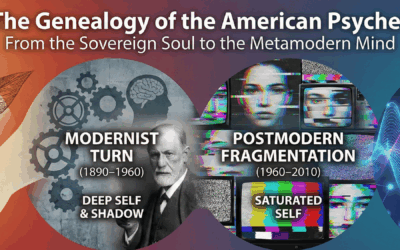
This page used to call Sloterdijk “the pioneering metamodern philosopher.” The label does not hold. Metamodernism in its current cultural sense comes from a 2010 essay by Timotheus Vermeulen and Robin van den Akker describing a sensibility “oscillating between a modern enthusiasm and a postmodern irony.”26 Spheres was finished six years earlier. None of the sources reviewed for this rewrite present Sloterdijk as a metamodernist, and the old claim that metamodern writers such as Hanzi Freinacht and Brent Cooper adopted his spheres could not be verified. Readers drawn to that debate should start with what comes after the postmodern, metamodernism and the future of psychotherapy and the genealogy of the American psyche.
The criticisms are real. In a 1999 lecture at Elmau, published as Rules for the Human Zoo, Sloterdijk described humanism as a project of “taming” human beings through reading the right books.27 His remarks on genetic technology in that lecture drew charges of eugenic rhetoric in a country with the history of Nazi eugenics, and a bitter public dispute with Jürgen Habermas followed, including an open letter from Sloterdijk in Die Zeit accusing Habermas of criticizing him behind his back. Among scholars, Morin finds his account of politics “suffocating,” with little room left to change the shared world,5 and Jean-Pierre Couture argues that he carries forward a reactionary political code inherited from Nietzsche.28 Clinically, Spheres is not psychology; its prenatal chapters are speculative. Its value is diagnostic: it names something symptom checklists miss, which is that people rarely break alone and rarely mend alone either.
If a punctured sphere describes something you are living with, after a loss, a betrayal or a long stretch of feeling exposed everywhere, therapy can be a place to build a small interior again before rebuilding the larger ones. You can read about our existential therapy in Birmingham or contact Taproot Therapy Collective in Hoover with questions about getting started.
References
- Sloterdijk, P. (2011). Bubbles: Spheres volume I: Microspherology (W. Hoban, Trans.). Semiotext(e). (Original work published 1998)
- Collège de France. (2023). Biography and publications: Peter Sloterdijk, The invention of Europe through languages and cultures. https://www.college-de-france.fr/en/chair/peter-sloterdijk-the-invention-of-europe-through-languages-and-cultures-annual-chair/biography
- Sloterdijk, P. (1988). Critique of cynical reason (M. Eldred, Trans.). University of Minnesota Press. (Original work published 1983)
- Sloterdijk, P. (1985). Der Zauberbaum: Die Entstehung der Psychoanalyse im Jahr 1785. Ein epischer Versuch zur Philosophie der Psychologie. Suhrkamp.
- Morin, M.-E. (2009). Cohabitating in the globalised world: Peter Sloterdijk’s global foams and Bruno Latour’s cosmopolitics. Environment and Planning D: Society and Space, 27(1), 58–72. https://doi.org/10.1068/d4908
- Sloterdijk, P. (2014). Globes: Spheres volume II: Macrospherology (W. Hoban, Trans.). Semiotext(e). (Original work published 1999)
- Sloterdijk, P. (2016). Foams: Spheres volume III: Plural spherology (W. Hoban, Trans.). Semiotext(e). (Original work published 2004)
- Sloterdijk, P. (1998). Sphären I: Blasen. Mikrosphärologie. Suhrkamp. Contents page consulted at https://www.suhrkamp.de/buch/peter-sloterdijk-sphaeren-mikrosphaerologie-t-9783518410226
- DeCasper, A. J., & Fifer, W. P. (1980). Of human bonding: Newborns prefer their mothers’ voices. Science, 208(4448), 1174–1176. https://doi.org/10.1126/science.7375928
- Kisilevsky, B. S., Hains, S. M. J., Lee, K., Xie, X., Huang, H., Ye, H. H., Zhang, K., & Wang, Z. (2003). Effects of experience on fetal voice recognition. Psychological Science, 14(3), 220–224. https://doi.org/10.1111/1467-9280.02435
- Coan, J. A., & Sbarra, D. A. (2015). Social baseline theory: The social regulation of risk and effort. Current Opinion in Psychology, 1, 87–91. https://doi.org/10.1016/j.copsyc.2014.12.021
- Coan, J. A., Schaefer, H. S., & Davidson, R. J. (2006). Lending a hand: Social regulation of the neural response to threat. Psychological Science, 17(12), 1032–1039. https://doi.org/10.1111/j.1467-9280.2006.01832.x
- Sloterdijk, P. (2013). You must change your life: On anthropotechnics (W. Hoban, Trans.). Polity. (Original work published 2009)
- Mendieta, E. (2014, July 18). Review of You must change your life, by P. Sloterdijk. Notre Dame Philosophical Reviews. https://ndpr.nd.edu/reviews/you-must-change-your-life/
- Sloterdijk, P. (2011). Co-immunité globale. Multitudes, 45(2), 42–45. https://doi.org/10.3917/mult.045.0042
- Sloterdijk, P. (2010). Rage and time: A psychopolitical investigation (M. Wenning, Trans.). Columbia University Press. (Original work published 2006)
- Sloterdijk, P. (2009). Terror from the air (A. Patton & S. Corcoran, Trans.). Semiotext(e). (Original work published 2002)
- Sloterdijk, P. (2009). Airquakes. Environment and Planning D: Society and Space, 27(1), 41–57. https://doi.org/10.1068/dst1
- Janoff-Bulman, R. (1989). Assumptive worlds and the stress of traumatic events: Applications of the schema construct. Social Cognition, 7(2), 113–136. https://doi.org/10.1521/soco.1989.7.2.113
- Brewin, C. R., Andrews, B., & Valentine, J. D. (2000). Meta-analysis of risk factors for posttraumatic stress disorder in trauma-exposed adults. Journal of Consulting and Clinical Psychology, 68(5), 748–766. https://doi.org/10.1037/0022-006X.68.5.748
- Ozer, E. J., Best, S. R., Lipsey, T. L., & Weiss, D. S. (2003). Predictors of posttraumatic stress disorder and symptoms in adults: A meta-analysis. Psychological Bulletin, 129(1), 52–73. https://doi.org/10.1037/0033-2909.129.1.52
- Holt-Lunstad, J., Smith, T. B., & Layton, J. B. (2010). Social relationships and mortality risk: A meta-analytic review. PLoS Medicine, 7(7), Article e1000316. https://doi.org/10.1371/journal.pmed.1000316
- Flückiger, C., Del Re, A. C., Wampold, B. E., & Horvath, A. O. (2018). The alliance in adult psychotherapy: A meta-analytic synthesis. Psychotherapy, 55(4), 316–340. https://doi.org/10.1037/pst0000172
- Kleinbub, J. R. (2017). State of the art of interpersonal physiology in psychotherapy: A systematic review. Frontiers in Psychology, 8, Article 2053. https://doi.org/10.3389/fpsyg.2017.02053
- Wambacq, J., & van Tuinen, S. (2017). Interiority in Sloterdijk and Deleuze. Palgrave Communications, 3, Article 17072. https://doi.org/10.1057/palcomms.2017.72
- Vermeulen, T., & van den Akker, R. (2010). Notes on metamodernism. Journal of Aesthetics & Culture, 2(1), Article 5677. https://doi.org/10.3402/jac.v2i0.5677
- Sloterdijk, P. (2009). Rules for the human zoo: A response to the Letter on Humanism. Environment and Planning D: Society and Space, 27(1), 12–28. https://doi.org/10.1068/dst3
- Couture, J.-P. (2025). Sloterdijk ou l’éclipse du nietzschéisme français. Appareil, 29. https://doi.org/10.4000/155f0















0 Comments