
Key takeaways
- Metamodernism is an oscillation between irony and sincerity, hope and despair, rather than a stable position, and it follows the cynical deconstruction of postmodernism.
- Peter Sloterdijk describes humans as sphere-building animals who need immunological bubbles of meaning to survive exposure to the void.
- Trauma is the rupture of the protective sphere, and constant digital exposure to global suffering produces a modern form of information trauma.
- Therapy is the co-creation of a new, temporary sphere in which the client repairs immunological defenses and builds shared meaning without returning to naive certainty.
- Games and the Post-Secular Sacred let people practice meaning-making inside a bounded magic circle, taking myth seriously while knowing it is a game.
The Metamodern Oscillation: Faith, Doubt, and the Digital Soul
We are living in a moment of cultural vertigo. The old maps of the 20th century—the rigid certainty of Modernism and the cynical deconstruction of Postmodernism—no longer describe the territory. We have entered the Metamodern era.
Metamodernism is defined not by a stable position, but by an oscillation. It is a constant swinging between irony and sincerity, hope and despair, naiveté and knowingness. It is the feeling of watching a cat video and feeling profound existential dread simultaneously. For the depth psychologist, this cultural shift presents a unique crisis: How do we find meaning when all the “Grand Narratives” have been deconstructed?
This article explores how Transformative Gameplay and the concept of the Post-Secular Sacred offer a path through the noise. By engaging with the work of philosopher Peter Sloterdijk, we can learn to build new “spheres” of meaning in a fragmented world.
Peter Sloterdijk: The Philosopher of Bubbles and Globes
To understand the Metamodern condition, we must turn to the German philosopher Peter Sloterdijk (b. 1947). Sloterdijk argues that humans are “sphere-building animals.” We cannot survive in the raw exposure of nature; we must create “immunological systems”—psychological bubbles that protect us from the void.
In his Spheres trilogy, Sloterdijk traces the history of human containment:
- Microspherology: The intimate bubble of the womb and the mother-child dyad.
- Macrospherology: The creation of “Globes”—nations, religions, and empires that provide a shared roof for millions.
- Plural Spherology (Foams): The modern condition. The great Globes have burst, leaving us living in “foam”—billions of isolated, individual bubbles (apartments, social media feeds) that touch but do not connect.
Key Milestones in the Metamodern Shift
| Era | Dominant Feeling | Psychological Structure |
| Modernism (1890–1945) | Optimism, Faith in Progress | The Ego is the master of the house. We can engineer a perfect world. |
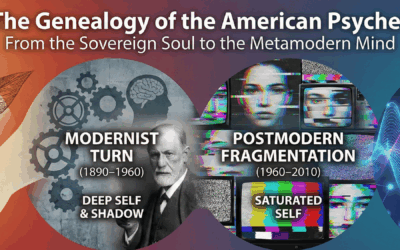
| Postmodernism (1945–2010) | Irony, Skepticism, Deconstruction | The Ego is a construct. Truth is relative. All narratives are power plays. |
| Metamodernism (2010–Present) | Oscillation, “Informed Naiveté” | We know the narrative is fake, but we choose to believe it anyway because we need it to survive. |
Transformative Gameplay: Rehearsing for Reality
If we live in “foam,” how do we connect? Sloterdijk suggests we must become anthropotechnicians—engineers of our own humanity. One of the most potent tools for this is Transformative Gameplay.
In a world where “expertise” has eroded and “truth” is contested, games offer a bounded space where rules still apply. But transformative games go further. They are not just escapism; they are simulations of the sacred.
The Magic Circle as Sacred Space
In game design, the “Magic Circle” is the boundary that separates the game from the real world. Inside the circle, the rules of the game are absolute. This mirrors the sacred space (temenos) of ritual.
By entering a game (whether a video game, a therapeutic role-play, or a ritual), the player enters a space where meaning is restored. For the duration of the play, there is a clear goal, a clear enemy, and a clear path to growth. This allows the Metamodern subject to “practice” meaning-making without the cynicism of the outside world.
The Conceptualization of Trauma: The Bursting of the Sphere
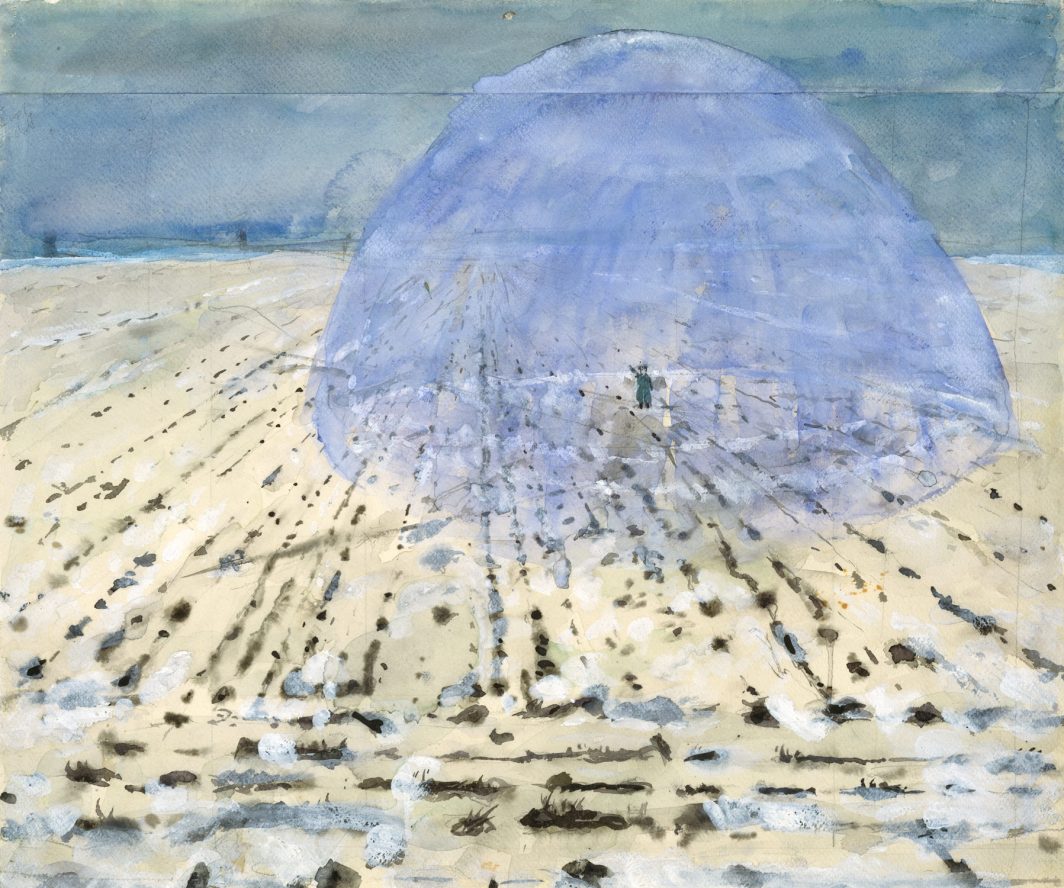
From a Sloterdijkian perspective, trauma is not just a painful event; it is the rupture of the immunological sphere.
The Loss of Protection
Trauma occurs when the “bubble” bursts. The individual is suddenly exposed to the “Outside”—the chaotic, unmediated reality of the universe. This leads to a state of existential exposure.
In the Metamodern age, we suffer from “information trauma.” The digital world punctures our protective spheres constantly, flooding us with global suffering that we have no capacity to process. We are “connected” to everything, but protected from nothing.
Healing through Sphere-Building
Therapy, in this model, is an act of re-insulation. The therapist and client co-create a new, temporary sphere (the therapeutic alliance) where the client can repair their immunological defenses. We cannot return to the naive “Globe” of religious certainty, but we can build “Rooms” of shared meaning.
The Post-Secular Sacred
Metamodernism allows for the return of the spiritual, but with a twist. This is the Post-Secular Sacred. It is a spirituality that has passed through the fire of postmodern critique.
We know that myths are “just stories,” but we also know that we die without them. Therefore, we choose to engage with the archetypes not as literal facts, but as pragmatic necessities. We play the “game” of religion or spirituality with deep seriousness, knowing it is a game, because it is the only game worth playing.
Further Reading & Resources
- Peter Sloterdijk: Bubbles: Spheres Volume I (Semiotext(e), 2011).
- Luke Turner: The Metamodernist Manifesto.
- Jane McGonigal: Reality Is Broken: Why Games Make Us Better and How They Can Change the World (Penguin Press, 2011).
Explore More on Metamodernism & Psychology
- Anticipating the Metamodern: What Comes After Postmodernism?
- Games, Language, and the Unconscious Mind
- The Myth of Science and the Science of Myth
Frequently asked questions
What is metamodernism?
Metamodernism is a cultural condition defined by oscillation rather than a fixed stance. It swings between irony and sincerity, hope and despair, naiveté and knowingness, and it follows modernism’s certainty and postmodernism’s cynical deconstruction. Metamodern people know a narrative is constructed and choose to believe it anyway because they need meaning.
What is Peter Sloterdijk’s Spheres theory?
Peter Sloterdijk’s Spheres trilogy traces human containment in three stages: microspherology, the intimate bubble of mother and child; macrospherology, the great Globes of nations and religions; and plural spherology, or foam, where billions of isolated bubbles touch but do not connect. He calls humans sphere-building animals.
How does Sloterdijk explain trauma?
From a Sloterdijkian perspective, trauma is the rupture of the immunological sphere that protects a person. The bubble bursts and the individual is exposed to the chaotic Outside. In the metamodern age, constant digital flooding of global suffering punctures these spheres and produces information trauma.
What is the Post-Secular Sacred?
The Post-Secular Sacred is a spirituality that has passed through postmodern critique. Its practitioners know myths are stories but also know people struggle without them, so they engage archetypes as pragmatic necessities rather than literal facts, playing the game of religion with full seriousness.
What is the magic circle in games and therapy?
The magic circle is the boundary in game design that separates a game from the real world, with absolute rules inside. It mirrors the temenos, the sacred space of ritual, and gives players a clear goal and path to growth where meaning-making can be practiced without outside cynicism.
Related reading
More in the series: Metamodernism and meme culture
- Is Metamodern Meme Cultural Making us Speak Literally and Symbolically at the Same Time
- Memes: The Language of the Internet
- Metal Gear Solid and the Metamodern: Oscillating Between Grand Narratives and Impossible Fragmentation
- The Kaleidoscope: Digital Dreamtime and the Collision of Parallel Realities
- The Mirror World: Why Nothing Means Anything Anymore
- The Search Bar and the Couch: How the Internet Rewired the Way We Think, Speak, and Make Meaning
- The Algorithmic Mirror: How Google Became the Invisible Architect of What We Know
- Metamodernism and the Future of Psychotherapy: Integrating Modernity, Postmodernity and the Therapeutic Encounter
- Peter Sloterdijk: The Pioneering Metamodern Philosopher
- Metamodernism: Exploring Multiple Perspectives and Conceptualizations
Also on the blog
- Fredric Jameson: The Metamodern for Therapy
- Lionel Corbett: Exploring the Psyche, Spirituality, and the Sacred
- Henry Corbin: Visionary of the Imaginal Realm
- The Eternal Return of the Soul: How Modern Psychotherapy is Rediscovering its Ancient Roots Through Neuroscience
- The Archetypal Psychology of Edward Edinger: Illuminating the Process of Individuation












0 Comments