

Updated November 2026 · By Joel Blackstock, LICSW-S
Joseph Campbell (1904–1987) was an American scholar of comparative mythology. His 1949 book The Hero with a Thousand Faces argued that hero myths around the world share one pattern, the monomyth: departure, initiation and return. Psychologists adopted it because Campbell, borrowing from Freud and Jung, read myth as a picture of inner change. It works well as a lens on crisis and badly as a law.
That last sentence is the claim this piece defends. The monomyth earns a place in therapy because it lets a person read a collapse as the middle of a story rather than the end of one. Its universalism is also its weakness. Folklorists argued that Campbell found one story partly by leaving out the stories that did not fit, anthropologists faulted him for overgeneralizing, and feminist writers objected to his male hero. A clinician who lays a template over a client repeats that error on a small scale. Used well, the hero’s journey is a question put to a particular life, not an answer imposed on it.
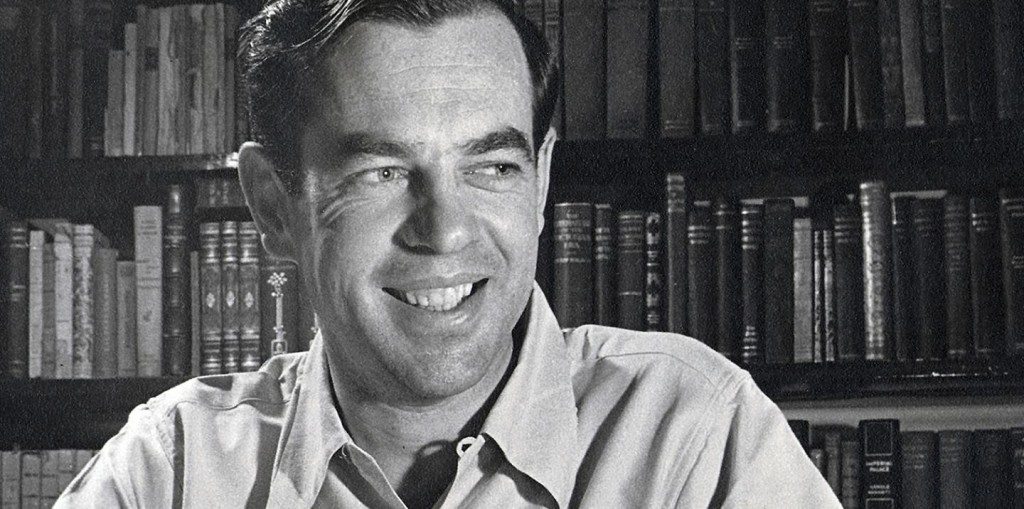
Who Joseph Campbell was
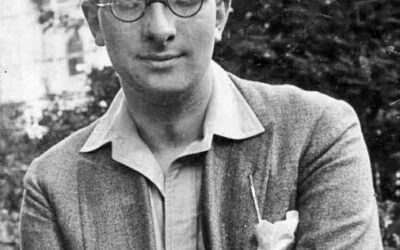
Campbell was born in White Plains, New York, on March 26, 1904, into an Irish Catholic family, and grew up partly in New Rochelle. After a year at Dartmouth he moved to Columbia University, where he took a BA in English literature in 1925 and an MA in medieval literature in 1927. A shipboard conversation with Jiddu Krishnamurti in 1924 started his interest in Indian thought, and a Columbia fellowship sent him to Paris and Munich from 1927, where he studied Old French, Provençal and Sanskrit and, in Paris, discovered the modernists who shaped the rest of his work: James Joyce, Thomas Mann and Pablo Picasso.
He returned to Columbia in 1929 wanting to add Sanskrit and modern art to his medieval studies. When the faculty refused, he left the doctoral program and never took a PhD. He spent the first five years of the Depression, 1929 to 1934, reading in a rented shack in Woodstock, New York, by his own account about nine hours a day, apart from a year in California in the circle of John Steinbeck and the marine biologist Ed Ricketts.
In 1934 he began teaching literature at Sarah Lawrence College, where he stayed 38 years, retiring in 1972. In 1938 he married the dancer and choreographer Jean Erdman, a former student. His first major book was A Skeleton Key to Finnegans Wake (1944), written with Henry Morton Robinson. The Hero with a Thousand Faces appeared in 1949 as the seventeenth title in the Bollingen Series.1 The four volumes of The Masks of God followed between 1959 and 1968, then Myths to Live By (1972) and The Mythic Image (1974).
Fame came late. George Lucas said after the 1977 release of Star Wars that its story had been shaped in part by Campbell’s books, though the two men did not meet until the original trilogy was finished. Campbell’s long conversations with the journalist Bill Moyers, filmed mostly at Lucas’s Skywalker Ranch in the last two summers of his life, aired on PBS in 1988 as The Power of Myth, with a companion book of expanded transcripts.2 Campbell did not see the broadcast. He died of complications of esophageal cancer at his home in Honolulu on October 30, 1987.
What the monomyth claims, and where it came from
Campbell compressed the pattern into one sentence: “A hero ventures forth from the world of common day into a region of supernatural wonder: fabulous forces are there encountered and a decisive victory is won: the hero comes back from this mysterious adventure with the power to bestow boons on his fellow man.”1 He laid out 17 stages in three acts. Departure begins with the call to adventure and, often, its refusal, and ends in the belly of the whale. Initiation runs from the road of trials to the ultimate boon. Return covers the hero’s reluctance to come back, the crossing of the return threshold and becoming master of the two worlds. The stages are not a checklist. Many myths contain only some of them, or tell them in a different order.
Little of this was new. The three-part frame comes from the ethnographer Arnold van Gennep, whose Les rites de passage (1909) found one sequence in rites that move people from one status to another, such as initiation and marriage: separation from the old status, a transitional or liminal phase, and incorporation back into the group.3 Otto Rank in 1909 and Lord Raglan in 1936 had already listed traits that hero biographies share. The word “monomyth” comes from Joyce’s Finnegans Wake, and the reading of the stages draws on Freud’s Oedipus complex and Jung’s archetypes.
Behind the universality claim sits the German anthropologist Adolf Bastian, who distinguished Elementargedanken, the “elementary ideas” he believed every human mind inherits, from Völkergedanken, the “folk ideas” that local geography and history build out of them. Campbell cited the distinction often. The Hero with a Thousand Faces is about elementary ideas; The Masks of God, which leans on anthropology and history, is about folk ideas. That split is where his critics and his best clinical use part ways.
Why psychologists took Campbell seriously
Campbell was never a clinician, but he read myth the way Carl Jung read dreams: as symbolic statements about the psyche, to be interpreted rather than debunked. He used Jung’s vocabulary of anima, animus and ego consciousness, and he edited The Portable Jung (1971). Read that way, the monomyth becomes a map of inner change: the threshold is a fear, the descent a dark stretch of life, the boon whatever a person brings back.
At the end of Creative Mythology (1968), the last volume of The Masks of God, Campbell set out the four functions he thought a living mythology performs.4 The mystical function awakens awe before the mystery of being. The cosmological offers a picture of the universe consistent with the knowledge of its time. The sociological validates a social order. The pedagogical, or psychological, guides an individual through the stages of a life. Therapy inherits the fourth. The third deserves a clinician’s attention too, because a story that carries someone through a crisis can also carry them back into the arrangement that was hurting them.
His best-known phrase, “follow your bliss,” came from the Sanskrit triad sat-chit-ananda: being, consciousness and bliss. The fuller version, from the Moyers conversations, reads less like a slogan: “If you follow your bliss, you put yourself on a kind of track that has been there all the while, waiting for you, and the life that you ought to be living is the one you are living.”2 The phrase is often heard as permission to do whatever feels good. In clinical terms bliss is closer to vitality, the felt sense of being alive in what one is doing, than to pleasure.
Rollo May made a related argument from the consulting room. In The Cry for Myth (1991) he used cases from his practice to argue that myths help people make sense of their lives, above all when they have lost their bearings.5
Psychology has since tested a narrower version of Campbell’s intuition. Research on narrative identity treats a life story as an internalized, evolving account linking the remembered past with an imagined future. People whose stories find redemptive meaning in adversity, and who tell their lives with themes of agency, tend to report better mental health and well-being, although McAdams and McLean note that the causal direction is still unsettled.6 Rogers and colleagues tested the hero’s journey itself in a paper reporting eight studies. In online and community samples, people who saw their lives in terms of seven elements drawn from the monomyth (protagonist, shift, quest, allies, challenge, transformation, legacy) reported more meaning in life. A brief “restorying” exercise that had people retell their lives in those terms increased meaning in life and, in a later study, resilience to life’s challenges.7 The authors call this initial evidence. The participants were online samples and older community adults, not therapy patients, and meaning in life is a different outcome from symptom relief.
What Campbell’s critics got right
The scholars who know folklore best have been the hardest on him. The folklorist Barre Toelken argued that Jung-influenced writers tend to build large theories on single versions of a tale, and that Campbell assembled the monomyth by citing the stories that fit his pattern while leaving out equally valid ones that did not.8 Toelken made the same complaint about Robert Bly’s Iron John (1990), the best-known text of the mythopoetic men’s movement of the 1980s and 1990s, a movement inspired partly by Campbell and other Jungian writers. Alan Dundes, in an invited plenary address to the American Folklore Society in 2004, treated Campbell as a non-expert whom the public, and public television, had accepted as an authority, and argued that no idea promoted by amateurs had done more harm to serious folklore study than the notion of the archetype.9
Anthropologists were no warmer. Raymond Scupin wrote that Campbell’s theories were poorly received in anthropology because of overgeneralization.10 The historian of religion Robert Ellwood judged that The Masks of God impressed general readers more than specialists, and noted concern about Campbell’s oversimplification of history and his tendency to make myth mean whatever he wanted it to mean.11
Three further criticisms matter clinically. The first is gender. The monomyth has been criticized for centering a masculine journey, and in Campbell’s stage names women appear as the goddess the hero meets or as temptress. Maureen Murdock wrote The Heroine’s Journey (1990) as an alternative sequence built from women’s experience.12 The second is context. The comparative method lifts stories out of the rituals, languages and social arrangements that gave them meaning, which is the folklorists’ complaint in another form. The mythopoetic men’s groups also borrowed Native American practices such as drumming and sweat lodges for their retreats.
The third criticism is personal. In a 1989 essay in the New York Review of Books, the critic Brendan Gill accused Campbell of antisemitism and of prejudice against Black people. The charge drew letters on both sides. Ellwood concluded that Gill relied on largely anecdotal scraps of evidence.11 The scholar of religion Robert Segal, working from Campbell’s published writing rather than anecdote, reached a harsher verdict in 1992: nearly all of Campbell’s references to Jews and Judaism were disdainful and hostile and drew on common antisemitic stereotypes, although Segal noted that part of the hostility reflected Campbell’s dislike of Western religions in general.13 None of this cancels the monomyth’s usefulness. It should end the habit of quoting Campbell as an oracle.
Universal pattern, local story
Campbell was not naive about the problem. The first published work to carry his name was a commentary on a Navajo war ceremonial, sung by the medicine man Jeff King and recorded by the artist and ethnologist Maud Oakes, about two young heroes who travel to the home of their father, the Sun, and come back with the power to destroy the monsters troubling their people. He used it for the rest of his career to show both the universal pattern and the particulars of a Navajo telling. His popular legacy kept the elementary ideas and mostly dropped the folk ones.
Two corrections from anthropology are worth keeping. The first is that van Gennep’s passages were communal. A group separated the initiate, held them through the liminal period and received them back with a new status. Victor Turner, writing about Ndembu ritual in The Forest of Symbols (1967), described people in that middle phase as “betwixt and between”: no longer what they were and not yet what they would become.3,14 (Our piece on the roots of initiation rites traces that tradition.) Campbell’s hero mostly travels alone, and modern adults usually do too, through divorce, diagnosis, migration or bereavement, with no elders and no ceremony at the far end.
The second correction is that the shape of the story is itself cultural. In The Redemptive Self, subtitled Stories Americans Live By, Dan McAdams traced the story of deliverance from suffering through Puritan conversion narratives, rags-to-riches tales and the language of recovery, and treated it as a cultural script as much as a private one. He linked it to well-being, but warned that some versions carry a naive expectation that suffering will always be overcome.15 It is a powerful story. It is not everyone’s.
This matters clinically. A meta-analysis of 78 studies with 13,998 participants, 95% of them not European American, found that psychological interventions adapted to clients’ cultures outperformed unadapted versions of the same interventions on psychopathology outcomes in the studies that made that direct comparison, with a medium effect (g = 0.52).16 A story can also be told before it is lived. In one study, undergraduates completed the same measures two months apart; among the 122 who reported a traumatic event in between, self-reported posttraumatic growth was largely unrelated to measured change in the same areas, and perceived growth went along with more distress, while actual growth went along with less.17 It is a single student sample, but it is a caution. A hero’s-journey frame that pushes someone to report a boon too early can produce exactly that: growth on the questionnaire, missing from the life.
What this looks like in therapy
In practice the monomyth works best as a question, not a diagnosis. Someone arrives after a divorce, a layoff or a panic attack in a grocery store, and much of their distress is a verdict: this proves I am failing. Asking where they might be in a longer story, without supplying the answer, can loosen that verdict. Some people find the hero frame clarifying; others find it foreign, which is useful information too. Some lives read better as a trickster story, an exile, or a long stretch of endurance with no boon at the end, and a therapist who insists on the hero has stopped listening.
Campbell’s own language helps at a few specific points. He wrote of the hero who refuses the call: “Walled in boredom, hard work, or ‘culture,’ the subject loses the power of significant affirmative action and becomes a victim to be saved.”1 That is a familiar clinical picture: a life kept safe at the cost of feeling alive. Refusal in this sense is rarely laziness. It usually protects something, and the work is to find out what before pushing past it. The belly of the whale, where the hero is swallowed and appears to have died, can help someone hold a depressive or grieving stretch as a passage rather than a permanent condition, as long as the image is not used to romanticize suffering or put off treatment. And the return is where most of the work happens. Campbell noticed that heroes often refuse to come back; in therapy, what is understood in session still has to be carried into a marriage, job or family that has not changed. Our post on the hero’s journey in psychotherapy works through that mapping stage by stage.
There is also a failure mode. Karen Horney described how a person can build an idealized self, the person they feel they should be, and then live inside a “search for glory” driven by rigid inner shoulds, swinging between an imagined perfection and self-hatred.18 A heroic self-story can feed that pattern. When the hero’s journey becomes one more standard to fail, the clinical task shifts from finding the quest to loosening the demand for one.
The anthropological correction points back to the relationship. A therapist’s job during a passage is closer to van Gennep’s elders than to a coach: keep the in-between period safe enough to survive, pace it, and help the person find the people who will receive them on the other side. In Jungian work and in existential therapy, this is usually where Campbell earns his keep, as a way of taking a crisis seriously without treating it as the end of the story.
If you are in the middle of a passage like this and want help working out which story you are actually living, Taproot Therapy Collective in Hoover offers Jungian depth therapy for adults across the Birmingham area. You can contact us when you are ready to talk.
References
- Campbell, J. (1949). The hero with a thousand faces. Pantheon Books.
- Campbell, J., & Moyers, B. (1988). The power of myth (B. S. Flowers, Ed.). Doubleday.
- van Gennep, A. (1960). The rites of passage. University of Chicago Press. (Original work published 1909)
- Campbell, J. (1968). The masks of God: Creative mythology. Viking Press.
- May, R. (1991). The cry for myth. W. W. Norton.
- McAdams, D. P., & McLean, K. C. (2013). Narrative identity. Current Directions in Psychological Science, 22(3), 233–238. https://doi.org/10.1177/0963721413475622
- Rogers, B. A., Chicas, H., Kelly, J. M., Kubin, E., Christian, M. S., Kachanoff, F. J., Berger, J., Puryear, C., McAdams, D. P., & Gray, K. (2023). Seeing your life story as a Hero’s Journey increases meaning in life. Journal of Personality and Social Psychology, 125(4), 752–778. https://doi.org/10.1037/pspa0000341
- Toelken, B. (1996). The dynamics of folklore (Rev. ed.). Utah State University Press.
- Dundes, A. (2005). Folkloristics in the twenty-first century (AFS invited presidential plenary address, 2004). Journal of American Folklore, 118(470), 385–408. https://doi.org/10.1353/jaf.2005.0044
- Scupin, R. (2000). Religion and culture: An anthropological focus. Prentice Hall.
- Ellwood, R. (1999). The politics of myth: A study of C. G. Jung, Mircea Eliade, and Joseph Campbell. State University of New York Press.
- Murdock, M. (1990). The heroine’s journey. Shambhala.
- Segal, R. A. (1992). Joseph Campbell on Jews and Judaism. Religion, 22(2), 151–170. https://doi.org/10.1016/0048-721X(92)90056-A
- Turner, V. (1967). The forest of symbols: Aspects of Ndembu ritual. Cornell University Press.
- McAdams, D. P. (2006). The redemptive self: Stories Americans live by. Oxford University Press. https://doi.org/10.1093/acprof:oso/9780195176933.001.0001
- Hall, G. C. N., Ibaraki, A. Y., Huang, E. R., Marti, C. N., & Stice, E. (2016). A meta-analysis of cultural adaptations of psychological interventions. Behavior Therapy, 47(6), 993–1014. https://doi.org/10.1016/j.beth.2016.09.005
- Frazier, P., Tennen, H., Gavian, M., Park, C., Tomich, P., & Tashiro, T. (2009). Does self-reported posttraumatic growth reflect genuine positive change? Psychological Science, 20(7), 912–919. https://doi.org/10.1111/j.1467-9280.2009.02381.x
- Horney, K. (1950). Neurosis and human growth: The struggle toward self-realization. W. W. Norton.












0 Comments