
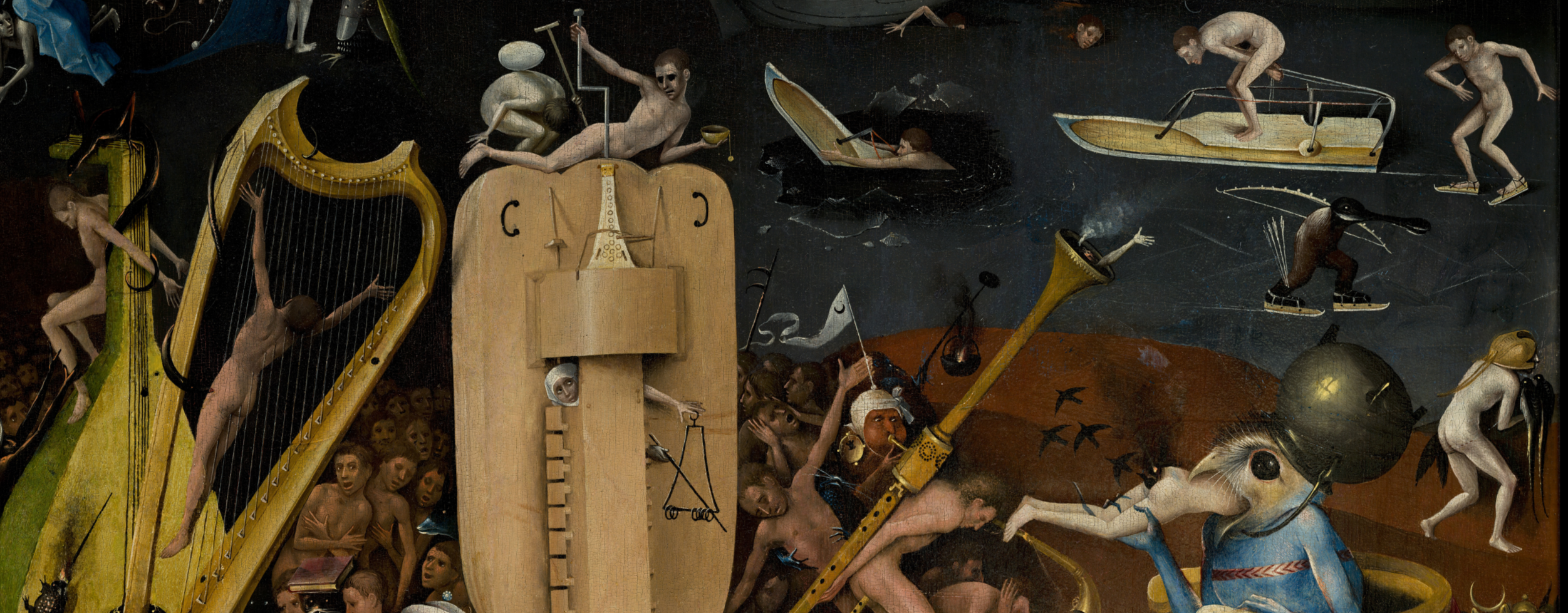
The Psychology of Character: Understanding Psychology and Its Role in Our Lives
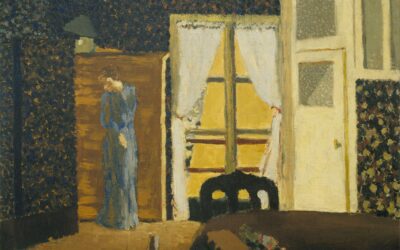
All of the models of psychotherapy are metaphors for consciousness, and consciousness is a tricky thing to understand. Egos, archetypes, complexes, schemas, attachment styles, parts: these are lenses for deconstructing thinking. Some are more helpful for certain people or certain problems, but none of them are fundamentally true. They are impressionistic paintings of a phenomenon that no one can see or understand perfectly.
This is not a weakness of psychology. It is the honest starting point for using it. If psychology cannot hand us the truth about the mind the way physics hands us the mass of an electron, then its role in our lives is something different than we usually assume. Psychology is not an answer machine. It is a discipline of looking. It exists to help us see the things we already know but will not allow ourselves to know, and to help us survive the seeing.
Understood that way, the psychology of character is not a taxonomy of personality types or a manual for self-improvement. It is an account of how a self gets built, what gets left out of the building, and what happens when the leftover material comes back asking to be let in.
Where Character Comes From
We are born with no ability to make rules. We have no way to know who we are separate from the tribes and systems we inhabit for the first part of our lives. We must take the rules and constrictions that our parents place on our identity even when we question them, because a child has no other material to build with.
This means that personality development itself is trauma. Not trauma in the sense of catastrophe, and not necessarily neglect or abuse at the hands of caregivers. Trauma in the older sense of the word: a wound, a cut, a shaping force. We come into life being given rules, constraints, and injuries by our families, and these are inevitable. Our parents teach us what a responsible adult does, or they do not. They tell us what is good and what is bad, or they do not. Many people are impacted more by the rules they were not given than by the rules they were. These are the patients who arrive in therapy ashamed that they do not know how to budget, how to hold self-respect, how to be independent. I tell all of them the same thing: we only have the tools that our families give to us or that we find.
Character, then, begins as inheritance. The project of later life, and it is both a privilege and a project, is sorting through those inherited rules and deciding which ones are actually us and which ones must be replaced. The people who ignore this process never get to become their oak tree. They never get the results of the experiment that the universe is running with their life. Growth begins the moment we find a rule that is not who we are. Then comes the harder task: designing our own rules, choosing the restrictions we will place on our own lives. These choices about identity are absolutely restrictions. Each choice to become something is a choice not to become a hundred other things. Maturity is not the escape from limitation. It is the authorship of it.
The Unknown Known
There is a category of knowledge that behaves strangely. It is information we possess but refuse to possess. We know it the way we know a stone in our shoe, by the constant small adjustments we make to avoid stepping on it. Carl Jung, gave this category a name that has outlived most of the century’s other psychological vocabulary. He called it the shadow.
The shadow is our unknown known. It is not the unconscious in the sense of material that never surfaced. It is material that surfaced and was banished, because it broke the rules of the self we were building. Every identity is a set of rules, and everything in us that violates those rules gets pushed into the dark.
There are multiple parts of the shadow. We have a self shadow that contains all of the things we know but do not want to know about ourselves. We also have a world shadow that contains all of the things we know about the world but cannot accept. The self shadow is made of the parts of us that break the rules of our self archetype: the anger of the peacemaker, the fear of the strong one, the ambition of the humble one. The world shadow is vastly more tricky to confront and integrate. It contains everything we cannot yet let ourselves know about the world we live in, and its very largest chambers hold the realities of existence that we feel too weak to face. Death lives there. So does injustice that will not be corrected, love that will not return, and time that will not slow down.
Families pass shadows down. Sometimes parents hand a child a shadow legacy that the child feels duty-bound to carry, a package of denial and rationalization that was never theirs to begin with. These patients often display remarkable insight into their own shadow in therapy but stop short when the work reaches the lies that came from inside their families. Even when we grow comfortable confronting the lies we tell ourselves, we often cannot bring ourselves to confront the lies that were told to us. It feels like betrayal. It is actually inheritance refusal, and it is one of the most loving things a person can do for the generation that comes after them.
If you want to find your own shadow without finding a Jungian analyst, my advice is simple. Pay attention to the criticism that makes you the most defensive. Your insecurities are insecurities precisely because you do not want to recognize that they are true. They are already the words of your inner critic. When one of them lands, you have two honest options. Accept that the criticism is true, or accept that it is not. If it is true, decide whether you want to change it. You have the ability to accept or to change the parts of yourself you do not like, and either move, taken sincerely, will stop the world’s ability to hurt you with that particular stone. What keeps the wound open is the third option, the one most of us choose by default, which is to know and refuse to know at the same time.
Growth Is Trauma
Growth is trauma. In order to become a bigger self we must learn to eat the shadow, and the self that we are right now is terrified of it. I tell patients wrestling with their shadow during trauma processing: you do not think you are strong enough to live in the world as it is, but I have faith that you can.
Accepting the shadow means letting go of the self we are right now in order to construct a new self that can hold the banished knowledge. We have to let part of ourselves die so the rest can live, the way a gardener kills half the seedlings so the others have room. Because we are killing part of the ego as it currently exists, all of us have involuntary defenses against this process. That is not pathology. That is the ego doing its job. Eating the shadow feels like death because, in a real structural sense, it is one. Giving up some of who we are right now feels like dying. When we grow we are letting part of ourselves die so that we can become a new thing, and the ego fights this process kicking and screaming, just as it did when we were children, and at every other major threshold of development.
This is why growth cannot be forced by information alone. People do not remain stuck because no one has explained their problem to them. They remain stuck because the solution requires a small death, and no organism volunteers for death without first exhausting every alternative.
Grief and the World Shadow
The clearest map we have of those alternatives came from a Swiss-American psychiatrist who spent the 1960s sitting at the bedsides of dying patients in Chicago hospitals, listening to people do the one piece of psychological work that cannot be postponed. Elisabeth Kübler-Ross described the stages that terminally ill patients moved through: denial, anger, bargaining, depression, acceptance. The model has been criticized and revised, and the stages do not arrive in order or arrive at all for everyone. But read as a description of defense rather than a schedule of feeling, it holds.
The stages of grief are ways that we fight integrating the world’s shadow. They are strategies for putting off knowing or accepting things that we already know are true. Anger, denial, and bargaining are games we play in the unconscious to try to change the world we live in into a different one. We cannot change death. We cannot blame it, rage at it, deny it, or bargain it away. Acceptance is not a feeling that descends on us as a reward for suffering. Acceptance is what happens after we have allowed the small container we keep the world in to expand, and admitted that our rules for how we want the world to work are bunk. The world works the way it works, and the only power we have is to look at that fact or away from it.
Every loss is a small rehearsal of this. The end of a relationship, a diagnosis, a layoff, a child leaving home: each one presents a piece of the world shadow and asks whether we will enlarge the container or spend our energy defending its old dimensions. Character is largely the record of how we have answered.
The Shadow in Dreams
The shadow does not wait politely for therapy hours. In dreams it shows up as threatening images and figures, and our reactions to those figures are usually our coping strategies from waking life, replayed with the sound turned up. Do you run from the memory of your past failures? Do you yell at the abusive teacher from high school to disappear? Do you freeze, paralyzed, when reminded of your past indiscretions?
The imagery is often startlingly architectural. Many patients who have disowned their aggressive parts, or were taught to disown them, dream of finding rooms full of fierce beasts in their basement or attic. The house is the self, and the beasts have been fed something down there all along. Patients with imposter syndrome dream of breaking into places they are not allowed to be. And patients on the edge of genuine self-discovery begin to dream of building a home or planting a garden. The psyche announces integration the same way it announced exile, in symbols, because symbols are the only language it has ever spoken.
Death, Language, and the Birth of Story
That symbolic language is older than we are. Social species of animals, primates especially, are often the most vocal when a member of their group dies. There are long and complex vocalizations after the death of a social unit member that serve no practical purpose. These are symbolic gestures, arguably religious ones: acknowledgements of a bond that has been severed. They point to an animal’s emotional state, and they are the beginning of an awareness of death and grief. Because social animals are vocal for the longest periods around death, it is likely that language itself evolved from our ancestors’ budding awareness of their own mortality. We may have learned to speak because we needed to say goodbye.
If that is true, then story is not decoration on top of human cognition. It is the original function. It is not emotion that makes a story a story, though it certainly helps. A story becomes a story when a series of events becomes a symbol. Symbolic language that points to a larger meaning turns a story into relevant information instead of merely useful information. Mere data is converted into narrative when it is given the ability to reflect the human experience of the audience. Put simply, we make stories by being able to see ourselves, or some part of our own experience, in an event. This is the moment history becomes a lesson, my ancestors become my identity, or my beliefs become my purpose.
Psychotherapy is, at bottom, this operation performed on a single life. A patient arrives with data: things that happened, in an order, with dates. The work is done when the data becomes symbol, when the events of a life point to something and the person can finally see themselves in their own story.
Emotion, Empathy, and the Failure Called Narcissism
We do not choose to feel emotion. Emotion is the result of the deep beliefs we hold about ourselves and the world being used to process the experiences happening to us. We understand the narrative events of our life history logically, but emotion is what allows us to figure out what they mean. Emotion is the meaning-detector, which is why arguing someone out of a feeling never works. The feeling is downstream of a belief, and until the belief is found and examined, the feeling will keep reporting for duty.
Empathy is a mirrored emotion. It is an emotion we begin to feel for someone else’s story instead of our own. Empathy is part of the connective tissue that makes each of us part of a family, a society, and a shared humanity. Without empathy we are isolated and alone. Without the most complicated stories we can tell, one man plays.
Narcissism is what the personality looks like when this mirroring fails and collapses inward. The narcissist sees their own reflection in people who are the same as they are, and uses those people as mirrors in which to worship the self as it currently exists. The actualized person does the opposite. They find parts of their soul in people who are different from them, using others like divining pools through which to discover the self they want to become. People who only like other people they can see themselves in carry some element of narcissism in their personality. True empathy is interested in people who are different from us, not people who are the same.
The failure shows up in unexpected places, and one of the most diagnostic is humor. Narcissists are not funny. Ask a narcissist to tell you a joke and you will often get a crude observation about power at the expense of an enemy or an out-group. If humor exists in the narcissist’s arsenal at all, it is a blunt instrument used to impress or belittle. Narcissists have no use for subtlety, and they are bored by metaphor. This is not a coincidence. Humor and metaphor both require holding two meanings at once and tolerating the tension between them, and that is precisely the muscle that shadow work builds and narcissism refuses to build. A personality organized around protecting a single flattering image cannot afford double meanings. The joke, like the shadow, always contains the second thing.
What Therapy Is Actually For
All of this returns us to the question of what psychology is for, and what the person sitting across from a therapist should expect from the encounter.
I believe that every patient is the best expert in how to be the best them. My job is only to help each patient start moving again toward their best self. I am helping them get the car started. I cannot tell them who they are supposed to be, because I do not know. My barometer for success is whether a patient is growing, and I will never tell patients what they should be growing into. If someone told me who to be, I would not believe them. If someone ever tells you who you are supposed to be, you should not believe them either.
This is the role of psychology in a life, properly understood. Not a set of answers about who you are, but a set of practices for looking: at the rules you inherited and never chose, at the criticism that makes you defensive, at the beasts in the basement, at the world as it actually works rather than as your container requires it to work. The models are impressionistic paintings, and that is fine, because the point was never the painting. The point is the thing the painting keeps gesturing toward, the life that is already yours and already known to you, waiting for you to allow yourself to know it.
The world works the way it works. The only power we have is to look at that fact or away from it. Psychology, at its best, is the discipline of looking.













0 Comments