
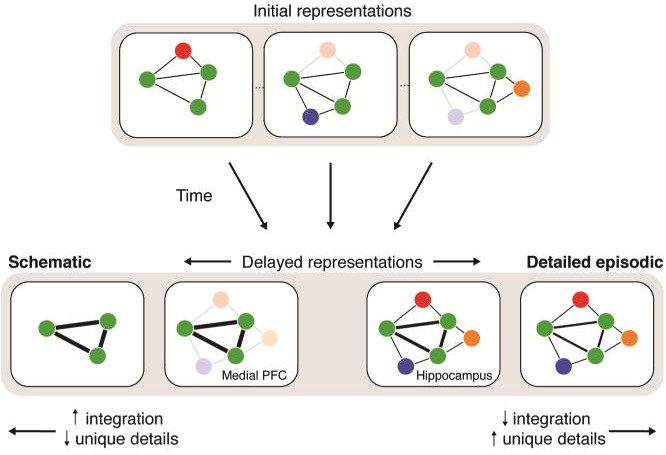
For over a century, neuroscientists believed that once memories consolidated into long-term storage, they became essentially permanent. Sure, you might forget details over time, and new learning could interfere with old memories, but the original memory trace itself was thought to be stable and unchangeable. This fundamental assumption dictated how we approached everything from education to psychotherapy. If traumatic memories were permanent, the best a therapist could offer was coping strategies or the creation of competing positive associations.
Then, around the turn of the millennium, a series of breakthrough experiments shattered this long-held belief. Memories, it turned out, could be fundamentally rewritten. Not merely covered over or competed with, but actively changed at their core. This discovery, centered on the process called memory reconsolidation, now provides the elegant neurobiological explanation for why many psychotherapy techniques work and points to powerful new directions for treating conditions like PTSD, anxiety disorders, and addiction.
The Accidental Discovery: A Fragile Window in the Past
The foundational story of reconsolidation begins in the late 1960s with rats in a laboratory. In 1968, researchers Donald Lewis, John Misanin, and colleagues were studying fear conditioning: pairing a tone with a mild foot shock until the rats froze in fear at the sound of the tone alone. The standard memory theory of the time dictated that once this fear memory was consolidated, it was fixed.
Lewis and his team introduced a curious twist: after the fear memory had been fully consolidated, they played the tone to remind the rats of the fear. Immediately after this reminder, they administered electroconvulsive shock, a procedure known to disrupt new memory formation. Classical theory held that this should have no effect, as the memory was already long-term. Instead, the rats acted as if they had never learned to fear the tone at all.
This was bizarre. The shock only erased the memory when given right after the memory was retrieved. It was as if retrieving the memory had temporarily returned it to a fragile, changeable state. This finding, which seemed to contradict everything known about memory, was so radical it was largely ignored for decades.
The Resurrection: Introducing Reconsolidation
Everything changed in 2000 when Karim Nader, a postdoc in Joseph LeDoux’s lab at New York University, decided to revisit the phenomenon. Nader utilized better tools: instead of crude electroshock, he injected specific protein synthesis inhibitors directly into the amygdala, the brain’s fear center. These drugs prevent the synthesis of new proteins, a process essential for stabilizing new memories.
Nader’s elegant experiment replicated the 1968 result with molecular precision. He trained rats to fear a tone, reactivated the memory with the tone, and immediately injected the inhibitor. The fear memory was effectively erased. If he omitted the tone or waited too long after playing it, the memory remained intact.
The implication was profound: Consolidated memories are not permanent. When retrieved, they enter a temporary state of plasticity (or “lability”) requiring new protein synthesis to stabilize them again. If this restabilizing process is blocked or altered, the memory can be modified or even nullified. Nader named this process reconsolidation.
The Mechanism: How Emotional Memories are Rewritten
At the molecular level, memory formation (consolidation) and memory retrieval (reconsolidation) share similar machinery. When a memory trace (or engram) is activated, the involved synapses become active, triggering a cascade of cellular events that require new proteins to maintain the memory’s strength. The critical insight is the temporary vulnerability during reconsolidation:
When a memory is recalled, it is literally deconstructed—made labile—before being rebuilt. During this rebuilding phase, which typically lasts between one and six hours, the memory is open to modification. If new information is introduced that contradicts the memory’s core emotional expectation, the memory can reconsolidate with the updated, non-fearful information incorporated.
However, not every recall leads to this vulnerable state. Susan Sara, a pioneer in the field, helped define the conditions that trigger reconsolidation: the reminder must be strong enough to fully activate the memory, and there must be a “prediction error.” If everything matches the memory’s expectation, it simply restabilizes unchanged. If the memory predicts danger but experiences safety, it destabilizes for an update.
The Clinical Revolution: Transforming Psychotherapy
While neuroscientists were mapping the brain, psychologist Bruce Ecker was observing the same phenomenon in his practice. He and his colleague Laurel Hulley noticed that the most enduring therapeutic breakthroughs involved a sudden, complete, and lasting change—not a gradual improvement. This transformation occurred when a client accessed a core emotional memory and simultaneously had a visceral, felt experience that contradicted the memory’s expectation.
Ecker and his colleagues developed The Therapeutic Reconsolidation Process (TRP), a framework for achieving this change systematically, which maps perfectly onto the neuroscience:
- Activate: Access the target memory and its emotional truth.
- Mismatched Experience: Introduce a clear, visceral experience that profoundly contradicts the memory’s expectation (the prediction error).
- Consolidate: Repeat this juxtaposition to ensure the new learning is stabilized in the memory trace.
Reconsolidation Explains Lasting Change in All Modalities
Reconsolidation provides a unifying framework for why many classic and modern therapies are effective:
- Systematic Desensitization (developed by Joseph Wolpe): The fear memory is activated (imagining the feared situation) then immediately paired with a new, contradictory experience (deep relaxation). The memory reconsolidates in association with the calm state.
- Cognitive Behavioral Therapy (CBT) (Aaron Beck): The patient activates the emotional schema (automatic thought) and then finds evidence that directly contradicts it (prediction error), updating the underlying belief in the reconsolidation window.
- Somatic and Experiential Therapies (Peter Levine’s Somatic Experiencing, Pat Ogden’s Sensorimotor Psychotherapy): These methods use the body’s wisdom to introduce prediction error. The memory expects a familiar somatic response (e.g., bracing, freezing), but the intervention guides the nervous system toward a different, more resolved, or safer somatic state, changing the emotional memory.
Modern Experiments: Fear, PTSD, and Addiction
The clinical relevance of reconsolidation has been proven through dramatic human studies.
Erasing Fear with Propranolol
The most compelling demonstration came from Merel Kindt’s lab in Amsterdam. Kindt used a Pavlovian fear conditioning paradigm with human volunteers (pairing a spider picture with a shock). The next day, she reactivated the fear memory and immediately gave some participants propranolol, a beta-blocker that interferes with the reconsolidation process by blocking the noradrenaline surge that helps stabilize the emotional memory.
The result was profound: The propranolol group showed a dramatic and lasting reduction in the fear response, even months later. Crucially, participants still remembered the spider was paired with a shock—the declarative memory was intact, but the emotional distress was gone. This demonstrated that the emotional core of a memory can be safely decoupled and modified without erasing the factual memory itself.
Targeting Trauma and Addiction
Leading clinical researchers have adapted these findings for high-stakes clinical issues:
- PTSD: Alain Brunet in Montreal developed a structured protocol combining propranolol with memory reactivation for PTSD. Patients write and read a trauma narrative aloud after taking the medication, which progressively reduces the memory’s emotional intensity. Similarly, Richard Gray’s Reconsolidation of Traumatic Memories (RTM) protocol uses specific visualizations to maximize prediction error during retrieval, showing rapid reduction in symptoms.
- Addiction: Drug-associated memories are a major driver of craving and relapse. Barry Everitt’s group at Cambridge showed that drug memories also undergo reconsolidation. Studies by Ravi Das and others have demonstrated that administering propranolol after retrieving alcohol or nicotine-associated memories can reduce craving and attentional bias toward those cues.
The Past Is Not Permanent
Memory reconsolidation is the most fundamental discovery about how the brain manages and modifies past emotional experience. It provides the mechanism for why transformative therapeutic change is possible—and why that change, when achieved, is so robust and lasting.
This discovery shifts the paradigm of therapy from mere coping and management to targeted unlearning and updating. While we cannot change the facts of what happened, the neuroscience of reconsolidation confirms that we can change how those past experiences live in our nervous systems. It reveals that memory is not a fixed recording, but an active, reconstructible process, offering a powerful scientific foundation for hope and healing.
Memory reconsolidation represents a fundamental discovery about how brains work and how people can change. It explains why some therapeutic interventions produce lasting change while others don’t. It suggests new approaches to treating not just PTSD but potentially any condition driven by emotional learning. Most fundamentally, it reveals that the past, as it lives in our brains, is not fixed but continually reconstructed.
The discovery doesn’t mean that change is easy or that all suffering can be simply erased. Many factors affect whether and how memories reconsolidate. Individual differences are substantial. Some memories seem particularly resistant to modification. But the basic finding that consolidated memories can be updated rather than just managed or competed with opens new possibilities for healing.
As research continues, we’re likely to discover additional mechanisms and develop more sophisticated interventions. The crude approaches of today, giving propranolol after memory retrieval or creating mismatch experiences in therapy, might seem primitive compared to future techniques. But the fundamental insight will remain that memory is not a recording but a reconstruction, and that each reconstruction is an opportunity for change.
The philosophers always suspected it, the poets knew it intuitively, and now the scientists have proven it. The past isn’t dead. It isn’t even past. It lives in our neurons, reconstructing itself each time we remember. And in that reconstruction lies the possibility of freedom from what has been and transformation into what might be.















0 Comments