

The Scientist Who Proposed That Consciousness Is the Brain’s Electromagnetic Field
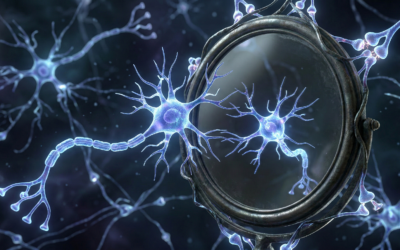
When billions of neurons fire in your brain, they generate not only electrical signals traveling along neural pathways but also electromagnetic waves radiating outward into the surrounding space. What if this electromagnetic field, rather than being mere byproduct, is actually the physical substrate of consciousness itself? This is the provocative proposal of Johnjoe McFadden, Professor of Molecular Genetics and Director of the Quantum Biology Doctoral Training Centre at the University of Surrey.
McFadden’s Conscious Electromagnetic Information (CEMI) field theory offers a unique solution to one of the deepest puzzles in consciousness studies: the binding problem. How do separate neural processes, occurring in different parts of the brain, come together into the unified experience we call consciousness? McFadden argues that only a field, rather than the neurons themselves, can truly integrate information in space rather than merely correlating it over time.
The Problem of Integration
Consider what happens when you look at a red apple. Different neurons process color, shape, location, and motion. These neurons are physically separate, connected only by synapses that pass information sequentially through time. Yet your experience is not a sequence of color, then shape, then location. It is a unified whole: a red apple, grasped in a single moment of awareness.
Most theories of consciousness treat this binding as occurring through temporal coordination. Neurons that fire together create correlated outputs, and this temporal binding is taken to be sufficient for unified experience. But McFadden points out a crucial problem: temporal correlation is not the same as physical integration. When two computers are networked and share information, their outputs are correlated, but the information remains in separate physical substrates. There is no single location where the information is physically unified.
McFadden argues that consciousness, as unified experience, requires genuine physical integration. Information must exist in a single substrate, not merely be correlated across separate substrates. And the only physical entity capable of integrating information in space, rather than time, is a field.
The CEMI Field Theory
The CEMI field theory proposes that the brain’s electromagnetic field is the physical substrate of consciousness. When neurons fire, they generate electromagnetic disturbances that propagate outward. These individual contributions superimpose to create a complex, dynamic electromagnetic field that encompasses the entire brain.
Unlike the neurons themselves, which are spatially separate, the electromagnetic field is a single physical entity. Information from different neural sources is genuinely integrated within the field, not merely correlated across separate locations. The binding problem is solved because there is a real physical substrate where binding occurs.
McFadden draws an analogy to a television screen. The image you see is not located in any single pixel but emerges from the integration of all pixels within the electromagnetic field of light radiating from the screen. Similarly, your conscious experience is not located in any single neuron but emerges from the integration of neural contributions within the brain’s electromagnetic field.
Synchronous Firing and Consciousness
A key piece of evidence for the CEMI field theory is the well-established correlation between synchronous neural firing and consciousness. Experiments by Wolf Singer and others have shown that when neurons fire synchronously, subjects report conscious awareness, whereas asynchronous firing of the same neurons does not produce consciousness.
McFadden explains this through the physics of electromagnetic wave superposition. When neurons fire asynchronously, their electromagnetic contributions are out of phase. Peaks cancel troughs, resulting in destructive interference and a weak net field. But when neurons fire synchronously, their electromagnetic waves are in phase. Peaks reinforce peaks, producing constructive interference and a strong, coherent field.
The CEMI field theory thus predicts that consciousness correlates with synchronous firing because synchronous firing produces the strong, integrated electromagnetic field that constitutes consciousness. Asynchronous firing, though it may process information through neural pathways, does not produce the field integration required for conscious experience.
Consciousness Affects the Brain
Unlike some field theories that treat the electromagnetic field as merely epiphenomenal, McFadden insists that the CEMI field has causal power. The electromagnetic field influences neural firing through electromagnetic induction, affecting voltage-gated ion channels in neuronal membranes. This creates a feedback loop: neurons generate the field, and the field influences which neurons fire next.
This feedback loop is crucial for explaining how consciousness can drive behavior. If the electromagnetic field were merely a byproduct with no causal power, consciousness would be a ghost, observing but never influencing. But if the field feeds back to neurons, then conscious thoughts encoded in the field can drive voluntary action.
McFadden proposes that the brain has two streams of processing. Most actions are initiated by neurons that are effectively insulated from electromagnetic field influences, operating through standard synaptic transmission. These are unconscious, automatic processes. But voluntary actions are driven by neurons that are sensitive to the electromagnetic field, allowing field-encoded conscious thoughts to influence behavior.
Seven Clues to Consciousness
McFadden has identified seven features of consciousness that the CEMI field theory explains:
First, consciousness impacts the world. We are not zombies; our conscious experiences influence what we do. The CEMI field theory explains this through electromagnetic feedback to neurons.
Second, consciousness is a property of living brains but not other structures. The brain’s specific architecture generates the coherent electromagnetic field required for consciousness. Random collections of neurons, or neurons in a dish, do not produce the organized field that constitutes experience.
Third, brain activity can be conscious or unconscious. In the CEMI theory, unconscious processing occurs through neural pathways insulated from field effects, while conscious processing occurs through field-sensitive neurons.
Fourth, the conscious mind appears to be serial. We can only consciously think one thought at a time, even though unconscious processes run in parallel. This is because there is only one electromagnetic field, which can encode only one integrated pattern at a time.
Fifth, learning requires consciousness but recall often does not. In the CEMI theory, the integration provided by the field is necessary for binding new information into coherent memories, but once encoded, memories can be retrieved through unconscious neural pathways.
Sixth, conscious information is bound into unified wholes. The electromagnetic field provides the physical substrate for this binding.
Seventh, consciousness correlates with synchronous firing. The CEMI theory explains this through constructive interference in the electromagnetic field.
Free Will and the Electromagnetic Will
McFadden has extended his theory to address free will. In the CEMI theory, what we call free will is the output of the brain’s electromagnetic field feeding back to drive voluntary action. This is not “free” in the sense of being uncaused; the field’s state is determined by prior neural activity. But it is free in the sense that matters: our conscious thoughts, as encoded in the field, genuinely drive our actions.
McFadden distinguishes this electromagnetic will from the deterministic neural processes that drive involuntary actions. When you consciously decide to move your arm, that decision is encoded in the electromagnetic field and fed back to motor neurons. The experience of willing the action corresponds to the real causal process by which the field drives behavior.
This account avoids both the implausibility of libertarian free will, which requires some acausal element, and the discomfort of hard determinism, which seems to deny that conscious choices matter. The electromagnetic will is fully causal yet genuinely conscious and genuinely efficacious.
Implications for Artificial Intelligence
The CEMI field theory has implications for the possibility of artificial consciousness. If consciousness requires the physical integration provided by an electromagnetic field, then conventional computers, which process information through discrete, spatially separate components, cannot be conscious. The information in a computer is temporally correlated but never spatially integrated.
However, this does not rule out artificial consciousness entirely. A machine designed to process information through electromagnetic field dynamics could, in principle, be conscious. McFadden has pointed to intriguing experiments at the University of Sussex in which electronic circuits evolved to use their electromagnetic fields for computation, demonstrating that field-based processing is possible in artificial systems.
Clinical Implications
The CEMI field theory offers perspectives relevant to clinical work with trauma and consciousness disorders.
Dissociative experiences might involve disruptions to the coherence of the brain’s electromagnetic field. When the field fails to integrate information properly, experience may become fragmented rather than unified. Interventions that restore coherent, synchronous neural firing might help restore integrated conscious experience.
Transcranial magnetic stimulation, which applies external electromagnetic fields to the brain, may work in part by directly affecting the brain’s endogenous electromagnetic field. This provides a theoretical basis for understanding why TMS can modulate mood, cognition, and behavior.
Mindfulness practices that promote coherent, synchronized neural activity might be understood as training the brain to generate a more coherent electromagnetic field. This could explain some of the benefits of meditation for attention, emotional regulation, and sense of unified self.
Selected Publications
McFadden, J. (2020). Integrating information in the brain’s EM field: the cemi field theory of consciousness. Neuroscience of Consciousness, 2020(1), niaa016.
McFadden, J. (2021). The Electromagnetic Will. NeuroSci, 2(3), 291-304.
McFadden, J. (2013). The CEMI Field Theory Closing the Loop. Journal of Consciousness Studies, 20(1-2), 1-2.
McFadden, J. (2013). The CEMI Field Theory Gestalt Information and the Meaning of Meaning. Journal of Consciousness Studies, 20(3-4), 3-4.
McFadden, J. (2006). The CEMI Field Theory: Seven Clues to the Nature of Consciousness. In J.A. Tuszynski (Ed.), The Emerging Physics of Consciousness (pp. 387-406). Springer.
McFadden, J. (2002). Synchronous firing and its influence on the brain’s electromagnetic field: Evidence for an electromagnetic field theory of consciousness. Journal of Consciousness Studies, 9(4), 23-50.
Bibliography
Academic Resources
Johnjoe McFadden Website: https://johnjoemcfadden.co.uk/popular-science/consciousness/
University of Surrey Profile: https://www.surrey.ac.uk/people/johnjoe-mcfadden
PhilPapers Profile: https://philpapers.org/s/Johnjoe%20McFadden
PubMed Article: https://pubmed.ncbi.nlm.nih.gov/32995043/
Related Resources
Neuroscience News Coverage: https://neurosciencenews.com/electromagnetic-consciousness-17191/
Oxford Academic Neuroscience of Consciousness: https://academic.oup.com/nc
Curious how electromagnetic approaches to brain function inform trauma therapy? Contact GetTherapyBirmingham.com to learn about our innovative treatments.

















0 Comments