
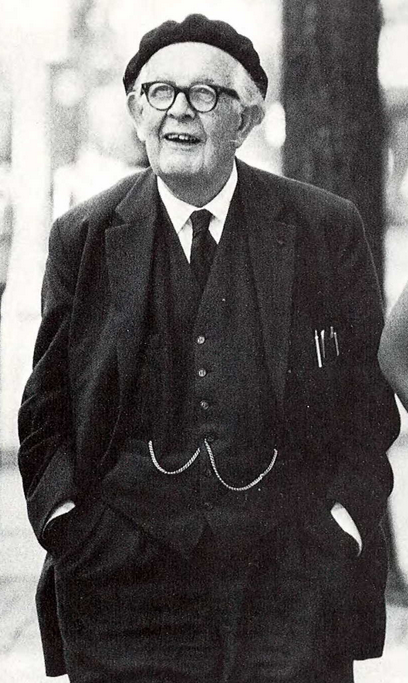
Jean Piaget’s theory holds that children build knowledge by acting on the world rather than by absorbing it. They assimilate new experience into the schemas they already have, and they accommodate those schemas when experience refuses to fit. Equilibration, the push to balance the two, drives development through four stages: sensorimotor, preoperational, concrete operational and formal operational.
Piaget (1896–1980) called his project genetic epistemology, the study of how knowledge comes into being. The stages are what people remember and what later research revised most. The mechanism underneath has aged better, and a therapist can use it. My argument is that assimilation and accommodation describe how adults change their minds too, and that trauma is this machinery jammed. A terrifying event gets bent to fit an old belief, as in self-blame, or it rewrites the belief far too broadly: “no one can be trusted.” Much of trauma therapy is getting accurate accommodation moving again, at a pace the person can bear.
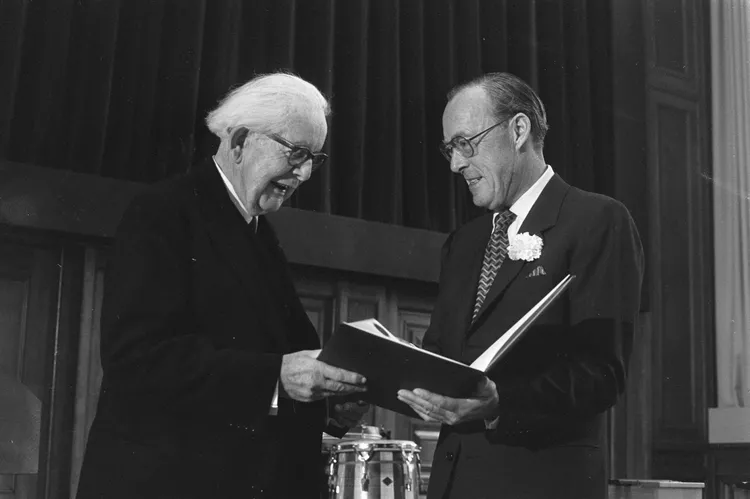
Who Jean Piaget was
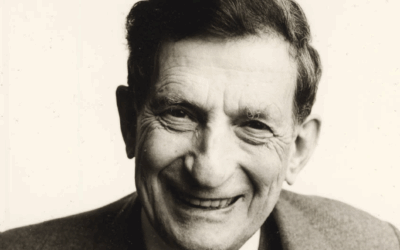
Piaget was born on 9 August 1896 in Neuchâtel, in French-speaking Switzerland. He was a naturalist first: a member of the Friends of Nature, a club for young natural historians started by Pierre Bovet, and the author of several papers on mollusks by the age of 15. His godfather, Samuel Cornut, gave him Henri Bergson’s Creative Evolution, and the young biologist began asking how knowledge itself evolves.1 He took a doctorate in natural sciences at Neuchâtel in 1918, with a thesis on the mollusks of the Valais.
A semester in Zurich followed, where he first studied psychoanalysis. Eugen Bleuler, who had brought psychoanalytic research into the Burghölzli clinic before quitting Freud’s association in 1911, still ran it, and Carl Jung, who broke with Freud in 1913, practiced at Küsnacht on the lake. Those rifts are the subject of our essay on how modern psychotherapy was born amid political and personal schisms. From 1919 to 1921 he was in Paris, testing schoolchildren in the laboratory Alfred Binet had founded, at the request of Binet’s collaborator Théodore Simon. What caught him was that younger children got the same questions wrong in the same ways. In Paris he also came into contact with Pierre Janet, the French pioneer of dissociation theory, whose genetic approach to behavior gave Piaget a framework for his own project.2
In 1921 Édouard Claparède and Bovet brought him to the Institut Jean-Jacques Rousseau in Geneva as director of research. Sabina Spielrein, once Jung’s patient and later his colleague, was working there. Piaget underwent a training analysis with her, and in 1922 both read papers at the International Psychoanalytical Congress in Berlin.3,4 He married Valentine Châtenay in 1923. Their three children, born between 1925 and 1931, became the subjects of his three books on infancy: The Origins of Intelligence in Children (1936), The Construction of Reality in the Child (1937) and Play, Dreams and Imitation in Childhood (1945).5,6,7 He directed the International Bureau of Education from 1929 for almost four decades, founded the International Centre for Genetic Epistemology in Geneva in 1955, and led it until his death there on 16 September 1980.
Assimilation, accommodation and equilibration
Piaget’s basic unit is the schema: an organized, repeatable pattern of action or thought that can be carried into new situations, from an infant’s grasping to a child’s working idea of what “more” means. Assimilation is taking in an experience on the terms of a schema you already have. Accommodation is changing the schema because the experience will not fit. A toddler who calls every four-legged animal “doggy” is assimilating. The day a cow refuses to be a dog, and the child makes room for a new category, accommodation has happened. Piaget insisted the two never occur alone: to recognize an apple as an apple you already have to adjust to this apple’s size and outline. What shifts across development is the balance.
Equilibration is his name for the self-regulating process that manages that balance, and it is not a resting state. Each equilibrium is temporary. When experience produces a contradiction the current structure cannot handle, the structure is rebuilt into a better one, which will be disturbed in its turn.8 Piaget treated equilibration as a fourth factor in development, alongside maturation, experience and the social environment, and gave one of his last major books to it.9
Disequilibrium is uncomfortable, and nothing guarantees a discrepancy will be resolved by accommodation; a mind can also leave it unprocessed. Piaget placed early play at the assimilation pole of behavior, a schema repeated “purely for functional pleasure.”10 In play the world bends to fit the schema. In learning, the schema has to bend.
The four stages, briefly
Piaget described development as a fixed sequence of qualitatively different ways of knowing. The ages are approximate; he said himself that the rate varies, especially from one culture to another.11
- Sensorimotor, birth to about 2. Intelligence in action, before language. By the end the infant knows that objects go on existing out of sight and can represent absent things.
- Preoperational, about 2 to 7. Language, pretend play and drawing show the new symbolic function. Thought fixes on one striking feature and stays tied to the child’s own viewpoint. Piaget called this egocentrism and insisted it had nothing to do with selfishness: it “stems from a lack of differentiation between one’s own point of view and the other possible ones, and not at all from an individualism that precedes relations with others.”12
- Concrete operational, about 7 to 11 or 12. Operations become reversible. The child knows that water poured into a taller glass is not more water, and can classify and order things, so long as the problem is concrete.
- Formal operational, from about 11 or 12. Hypothetico-deductive reasoning: working out what follows from a proposition held as a hypothesis, or even known to be false.13
The Moral Judgment of the Child (1932) ran a parallel track. Watching children play marbles and questioning them about rules, lies and punishment, Piaget traced a move from a morality of constraint, where rules come from adults and cannot change, to a morality of cooperation, where rules are agreements among equals. Younger children also judged an act by the size of the damage rather than the intention.14 Lawrence Kohlberg’s later stages started from this work, although Jeremy Carpendale argues that Kohlberg rejected critical parts of Piaget’s approach.15 Our review of stage hierarchies from Maslow and Erikson to Kohlberg and Kegan asks how such ladders survive the evidence.
Piaget and the unconscious
Piaget is often cast as the “cold cognitivist” who left feeling out; Bryan Sokol and Stuart Hammond argue the reputation is only partly earned.16 Psychoanalysis was one of his first routes into psychology. A 1993 paper by E. M. Schepeler argues that his interest in it grew largely out of long-standing problems with his mother, and that his lifelong habit of intellectualizing his own emotional experience may be related to how little room affect has in his theories.4 That is a psychoanalytic reading of a biography and cannot be tested, but it is a fair question to put to a theory of mind that says so little about fear.
He did not ignore the unconscious. Play, Dreams and Imitation has a chapter on the “unconscious” symbol in children’s dreams and on what he called “secondary symbolism,” play less conscious than ordinary make-believe, problems he said “involve the whole question of psycho-analysis.”10 That is territory Freud, Jung and Herbert Silberer, who studied how symbols form at the edge of sleep, had already mapped. He lectured on intelligence and affectivity at the Sorbonne in 1953–54 and at the Menninger Clinic in 1962.16,17 Opening an address to the American Psychoanalytic Association, published in 1973, he wrote: “Although I have always been rather heretical as regards dogmas, I did at one time undertake a didactic psychoanalysis in order to more fully understand the theory.” The address’s title states his position: there is a cognitive unconscious alongside the affective one.18
One place analysts engaged him was the object. Piaget’s object is a thing that keeps existing out of sight; the “object” of object relations theory is a person held in mind with feeling. In 1969 Selma Fraiberg, a social worker turned child analyst, proposed, following Piaget, a distinction between recognition memory and evocative memory: knowing a mother when she appears versus calling her to mind when she is gone. She placed evocative memory at around 18 months.19 It is a useful lens on clients who lose the felt sense of a caring person the moment that person leaves the room.
What research kept and what it revised
Infants may know more than his tasks showed. In 1985 Renée Baillargeon and colleagues reported that five-month-olds looked longer at a screen that appeared to rotate straight through a box hidden behind it, suggesting a grasp of hidden objects months before Piaget’s search tasks allowed.20 The reading is contested. Rivera, Wakeley and Langer found infants also looked longer at the full rotation when no box was there, which points to a plain preference for more motion.21 The debate is not settled.
How a question is staged changes the answer. In McGarrigle and Donaldson’s “conservation accidents” study, more young children gave conserving answers when a toy “naughty teddy,” rather than the experimenter, messed up a row of counters.22 One replication attempt did not find it: in two experiments with 64 children each, aged 5 to 7, it made no difference whether a toy fox or the experimenter moved the counters.23 Perspective-taking also depends on how the task is staged. Piaget and Inhelder’s three-mountains task asked children to pick the photograph showing a doll’s view. When Helene Borke used a more familiar farm scene and had Grover from Sesame Street drive around it, children as young as three did well at working out what Grover could see.24
Culture and expertise shape the timetable. Pierre Dasen’s 1972 review found the qualitative sequence mostly confirmed across cultures but the rate affected by culture, sometimes so much that large proportions of non-Western samples did not reach concrete operations on the standard tasks.25 Piaget conceded the same year that people apply formal operations in the fields their aptitudes and professional specializations train.11 Neo-Piagetians such as Kurt Fischer went further: a person’s actions vary sharply across contexts, tasks and emotional states, so nobody simply “has” a stage.26
The social side was thin but not absent. Lev Vygotsky argued that Piaget underplayed language and social life. Alexander Luria had kept Piaget informed of the critique, but Piaget could read it only in the early 1960s, in manuscript chapters of the English translation: “it is not without sadness that an author discovers, twenty-five years after its publication, the work of a colleague who has died in the meantime.” He then agreed with some points and not others.12 Our essay on Vygotsky’s significance for psychology and education gives his side. Richard Kitchener notes that the charge that Piaget had no social theory ignores his Sociological Studies, though whether that theory is adequate is still argued.27
Trauma as accommodation that stalls
Piaget did not study trauma, but trauma researchers borrowed his vocabulary. Ronnie Janoff-Bulman argued in 1989 that people ordinarily run on unchallenged assumptions about themselves and the world, and that the major coping task after a traumatic event is a cognitive one: “that of assimilating their experience and/or changing their basic schemas about themselves and their world.” She read self-blame, denial and intrusive thoughts as part of that work, and, comparing people who had or had not been through particular traumatic events, found differences in assumptions about the benevolence of the world, chance and self-worth years after the event.28
Cognitive processing therapy, developed by Patricia Resick and Monica Schnicke for survivors of sexual assault, made the vocabulary clinical.29 As Ana Sobel and colleagues summarize it, crediting Piaget with the two terms, a traumatic event can be assimilated, altered to fit an existing schema: someone who believes the world is fair concludes the assault must have been their fault. It can be over-accommodated, with schema changes that are inaccurate and overgeneralized across themes such as safety, trust, power, esteem and intimacy. Or it can be accommodated: the belief changes as much as the event requires and no more.30
The evidence for this mechanism is encouraging and modest. Three studies that coded patients’ written “impact statements” before and after therapy (37 women, 63 active-duty service members, 31 adolescents and young adults) all found more accommodated and fewer assimilated or over-accommodated statements by the end. Links to symptom change were only partly as predicted, and in two of the studies assimilated statements did not relate to symptoms as the theory expects.30,31,32 The treatment has stronger support: a 2019 meta-analysis of 11 trials with 1,130 participants found large effects against inactive controls (Hedges’ g = 1.24 after treatment, 0.90 at follow-up) and an edge over other active treatments that was no longer significant at follow-up.33
Stephen Joseph and Alex Linley use a similar split for growth after adversity: assimilation, negative accommodation and positive accommodation, the last depending on a social environment able to support it.34 Put in Piaget’s terms, trauma is a perturbation too large to assimilate honestly and too dangerous to accommodate accurately. The mind keeps the old schema at the price of self-blame, or overcorrects into a world where nothing is safe. Janet’s older language of a failure to integrate describes a related problem.
What this looks like in therapy
A therapist working this way listens first for which failure is in play. Assimilation sounds like hindsight: “I should have seen it coming.” Over-accommodation sounds like a law of nature: “people are dangerous,” “I can’t trust my judgment about anything.” Both are protective. The first keeps alive a world where outcomes can be controlled; the second makes sure the person is never surprised again. Neither gets argued away, because each is doing a job.
Accommodation needs the old schema and the new information present together, which is Piaget’s point that the two processes never happen alone. Richard Lane and colleagues propose that change across many therapies works this way: an old emotional memory is reactivated, a new emotional experience is folded into it, and the revised structure is practiced in many settings.35 The model leans on memory reconsolidation, which in humans remains, in one major review’s words, “a viable but hotly contested explanation.”36 It is a useful map, not a settled mechanism.
Pace matters: too little disequilibrium and nothing moves, too much and the person retreats to the old schema or swings into the overgeneralized one. William Stiles’s assimilation model describes a problematic experience moving through predictable stages, from oblivious to acutely painful, then less distressing, puzzling, understood and finally mastered,37 which suggests an explanation offered too early has nothing to attach to. The neo-Piagetian finding that performance varies with context and emotional state26 points the same way: what a person can think clearly in a calm session may not be available at home under stress, so new understanding has to be practiced where the old one fires.
Many of these schemas are older than language. Piaget’s first stage is intelligence in action, and some trauma-related learning looks like that: bracing, startle, the body’s expectation of what comes next. That plausibly explains why talk alone sometimes leaves a belief intact, and why many therapists add experiential and body-based methods. Alfred Adler’s idea of private logic, the idiosyncratic reasoning that justifies a person’s way of living, can be read as a schema in Piaget’s sense. Mary Main and colleagues’ 1985 “move to the level of representation” made attachment schemas audible in how adults talk about their childhoods,38 work traced in our essay on Mary Main’s research and its use in therapy. And schemas do not only appear as statements. They surface in dreams and images, which is often where a Jungian therapist meets them first, before the client can put them into a sentence.
If an old belief about safety or blame keeps running your life after the circumstances that built it have changed, that is the kind of work we do at Taproot. You can read about our approach to Jungian depth therapy in Hoover, or contact us to ask whether it is a fit.
References
- Bennour, M., & Vonèche, J. (2009). The historical context of Piaget’s ideas. In U. Müller, J. I. M. Carpendale, & L. Smith (Eds.), The Cambridge companion to Piaget (pp. 45–63). Cambridge University Press. https://doi.org/10.1017/CCOL9780521898584.002
- Amann-Gainotti, M. (1992). Contributions to the history of psychology: LXXXV. Jean Piaget, student of Pierre Janet (Paris 1919–1921). Perceptual and Motor Skills, 74(3, Suppl.), 1011–1015. https://doi.org/10.2466/pms.1992.74.3c.1011
- Vidal, F. (2001). Sabina Spielrein, Jean Piaget: Going their own ways. Journal of Analytical Psychology, 46(1), 139–153. https://doi.org/10.1111/1465-5922.00220
- Schepeler, E. M. (1993). Jean Piaget’s experiences on the couch: Some clues to a mystery. International Journal of Psycho-Analysis, 74(2), 255–273. PMID 8491531.
- Müller, U. (2009). Infancy. In U. Müller, J. I. M. Carpendale, & L. Smith (Eds.), The Cambridge companion to Piaget (pp. 200–228). Cambridge University Press. https://doi.org/10.1017/CCOL9780521898584.009
- Piaget, J. (1952). The origins of intelligence in children (M. Cook, Trans.). International Universities Press. (Original work published 1936)
- Piaget, J. (1954). The construction of reality in the child (M. Cook, Trans.). Basic Books. (Original work published 1937)
- Boom, J. (2009). Piaget on equilibration. In U. Müller, J. I. M. Carpendale, & L. Smith (Eds.), The Cambridge companion to Piaget (pp. 132–149). Cambridge University Press. https://doi.org/10.1017/CCOL9780521898584.006
- Piaget, J. (1985). The equilibration of cognitive structures: The central problem of intellectual development (T. Brown & K. J. Thampy, Trans.). University of Chicago Press. (Original work published 1975)
- Piaget, J. (1962). Play, dreams and imitation in childhood (C. Gattegno & F. M. Hodgson, Trans.). W. W. Norton. (Original work published 1945)
- Piaget, J. (1972). Intellectual evolution from adolescence to adulthood. Human Development, 15(1), 1–12. https://doi.org/10.1159/000271225
- Piaget, J. (1962). Comments on Vygotsky’s critical remarks concerning The Language and Thought of the Child, and Judgment and Reasoning in the Child (A. Parsons, Trans.). MIT Press.
- Moshman, D. (2009). Adolescence. In U. Müller, J. I. M. Carpendale, & L. Smith (Eds.), The Cambridge companion to Piaget (pp. 255–269). Cambridge University Press. https://doi.org/10.1017/CCOL9780521898584.011
- Piaget, J. (1932). The moral judgment of the child (M. Gabain, Trans.). Kegan Paul, Trench, Trubner.
- Carpendale, J. I. M. (2009). Piaget’s theory of moral development. In U. Müller, J. I. M. Carpendale, & L. Smith (Eds.), The Cambridge companion to Piaget (pp. 270–286). Cambridge University Press. https://doi.org/10.1017/CCOL9780521898584.012
- Sokol, B. W., & Hammond, S. I. (2009). Piaget and affectivity. In U. Müller, J. I. M. Carpendale, & L. Smith (Eds.), The Cambridge companion to Piaget (pp. 309–323). Cambridge University Press. https://doi.org/10.1017/CCOL9780521898584.014
- Piaget, J. (1981). Intelligence and affectivity: Their relationship during child development (T. A. Brown & C. E. Kaegi, Trans. & Eds.). Annual Reviews. (Original work published 1954)
- Piaget, J. (1973). The affective unconscious and the cognitive unconscious. Journal of the American Psychoanalytic Association, 21(2), 249–261. https://doi.org/10.1177/000306517302100201
- Fraiberg, S. (1969). Libidinal object constancy and mental representation. The Psychoanalytic Study of the Child, 24(1), 9–47. https://doi.org/10.1080/00797308.1969.11822685
- Baillargeon, R., Spelke, E. S., & Wasserman, S. (1985). Object permanence in five-month-old infants. Cognition, 20(3), 191–208. https://doi.org/10.1016/0010-0277(85)90008-3
- Rivera, S. M., Wakeley, A., & Langer, J. (1999). The drawbridge phenomenon: Representational reasoning or perceptual preference? Developmental Psychology, 35(2), 427–435. https://doi.org/10.1037/0012-1649.35.2.427
- McGarrigle, J., & Donaldson, M. (1974). Conservation accidents. Cognition, 3(4), 341–350. https://doi.org/10.1016/0010-0277(74)90003-1
- Eames, D., Shorrocks, D., & Tomlinson, P. (1990). Naughty animals or naughty experimenters? Conservation accidents revisited with video-stimulated commentary. British Journal of Developmental Psychology, 8(1), 25–37. https://doi.org/10.1111/j.2044-835X.1990.tb00819.x
- Borke, H. (1975). Piaget’s mountains revisited: Changes in the egocentric landscape. Developmental Psychology, 11(2), 240–243. https://doi.org/10.1037/h0076459
- Dasen, P. R. (1972). Cross-cultural Piagetian research: A summary. Journal of Cross-Cultural Psychology, 3(1), 23–40. https://doi.org/10.1177/002202217200300102
- Rose, L. T., & Fischer, K. W. (2009). Dynamic development: A neo-Piagetian approach. In U. Müller, J. I. M. Carpendale, & L. Smith (Eds.), The Cambridge companion to Piaget (pp. 400–422). Cambridge University Press. https://doi.org/10.1017/CCOL9780521898584.018
- Kitchener, R. F. (2009). On the concept(s) of the social in Piaget. In U. Müller, J. I. M. Carpendale, & L. Smith (Eds.), The Cambridge companion to Piaget (pp. 110–131). Cambridge University Press. https://doi.org/10.1017/CCOL9780521898584.005
- Janoff-Bulman, R. (1989). Assumptive worlds and the stress of traumatic events: Applications of the schema construct. Social Cognition, 7(2), 113–136. https://doi.org/10.1521/soco.1989.7.2.113
- Resick, P. A., & Schnicke, M. K. (1992). Cognitive processing therapy for sexual assault victims. Journal of Consulting and Clinical Psychology, 60(5), 748–756. https://doi.org/10.1037/0022-006X.60.5.748
- Sobel, A. A., Resick, P. A., & Rabalais, A. E. (2009). The effect of cognitive processing therapy on cognitions: Impact statement coding. Journal of Traumatic Stress, 22(3), 205–211. https://doi.org/10.1002/jts.20408
- Dondanville, K. A., Blankenship, A. E., Molino, A., Resick, P. A., Wachen, J. S., Mintz, J., Yarvis, J. S., Litz, B. T., Borah, E. V., Roache, J. D., Young-McCaughan, S., Hembree, E. A., Peterson, A. L., & STRONG STAR Consortium. (2016). Qualitative examination of cognitive change during PTSD treatment for active duty service members. Behaviour Research and Therapy, 79, 1–6. https://doi.org/10.1016/j.brat.2016.01.003
- König, J., Kopp, B., Ziegelmeier, A., Rimane, E., Steil, R., Renneberg, B., & Rosner, R. (2021). Young people’s trauma-related cognitions before and after cognitive processing therapy for post-traumatic stress disorder. Psychology and Psychotherapy: Theory, Research and Practice, 94(1), 33–44. https://doi.org/10.1111/papt.12263
- Asmundson, G. J. G., Thorisdottir, A. S., Roden-Foreman, J. W., Baird, S. O., Witcraft, S. M., Stein, A. T., Smits, J. A. J., & Powers, M. B. (2019). A meta-analytic review of cognitive processing therapy for adults with posttraumatic stress disorder. Cognitive Behaviour Therapy, 48(1), 1–14. https://doi.org/10.1080/16506073.2018.1522371
- Joseph, S., & Linley, P. A. (2005). Positive adjustment to threatening events: An organismic valuing theory of growth through adversity. Review of General Psychology, 9(3), 262–280. https://doi.org/10.1037/1089-2680.9.3.262
- Lane, R. D., Ryan, L., Nadel, L., & Greenberg, L. (2015). Memory reconsolidation, emotional arousal, and the process of change in psychotherapy: New insights from brain science. Behavioral and Brain Sciences, 38, Article e1. https://doi.org/10.1017/S0140525X14000041
- Elsey, J. W. B., Van Ast, V. A., & Kindt, M. (2018). Human memory reconsolidation: A guiding framework and critical review of the evidence. Psychological Bulletin, 144(8), 797–848. https://doi.org/10.1037/bul0000152
- Stiles, W. B., Elliott, R., Llewelyn, S. P., Firth-Cozens, J. A., Margison, F. R., Shapiro, D. A., & Hardy, G. (1990). Assimilation of problematic experiences by clients in psychotherapy. Psychotherapy: Theory, Research, Practice, Training, 27(3), 411–420. https://doi.org/10.1037/0033-3204.27.3.411
- Main, M., Kaplan, N., & Cassidy, J. (1985). Security in infancy, childhood, and adulthood: A move to the level of representation. Monographs of the Society for Research in Child Development, 50(1–2), 66–104. https://doi.org/10.2307/3333827
















0 Comments