
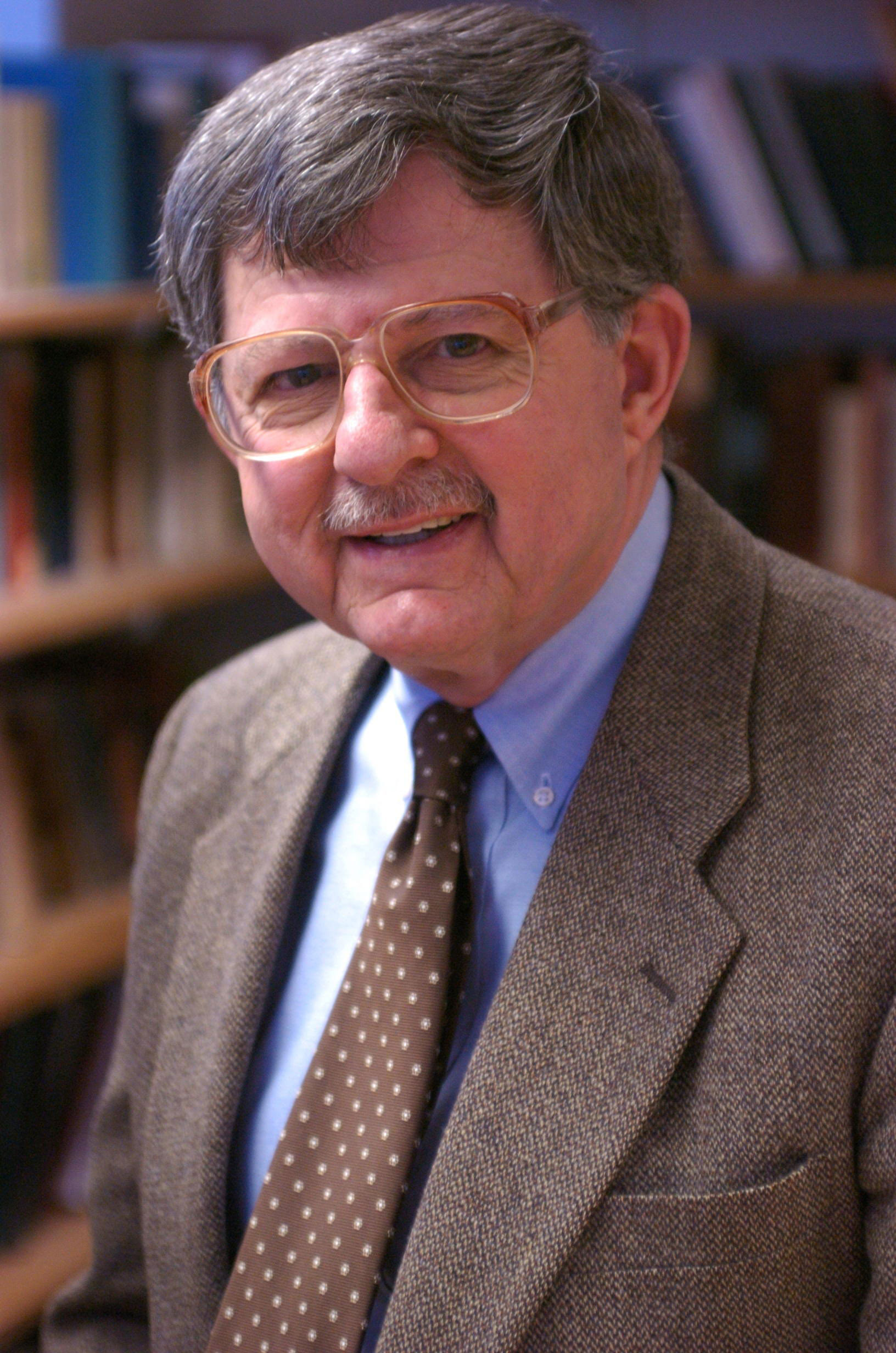
John D. Caputo (born 1940) is an American philosopher of religion who uses deconstruction to rethink God as a call rather than an all-powerful being. His “weak theology,” set out in The Weakness of God (2006), describes a faith that can live with doubt and loss. That matters for trauma survivors, and above all for people harmed by religion, who need meaning without a punishing certainty.
Key takeaways
- John D. Caputo is an American philosopher of religion who uses Derrida’s deconstruction to describe God as a call or event rather than an all-powerful being.
- Caputo’s post-secular religion without religion keeps faith, hope, love and the longing for justice while letting go of confessional certainty and literalism.
- The Weakness of God (2006) replaces the sovereign God of strong theology with a weak force that calls and depends on our response.
- For people harmed by religion, weak theology offers a third path between keeping a punishing God and losing everything good in their tradition.
- Depth psychologists read Caputo alongside trauma work, myth, ritual and the body, treating the wound as something to be lived with and given new meaning.
Who is John D. Caputo?
Caputo was born in Philadelphia in 1940 and earned his doctorate at Bryn Mawr College in 1968. He taught philosophy at Villanova University from 1968 to 2004, latterly as the David R. Cook Professor of Philosophy, then held the Thomas J. Watson Professorship of Religion and Humanities at Syracuse University until he retired in 2011. He is professor emeritus at both schools.
His first books were about Heidegger and medieval mysticism. The Mystical Element in Heidegger’s Thought (1978) traced Martin Heidegger’s idea of releasement, Gelassenheit, back to Meister Eckhart, and Heidegger and Aquinas (1982) set Heidegger beside Thomas Aquinas. Radical Hermeneutics (1987) argued that interpretation never reaches bedrock, and that honest thinking keeps the difficulty of life in view instead of covering it with metaphysical reassurance.
The decisive turn came through Jacques Derrida. In The Prayers and Tears of Jacques Derrida: Religion without Religion (1997), Caputo argued that deconstruction is not nihilism. It is driven by a passion for what Derrida called “the impossible”: justice, the gift, forgiveness and hospitality, things that are always promised and never fully delivered.1 The same year he published Deconstruction in a Nutshell, built around a conversation with Derrida, and he later wrote How to Read Kierkegaard (2007), a short introduction to Søren Kierkegaard, whose faith without objective certainty runs through all of Caputo’s work.
The books most often read outside philosophy departments followed: On Religion (2001), The Weakness of God (2006), What Would Jesus Deconstruct? (2007), After the Death of God with Gianni Vattimo (2007), The Insistence of God (2013), The Folly of God (2016), Cross and Cosmos (2019) and Specters of God (2022). He writes for church study groups as readily as for specialists, which is one reason his ideas have traveled into pastoral care and psychotherapy.
What does “post-secular” mean in Caputo’s work?
Modern secularization promised that religion would retreat from public life as science and reason advanced. Max Weber called the result the disenchantment of the world. Caputo accepts the real gains of the Enlightenment, including its criticism of superstition and of church power, but he argues that its confidence in a pure, neutral reason was itself a kind of dogma. When late twentieth-century philosophy grew modest about what reason can prove, it undermined the case against religion as well. Caputo calls this the death of the death of God, and he describes the time we live in as post-secular.2
Post-secular does not mean a return to pre-modern religion. Caputo borrows Derrida’s phrase “religion without religion” for what survives criticism: the structure of faith, hope and love, the longing for justice and the readiness to forgive, without a confessional system that claims to own them. On Religion organizes all of this around the question Augustine asks in the Confessions: what do I love when I love my God? Caputo treats it as a question every person faces, believer or not, and he locates religion in a passion for the impossible, for something we cannot see coming or control.2 Religion in this sense is a way of living inside the paradox and ambiguity of the human condition, affirming life in its beauty and its brokenness.
The word has a different sense in Jürgen Habermas, who uses it for modern societies in which religion has not disappeared, and argues that secular citizens must stay open to what religious traditions can teach them.3 Habermas asks how believers and secular people can share a public square. Caputo asks what faith looks like after it has passed through doubt. As one recent reading puts it, Caputo moves from God as an object whose existence must be proved to faith as an existential response to a call, an orientation to the impossible lived with radical uncertainty, which is not atheism.4
The therapeutic consequence follows. If what matters most in a life cannot be reduced to propositions, healing cannot be reduced to a list of symptoms that go down. Carl Jung made a similar claim from the consulting room when he wrote in Modern Man in Search of a Soul (1933) that among all his patients in the second half of life there was not one whose problem was not, in the last resort, that of finding a religious outlook on life, and the parallels are traced in Jung’s thinking about God and religion. A post-secular therapy honors the complexity of experience, treats a breakdown as a possible threshold rather than only a malfunction, and takes myth, ritual and symbol seriously as ways people hold what they cannot explain.
What is the weakness of God?
Caputo’s title comes from Paul: “God’s weakness is stronger than human strength” (1 Corinthians 1:25). His hypothesis, stated at the start of The Weakness of God, is that “the name of God is the name of an event.”5 An event, in the sense Caputo takes from Derrida, is not a thing that happens. It is what stirs within what happens: a promise, a solicitation, a call that is never exhausted by any institution or doctrine that tries to contain it.
This rules out what Caputo calls strong theology, the picture of God as a supreme being with supreme power who could stop any evil and chooses when to do so. He links that picture to sovereignty, empire and the church’s claim to speak for heaven. In its place he puts a “weak force,” a phrase he adapts from Walter Benjamin’s “weak messianic power” in his 1940 theses on history. The weak force of God has no army. It does not intervene in the laws of nature. It calls, invites and lays a claim on us, and it depends on someone answering.5
Caputo works this out through scripture. Reading Genesis, he notes that God shapes and blesses a world of elements that are already there and calls it good, not perfect. Reading the Gospels, he describes the kingdom of God as a “sacred anarchy” in which the last are first, outsiders sit at the table and forgiveness goes to those who have not earned it.5 The Insistence of God (2013) condenses the idea into a line that is now widely quoted: “God does not exist; God insists.” The call insists, and it is up to us to give it existence in how we live. Caputo calls this a theology of “perhaps,” and the poetic language that carries it theopoetics.6
For anyone who has suffered, this removes the premise behind the question “Why did God let this happen?” That question assumes an agent who could have prevented the harm and decided not to. Caputo’s God is not that agent, so the abuse, the accident or the loss was not a lesson, a test or a plan. Simone Weil reached a neighboring place by another road, describing creation as God’s withdrawal and attending to affliction without explaining it away.
Why does trauma become a crisis of meaning?
Caputo is a philosopher, not a trauma theorist, and he does not write about clinical trauma. The connection is one depth psychologists make when they read him. Trauma breaks the background assumptions a person lives by: that the world is mostly safe, that people are mostly decent, that I am worth protecting. For a believer it can also break the image of God. In a culture where shared stories and rituals no longer bind people together, the survivor is often left to rebuild that world of meaning alone, which is why trauma is a crisis of belonging as well as of the nervous system.
The Jungian analyst Donald Kalsched describes the same rupture from inside the psyche. In Trauma and the Soul (2013) he argues that early trauma interrupts the soul’s development, and that the mind’s protective defenses split off the most vulnerable core of the personality in order to save it. Healing, in his account, includes the return of a sense of the sacred that the trauma drove underground.7
Caputo’s contribution is a way of hoping that does not depend on erasing the wound. Because the event is by definition what we cannot master, his faith is a hope that has already given up its guarantees. Read this way, a trauma does not have to be explained to be lived with. Some survivors later describe the disorientation that followed as a call to adventure and the threshold of an initiation, the pattern traced in initiation rites across cultures. That meaning belongs to the survivor to find, in their own time and words. It is never something a therapist imposes.
Symptom relief matters, and no one should be asked to stay in pain for the sake of meaning. But a person whose world of meaning has collapsed also needs a place where the shards of the broken self can be gathered and arranged into a new pattern, where the exile can begin the long journey home. Medicalized, symptom-only models of therapy have little room for that work.
How does weak theology help with religious trauma?
Religious trauma is harm done through religious teaching, community or authority: children threatened with hell, shame-based teaching about sex and the body, spiritual abuse by leaders, shunning for doubt or for leaving. Its effects often look like ordinary anxiety, depression or chronic shame, and the religious root can go unnoticed for years.
Research on religious coping shows why the image of God a person carries matters. A meta-analysis of 49 studies by Gene Ano and Erin Vasconcelles found that positive religious coping was linked to better adjustment to stress, and negative religious coping, such as seeing a crisis as God’s punishment or feeling abandoned by God, was linked to worse adjustment.8 Julie Exline, Kenneth Pargament and colleagues later built the Religious and Spiritual Struggles Scale around six kinds of struggle: with the divine, with the demonic, with other people, with morality, with doubt and with ultimate meaning.9 Many people with religious trauma carry several of these at once.
Such clients often feel trapped between two options. They can keep the punishing God they were taught, or reject everything and lose the good with the harm: the music, the prayer, the community, the sense of being held. Caputo offers a third path. What harmed them, on his account, was strong theology, God imagined as a sovereign enforcer whose will the institution claimed to know. What was good can survive as a call to justice, mercy and hospitality. In What Would Jesus Deconstruct? (2007) he argued that deconstruction is good news for the church, because it exposes the moments when an institution confuses its own power with God’s will.10
The theology of “perhaps” helps in a quieter way. Many survivors were taught that doubt is sin. Caputo treats doubt as part of faith’s structure, so a client can hold uncertainty without it marking a moral failure, and can stay undecided as long as they need to without being pushed toward either belief or unbelief.
What role do myth, ritual and theopoetics play?
Caputo’s theopoetics is the claim that religious language works like poetry, parable and prayer, not like a physics of the supernatural.6 Parables do not explain the world. They overturn the hearer’s expectations and leave a question behind. This is why Caputo can keep the stories of a tradition while letting go of their literal claims, and why his work fits a depth psychology that treats myth as meaningful without treating it as history.
Caputo himself argues for theopoetics rather than for inventing new myths. The idea that we must create new myths and rituals able to hold postmodern life comes from depth psychology, and it fits his work well. In therapy it means treating dreams, fantasies, images and imaginal figures as ways into the deep psyche. It also means building rituals of mourning and remembrance, of initiation and change, that help a person, a family or a community fold the fragments of traumatic experience into a larger web of meaning.
Others in Caputo’s orbit have done this practically. Peter Rollins, whose How (Not) to Speak of God (2006) draws on deconstruction and mystical theology, built experimental gatherings with the Ikon collective in Belfast and printed several of them in the book, showing faith carried by practice when its doctrines can no longer be stated plainly.11 Catherine Keller’s Cloud of the Impossible (2015) returns to the apophatic tradition, especially Nicholas of Cusa’s learned ignorance, to argue for a faith that speaks from inside not-knowing.12
Can therapy be a space of resistance?
Caputo’s sacred anarchy is aimed at religious institutions, but the same suspicion applies to psychotherapy. Therapy can reinforce the conditions of alienation it means to heal. When the psyche is reduced to a set of disorders to be managed, and adjustment is valued above questioning and creative self-expression, therapy can become another instrument for fitting people back into whatever made them ill.
Michael White’s narrative practice shows one alternative. In Maps of Narrative Practice (2007) he describes externalizing conversations that separate a person from the problem story told about them, re-authoring conversations that recover the events that story left out, and definitional ceremonies in which outsider witnesses hear and respond to the new account.13 The definitional ceremony is a ritual in the full sense: a community witnessing a change of identity.
A post-secular therapy keeps this countercultural edge. It does not aim to normalize people for a dysfunctional society. It offers a room for resistance and re-imagining, where new ways of being a self and new kinds of relationship can begin, and where the question of what a person loves, in Augustine’s sense, is allowed to take its place beside the question of what is wrong with them.
Where does Caputo sit among post-secular and metamodern thinkers?
His closest partner is the Italian philosopher Gianni Vattimo, whose “weak thought” reads secularization itself as the outworking of the Christian idea of God’s self-emptying. The two set out their agreements and differences in After the Death of God (2007), edited by Jeffrey W. Robbins.14
Caputo is also read alongside the theorists of what came after postmodernism. Fredric Jameson described postmodernism as the cultural logic of late capitalism in 1991. Timotheus Vermeulen and Robin van den Akker, and writers such as Seth Abramson, describe a metamodern sensibility that oscillates between modern hope and postmodern irony. Caputo’s hope that has given up its guarantees fits that oscillation closely, which is why he appears in discussions of metamodernism and psychotherapy.
The sociologist Christopher Partridge tracks the same return of the sacred from below, in the popular spirituality and “occulture” he describes in The Re-Enchantment of the West. Richard Tarnas’s The Passion of the Western Mind (1991) tells the longer history of the disenchantment Caputo answers. Carl Raschke, a contributor to The Blackwell Companion to Postmodern Theology (2005), works the same territory from within theology. F. LeRon Shults and Steven Sandage, in Transforming Spirituality (2006), bring theology and psychology together around how spiritual life changes when old forms of faith are shaken.15
The psychoanalyst Wilfred Bion offers the clinical parallel. Bion used the sign O for the ultimate reality of a session that can never be known directly, and asked analysts to meet each hour without memory or desire. Caputo’s faith in what cannot be foreseen and Bion’s discipline of not-knowing ask the same thing of a listener: stay open to what has not yet arrived.
How do therapists use Caputo’s ideas?
Caputo’s ideas shape how a therapist listens more than what a client is told. The first task is to hear the theology inside a symptom. Chronic shame, a startle response to certain hymns, a freeze in church parking lots, or an inner critic that speaks in the voice of a punishing God are often the strong theology a child absorbed to stay safe. In parts work, that critical voice can be understood as a protector that once had a job, not as the truth about God or the self.
The second task is to avoid replacing one certainty with another. A therapist working in Caputo’s spirit does not argue a client out of faith or back into it. They help the client tell the harmful teaching apart from whatever still feels alive, and let the client decide what, if anything, they keep.
The third is to work where religious fear actually lives, which is often the body. At Taproot, Jungian therapy gives dreams and images room to carry what words cannot, while Brainspotting, EMDR and somatic work help the nervous system release fear learned in sermons, at youth camps or at a family table. Meaning-making is the last step, not the first: once the body is no longer bracing for punishment, a person can ask what they love, and what they want to do about it.
What is Caputo’s legacy for trauma work?
Caputo gives therapists a language for faith that is honest about doubt and suffering, and for hope that does not depend on guarantees. For trauma work this means seeing the wound as more than a pathology to be cured. It can also be an opening onto what a person did not know about themselves and their world, held with radical openness to mystery and to the other, and with responsibility for the social settings in which harm and healing happen.
That path takes courage and compassion, a willingness to sit in the dark and a commitment to the light. Therapists who walk it with clients act as midwives of new myths and rituals, helping a person find a more soulful way of being human after the old stories failed them.
At Taproot we bring this outlook to people recovering from religious harm and from trauma that broke their sense of meaning. Existential therapy, Jungian work and body-based trauma therapy give room for doubt, grief and a slower search for what is still worth loving.
Frequently asked questions
Who is John D. Caputo?
John D. Caputo, born in Philadelphia in 1940, is an American philosopher of religion. He taught at Villanova University from 1968 to 2004 and at Syracuse University until 2011. He is known for applying Jacques Derrida’s deconstruction to theology in books such as The Prayers and Tears of Jacques Derrida, The Weakness of God and The Insistence of God.
What is weak theology?
Weak theology is John D. Caputo’s name for thinking about God without the idea of an all-powerful sovereign. Following Paul’s line that God’s weakness is stronger than human strength, Caputo argues that God is the name of an event or call. Its weak force has no power to intervene, but it lays a claim on people to answer with justice, mercy and forgiveness.
What does Caputo mean by God does not exist, God insists?
In The Insistence of God (2013), Caputo argues that God is not a being who exists among other beings. God insists, meaning the call to justice, love and hospitality presses on us without forcing anything. Whether that call comes to exist in the world depends on how people respond to it, which Caputo calls a theology of perhaps.
What is religion without religion?
Religion without religion is a phrase Caputo takes from Jacques Derrida. It names the structure of faith, hope, love and the passion for justice and forgiveness, held apart from any single confessional system that claims to own them. Caputo uses it to describe a post-secular faith that survives modern criticism without returning to dogma.
How can Caputo’s ideas help someone with religious trauma?
Many people with religious trauma feel they must either keep the punishing God they were taught or reject their tradition entirely. Caputo’s weak theology lets a therapist and client separate the harmful picture of God as a sovereign enforcer from what still feels alive, such as mercy, community or prayer, and lets doubt be part of faith rather than a sin.
Related reading
- The Children’s March of 1963: What Birmingham’s Bravest Youth Can Teach Us About Parentification and Family Healing
- Breaking the Cycle: Understanding and Healing as an Adult Child of an Alcoholic
- The Enduring Relevance of Alice Miller’s Drama of the Gifted Child
- Can Psychotherapy Survive Staying Seperated from Anthropology and Philosophy?
- Can Jungian Archetypes be Evidence-Based?
- The Pantheon: Myths are Public Dreams, Dreams are Private Myths
References
- Caputo, J. D. (1997). The prayers and tears of Jacques Derrida: Religion without religion. Indiana University Press. https://doi.org/10.2307/j.ctt2005rjr
- Caputo, J. D. (2018). On religion (2nd ed.). Routledge. (Original work published 2001) https://doi.org/10.4324/9781315197807
- Habermas, J. (2008). Notes on post-secular society. New Perspectives Quarterly, 25(4), 17–29. https://doi.org/10.1111/j.1540-5842.2008.01017.x
- Williams, J. (2022). Reframing God: John Caputo as theologian. Theology, 125(6), 412–420. https://doi.org/10.1177/0040571×221133788
- Caputo, J. D. (2006). The weakness of God: A theology of the event. Indiana University Press. https://doi.org/10.2979/4159.0
- Caputo, J. D. (2013). The insistence of God: A theology of perhaps. Indiana University Press. https://doi.org/10.2979/6973.0
- Kalsched, D. (2013). Trauma and the soul: A psycho-spiritual approach to human development and its interruption. Routledge.
- Ano, G. G., & Vasconcelles, E. B. (2005). Religious coping and psychological adjustment to stress: A meta-analysis. Journal of Clinical Psychology, 61(4), 461–480. https://doi.org/10.1002/jclp.20049
- Exline, J. J., Pargament, K. I., Grubbs, J. B., & Yali, A. M. (2014). The Religious and Spiritual Struggles Scale: Development and initial validation. Psychology of Religion and Spirituality, 6(3), 208–222. https://doi.org/10.1037/a0036465
- Caputo, J. D. (2007). What would Jesus deconstruct? The good news of postmodernism for the church. Baker Academic.
- Rollins, P. (2006). How (not) to speak of God. Paraclete Press.
- Keller, C. (2015). Cloud of the impossible: Negative theology and planetary entanglement. Columbia University Press. https://doi.org/10.7312/kell17114
- White, M. (2007). Maps of narrative practice. W. W. Norton.
- Caputo, J. D., & Vattimo, G. (2007). After the death of God (J. W. Robbins, Ed.). Columbia University Press.
- Shults, F. L., & Sandage, S. J. (2006). Transforming spirituality: Integrating theology and psychology. Baker Academic.







0 Comments