
Beyond the Synapse: The Systemic Revolution in Treatment-Resistant Depression
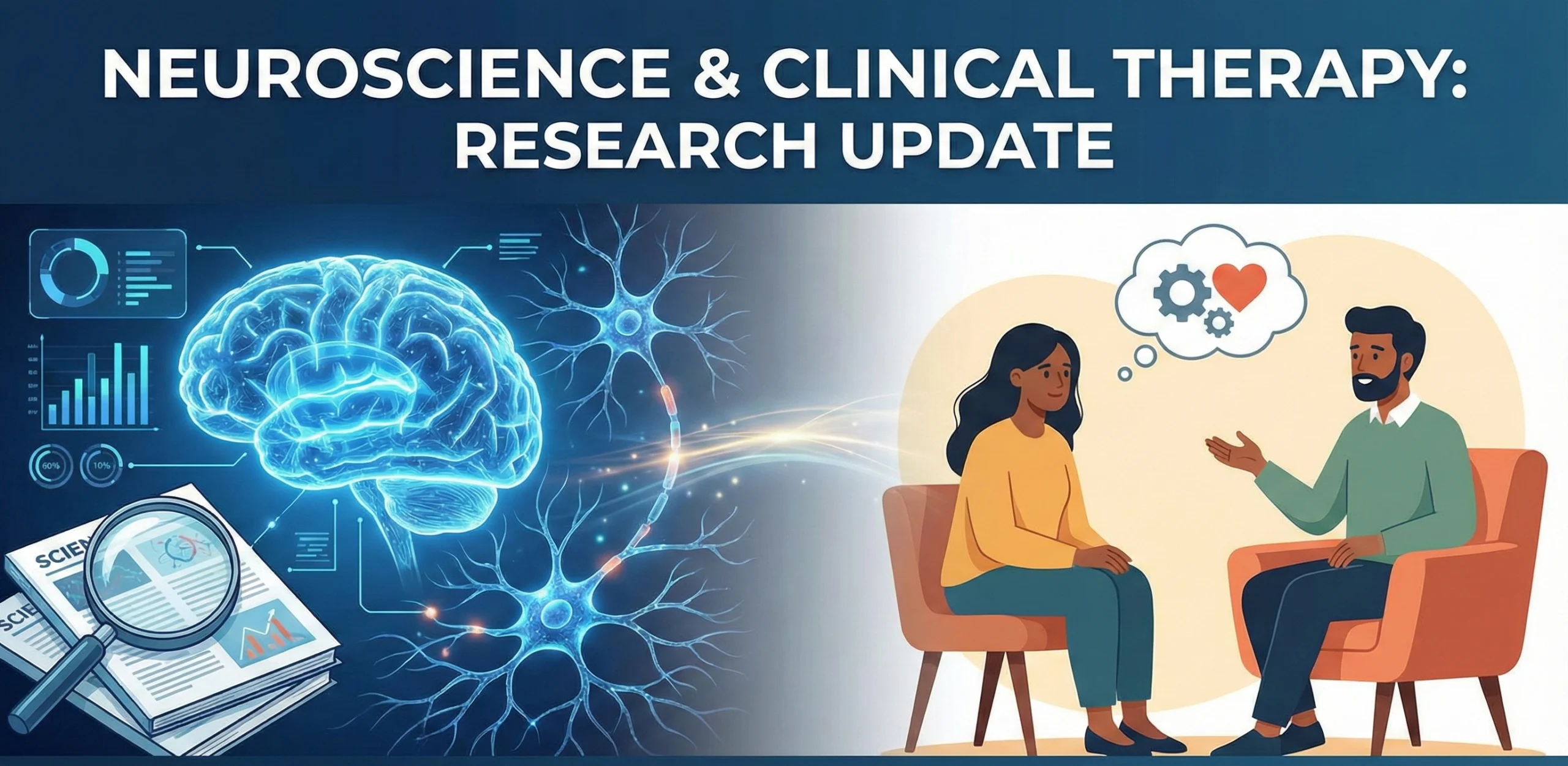
The clinical management of Major Depressive Disorder (MDD) is undergoing a paradigm shift of historical significance. For half a century, the medical establishment operated under the monoamine hypothesis—a top-down model driving the ubiquity of SSRIs. Today, modern science recognizes that depression is not merely a chemical imbalance above the neck; it is a whole-body, systemic dysregulation.
For the better part of the last half-century, the field of psychiatry has operated largely under the monoamine hypothesis, which posits that depressive symptomatology is primarily the result of deficits in serotonin, norepinephrine, and dopamine within the synaptic cleft. While these agents remain the first line of defense in standard medicine, epidemiological data and clinical reality reveal a stark limitation.
Approximately one-third of patients fail to achieve remission with standard pharmacotherapy. A significant percentage experience crippling residual symptoms, including severe anhedonia, cognitive fog, and persistent somatic anxiety. As we advance through 2026, the research horizon has fundamentally expanded. The field is moving beyond the synapse to encompass a systems biology approach that integrates the autonomic nervous system, the subcortical deep brain structures responsible for threat detection, and the complex ecology of the gut microbiome.
At Taproot Therapy Collective, we are an integrative psychotherapy and neurotechnology clinic, not a psychiatric medical practice. However, we intimately understand this biological research. While medical doctors may pursue these pathways through invasive procedures and new pharmaceuticals, our clinical team utilizes advanced neuro-experiential modalities to target the exact same subcortical and autonomic pathways through non-invasive psychotherapy.
Autonomic Resetting: The Medical Approach vs. Somatic Therapy
The Stellate Ganglion Block (SGB) represents one of the most compelling medical crossovers from pain medicine to psychiatry. Historically utilized for Complex Regional Pain Syndrome, the SGB involves a physician injecting a local anesthetic into the stellate ganglion—a collection of sympathetic nerves anterior to the C6 and C7 vertebrae. This medical procedure has emerged as a potent transdiagnostic intervention for psychiatric conditions characterized by sympathetic hyperarousal, including depression with anxious or agitated features.
While the bulk of SGB research focused on PTSD, 2024 and 2025 investigations explicitly isolated its effects on depression. A pivotal study examining SGB found significant reductions in depression scores. A large retrospective chart review evaluated ultrasound-guided bilateral blocks, finding statistically significant reductions in anxiety. Furthermore, a 2025 clinical review indicated the SGB group achieved a significantly higher effect rate compared to controls, modulating immune function and reducing sickness behavior.
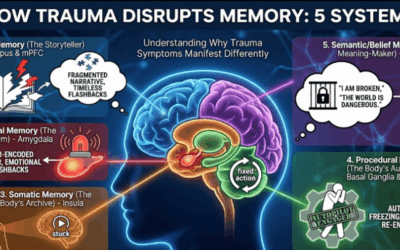
The Psychotherapy Correlation: While Taproot clinicians do not perform SGB injections, this medical procedure absolutely validates the premise of Somatic Experiencing (SE). SE argues that trauma is trapped physiological survival energy. Just as an SGB medically forces a sympathetic reset, Somatic Experiencing utilizes interoception to help the nervous system organically discharge that trapped energy, achieving a natural autonomic reboot.
Subcortical Psychotherapies: Brainspotting & Deep Brain Reorienting
As biological psychiatry explores the autonomic nervous system, the field of psychotherapy is simultaneously descending from the "talking cure" of the prefrontal cortex to the non-verbal processing of the midbrain and brainstem. Brainspotting and Deep Brain Reorienting (DBR) posit that trauma and deep depressive states are stored in subcortical capsules inaccessible to standard cognitive therapies.
Developed by Dr. David Grand, Brainspotting operates on the premise that "where you look affects how you feel." It posits that specific eye positions correlate with subcortical areas encapsulating emotional distress. The therapist helps the client locate a specific "brainspot" that triggers a strong somatic response and holds that gaze, forming a Dual Attentional Frame. This bypasses the cognitive defenses of the neocortex. Pilot studies indicate reductions in depression inventories by decreasing the emotional distress of memories that fuel rumination.
Deep Brain Reorienting (DBR), developed by Dr. Frank Corrigan, descends further into the neuroanatomy of trauma. DBR is grounded in the Orienting-Tension-Shock-Affect sequence, hypothesizing that trauma impacts the Superior Colliculus and Periaqueductal Gray before the signal reaches the amygdala. Standard therapies work at the level of Affect (emotion). DBR works at the Orienting and Tension levels in the facial and neck muscles. A key study demonstrated a 36.6% reduction in CAPS scores after eight sessions, making it highly effective for attachment shock originating from pre-verbal relational trauma.
The Polyvagal Era & Vagus Nerve Stimulation
Polyvagal Theory posits a hierarchy of the autonomic nervous system, moving from the newest Ventral Vagal system (social engagement) to the Sympathetic system (mobilization), and finally to the oldest Dorsal Vagal system (depressive collapse). While scientific scrutiny of its strict anatomical claims has intensified, it remains a highly useful heuristic for clinical regulation.
Beyond theory, the direct medical modulation of the vagus nerve is a validated treatment. Surgically implanted VNS remains FDA-approved with data supporting its efficacy in severe recurrent depression. However, invasive limitations have driven interest in Transcutaneous VNS (tVNS), which stimulates the ear or neck, reducing depression scores significantly better than sham.
The consumer market has proliferated with wearable vibroacoustic devices like Apollo Neuro, which uses vibration to mimic human touch. Clinical trials show it can improve Heart Rate Variability. At our clinic, we recognize that you do not always need a surgical implant to stimulate the vagus nerve; specialized experiential psychotherapies naturally tone the vagus nerve by restoring physiological safety.
The Microbiota-Gut-Brain Axis & Neuromodulation
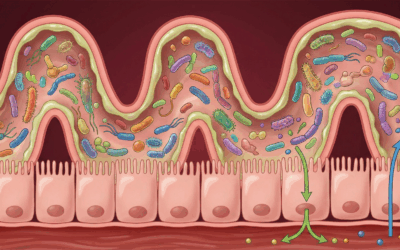
Perhaps the most biologically profound shift in medicine is the recognition of the gut microbiome as a regulator of mood. The Microbiota-Gut-Brain Axis links the enteric nervous system to the CNS. Psychobiotics are live bacteria that yield a mental health benefit. The combination of Lactobacillus helveticus R0052 and Bifidobacterium longum R0175 has the strongest evidence base, demonstrating significant reductions in anxiety and depression by restoring intestinal barrier integrity to reduce neuroinflammation.
Medical research is also exploring Fecal Microbiota Transplantation (FMT). Transferring fecal matter from depressed humans to germ-free rats induces depressive behaviors, and a 2024 meta-analysis found FMT significantly reduced depressive symptoms.
- SAINT (Stanford Accelerated Intelligent Neuromodulation Therapy): An fMRI-guided acceleration of Transcranial Magnetic Stimulation delivering ten sessions per day, achieving remission rates significantly higher than standard rTMS.
- Glutamate Modulation: Auvelity, the first oral NMDA receptor antagonist approved for MDD, offers symptom relief in as little as one week.
- Psychedelics: With Phase 3 trials for TRD nearing completion, millions could be eligible for psilocybin therapy to forcefully rewire neural circuits.
At Taproot Therapy Collective, while we do not prescribe medications or perform surgeries, our Director of Neurotechnology, Dr. Jason Mishalanie, utilizes QEEG Brain Mapping to objectively identify electrical dysregulation, providing advanced neurofeedback that works in tandem with these cutting-edge biological understandings.
The Taproot Clinical Roster
If you are struggling with Treatment-Resistant Depression, standard talk therapy may not be enough. Engage a clinical team trained to navigate the subcortical and autonomic reality of your nervous system.
Break the Treatment-Resistant Cycle
Move beyond the synapse. If standard SSRIs and cognitive behavioral therapy have failed you, it is time to treat the physiological root of your suffering.
Schedule a Comprehensive Assessment














0 Comments