
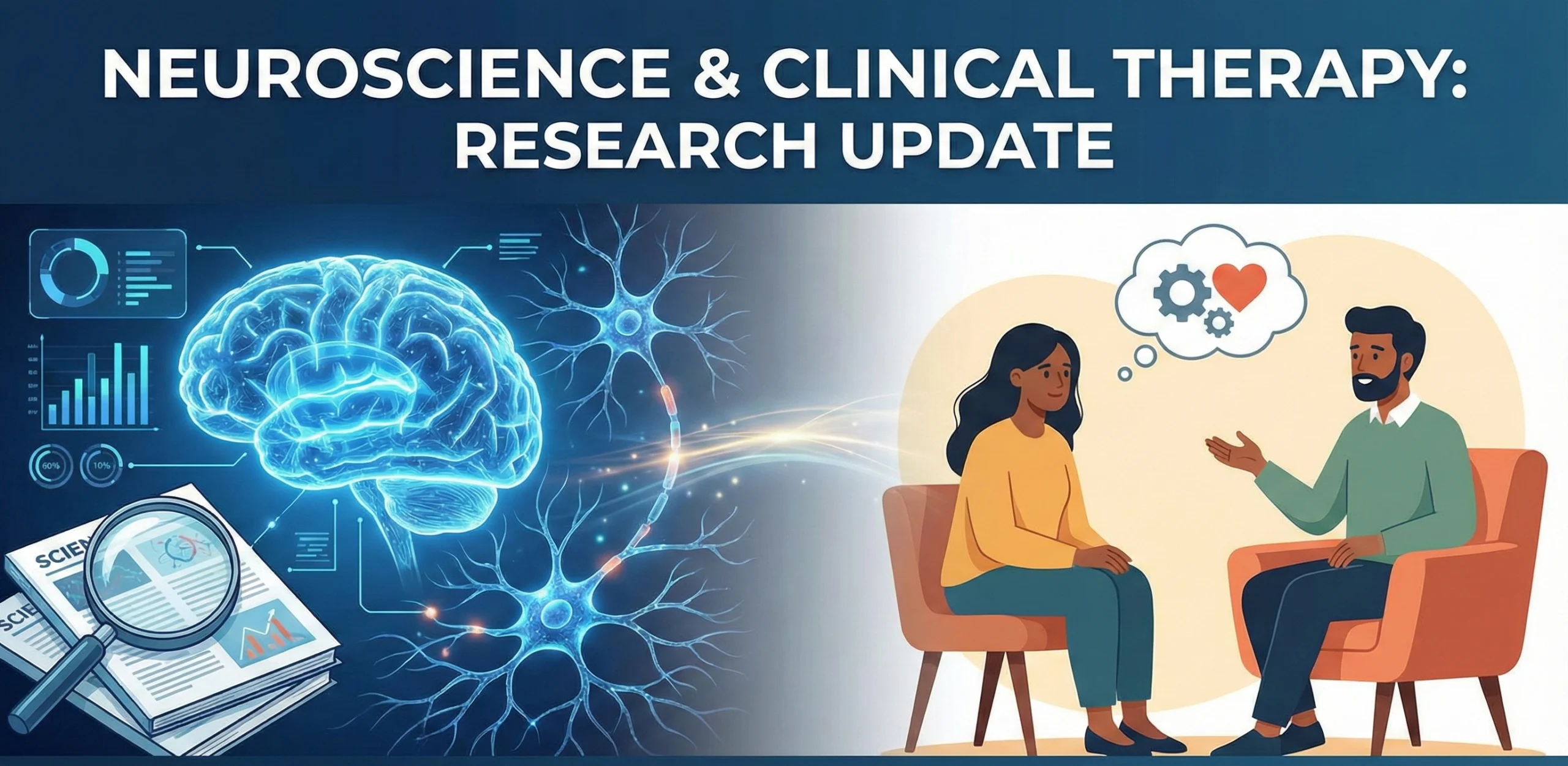
The New Frontier of Trauma Therapy: Bottom-Up Interventions
The clinical landscape of Post-Traumatic Stress Disorder treatment is undergoing its most significant transformation since the introduction of exposure therapies. Discover how modern anesthesiology, neurotechnology, and midbrain targeting are validating the theories of psychology's greatest historical pioneers.
For decades, our dominant therapeutic paradigm operated on a highly flawed top-down model. Pioneers like Albert Ellis (founder of REBT) championed the absolute supremacy of the prefrontal cortex, operating under the belief that by logically altering the narrative or the cognitive appraisal of a traumatic event, the downstream physiological dysregulation would automatically resolve. We assumed that cortical insight and verbal processing were the primary vehicles for extinguishing traumatic fear.
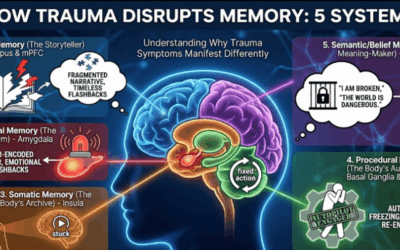
However, clinical data emerging in 2024 and 2025 has forced a fundamental inversion of this hierarchy. The field is rapidly pivoting toward bottom-up interventions that entirely bypass the prefrontal cortex to directly target the subcortical, autonomic, and visceral substrates of threat. We are no longer treating PTSD merely as a psychological disorder of memory, but as a severe physiological disorder of the autonomic nervous system and midbrain survival circuitry.
The Sympathetic Reset: Stellate Ganglion Block
Among emerging modalities, the Stellate Ganglion Block (SGB) represents the most advanced integration of anesthesiology and psychiatry. SGB involves the precise injection of a local anesthetic into a cluster of sympathetic nerves at the C6 and C7 vertebrae. In trauma treatment, it acts as a biological reboot for a nervous system locked in chronic fight-or-flight.
The durability of SGB challenges simple pharmacology, as relief lasts months despite the anesthetic metabolizing rapidly. This is explained by the Nerve Growth Factor (NGF) Hypothesis. Chronic PTSD elevates NGF, promoting sympathetic nerve sprouting and norepinephrine spikes. The anesthetic triggers a downregulation of NGF, breaking the positive feedback loop feeding the amygdala.
A critical 2025 refinement involves laterality. Historically performed on the right side, clinical audits revealed a subset of non-responders. Recent data shows that 90% of right-sided non-responders achieved a significant reduction in PTSD symptoms following a left-sided block. This has led to the Dual Sympathetic Reset protocol, addressing both components of sympathetic innervation with statistically significant efficacy in lowering CAPS-5 scores.
Fritz Perls & The Physical Gestalt
Long before anesthesiologists injected the C6 vertebrae, Fritz Perls, the founder of Gestalt therapy, recognized the catastrophic danger of the "alienated body." Perls argued that unexpressed trauma does not vanish; it becomes physically lodged as neuromuscular tension—an "unclosed gestalt." He demanded patients drop abstract intellectualizing and focus on the immediate physiological reality. SGB operates as the ultimate biological closure to Perls' interrupted gestalt, forcing the sympathetic musculature to finally release its historical grip.
Targeting the Midbrain: Deep Brain Reorienting
While SGB targets the peripheral autonomic system, Deep Brain Reorienting (DBR) targets the central nervous system threat circuitry in the midbrain and brainstem. DBR moves beyond the limbic system to target older structures like the Superior Colliculus and the Periaqueductal Gray.
DBR is predicated on the hypothesis that the physiological threat response occurs in a specific sequence: Orienting (Superior Colliculus directs eyes/head), Tension (Locus Coeruleus generates preparatory tension), Shock (Periaqueductal Gray registers unmitigated threat), and finally Affect (emotional generation). Standard therapies intervene at Affect. DBR aims to access the physical sensation in the neck and shoulders to release the residual shock locked at the Orienting phase.
A landmark 2024 Randomized Controlled Trial demonstrated that eight DBR sessions resulted in a 48.6% reduction in CAPS-5 scores at the 3-month follow-up, with 52% of participants no longer meeting the diagnostic criteria for PTSD. The remarkably low dropout rate suggests high tolerability for complex cases.
Peter Levine & The Orienting Response
DBR’s sequential targeting perfectly validates the foundational theories of Dr. Peter Levine, the creator of Somatic Experiencing. Levine mapped the "defensive orienting response" decades ago, observing that wild animals rarely suffer trauma because they physically complete their survival movements. Levine theorized that human trauma is exactly what DBR treats: the interrupted, frozen motor plan of turning toward a threat.
The Oculomotor Debate: Brainspotting & Flash
Brainspotting operates on the theory that the visual field maps directly to the neural substrate of the brain. A brainspot is a specific eye position correlating with a traumatic somatic capsule. Proponents hypothesize that this fixed gaze bypasses cortical inhibition via the Superior Colliculus, allowing for the processing of implicit memory. A 2024 RCT comparing Brainspotting to treatment-as-usual found significant improvements in PTSD.
Similarly, the Flash Technique utilizes subliminal processing. The patient engages in a positive focus while momentarily flashing on the traumatic memory. By keeping the amygdala calm, the memory is reconsolidated without triggering the defense cascade, rated in analyses as significantly more pleasant than traditional exposure.
Carl Jung & The Subcortical Shadow
The concept of bypassing the rational intellect to access hidden trauma directly mirrors the philosophy of Carl Jung. Jung believed the unconscious mind could not be reasoned with through pure cortical logic; it required portals—dreams, active imagination, and somatics. Brainspotting acts as a modern, physiological portal to the Jungian "Shadow," bypassing the ego's defenses to metabolize what the conscious mind actively represses.
Rewiring the Vagus Nerve: Neuromodulation
The Vagus Nerve has become a primary target for increasing vagal tone to counteract sympathetic dominance. Targeted Plasticity Therapy involves a surgically implanted Vagus Nerve Stimulation (VNS) device that triggers short bursts of stimulation precisely when the patient engages with a traumatic memory, releasing acetylcholine and accelerating fear extinction. A Phase 1 trial published in 2025 reported that 100% of participants lost their PTSD diagnosis.
For non-invasive scalability, wearables like Apollo Neuro deliver silent vibrations to mimic the rhythm of human touch, while Sensate utilizes infrasonic resonance via bone conduction on the sternum. Pilot studies indicate significant decreases in stress levels and improvements in dissociative states via daily autonomic regulation.
Carl Rogers & Marsha Linehan
Carl Rogers asserted that psychological growth requires "unconditional positive regard"—a state of absolute, perceived safety. VNS essentially induces this physiological state of safety artificially. Furthermore, Dr. Marsha Linehan (DBT) recognized that patients cannot utilize mindfulness when severely dysregulated; they require intense physiological intervention (TIPP skills) first. VNS automates Linehan's demand for physiological stabilization.
Psychobiotics, Methylone, and 3MDR
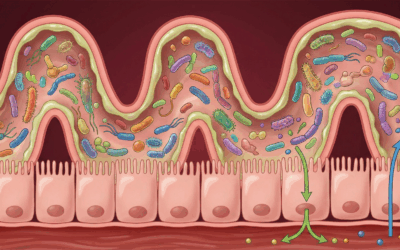
PTSD is increasingly understood as a systemic inflammatory disorder. The Psychobiotic Revolution uses probiotic strains like Lactobacillus rhamnosus GG (LGG) to signal safety to the brain via the vagus nerve, reversing stress-induced decreases in Brain-Derived Neurotrophic Factor.
Pharmacologically, Methylone (TSND-201) received FDA Breakthrough Therapy Designation as a rapid-acting neuroplastogen lacking classic hallucinogenic properties. Finally, 3MDR (Modular Motion-assisted Memory Desensitization) combines VR exposure with physical movement on a treadmill. The element of forward motion physiologically counteracts the freeze response.
Adlerian Teleology & Mindell's Process
3MDR's reliance on forward physical movement beautifully embodies Alfred Adler's focus on teleology (forward-moving action) to overcome inferiority and trauma. Additionally, treating gut inflammation as a psychiatric intervention mirrors Arnold Mindell's Process-Oriented Psychology, which argues that a physical symptom and a psychological complex are the exact same energy expressing itself on different dimensional axes.
The Taproot Clinical Roster
We invite you to review the credentials of our clinicians who specialize in mapping these neurobiological mechanisms and deploying advanced, subcortical trauma interventions:
Bypass the Thinking Brain
You cannot logic your way out of an autonomic survival response. Engage a clinical team equipped with the neuro-somatic tools required to discharge the terror trapped in your nervous system.
Schedule a Clinical Assessment













0 Comments