
The Neuroscientist Who Asks How the Brain Knows What Is Real
Imagine you are at a magic show. The performer vanishes before your eyes. You know, rationally, that the person is hiding somewhere. Yet no matter how much you reason, you cannot shake the visual impression that the person has disappeared. Why is conscious perception so stubbornly resistant to rational override?
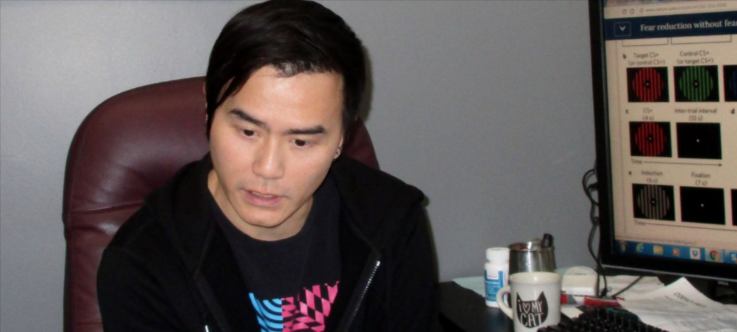
This puzzle lies at the heart of Hakwan Lau’s research. Lau, Team Leader at the Laboratory for Consciousness at the RIKEN Center for Brain Science in Japan (and formerly Professor at UCLA and Columbia), has spent two decades investigating how the brain generates conscious experience. His distinctive contribution is the theory of Perceptual Reality Monitoring, which proposes that consciousness arises when a specialized brain mechanism judges that sensory signals genuinely reflect external reality. His 2022 book “In Consciousness We Trust” synthesizes this research program and has been praised as essential reading for anyone seeking to understand consciousness scientifically.
The Problem of Perceptual Stubbornness
Consider how we normally process information. If five friends tell you it is raining outside and one weather website says it is not, you simply discount the website. Conflicting evidence is weighed and integrated rationally. But perception does not work this way. When we consciously see something, that experience is strangely persistent even when we know it must be wrong.
Optical illusions continue to look wrong even after we understand how they work. Pain can feel sharp even when we know nothing is poking us. Patients report feeling pain in limbs that have been amputated. Conscious experience seems to have a special authority that resists rational correction.
Lau argues this stubbornness is not a bug but a feature. Consciousness functions as a kind of reality check, and once the reality-monitoring system has judged a signal to be genuine, that judgment is hard to overturn. This is usually adaptive, because most of the time our senses are right, and it would be counterproductive if we could easily reason ourselves out of genuine perceptions.
Perceptual Reality Monitoring
Lau’s theory proposes that the brain contains a specialized mechanism for determining whether sensory signals reflect reality or are internally generated noise. He calls this Perceptual Reality Monitoring (PRM). The theory draws on insights from artificial intelligence, particularly generative adversarial networks (GANs), where one neural network generates content and another discriminates between genuine and fake inputs.
In the brain, sensory areas generate patterns of activity in response to stimulation. But similar patterns can arise from memory, imagination, or random neural noise. The PRM mechanism, likely implemented in prefrontal cortex, functions as a discriminator, evaluating whether sensory activity is driven by external reality or internally generated.
When the discriminator judges that sensory signals are real, conscious experience arises. When it judges them to be noise or imagination, they remain unconscious. This explains the stubbornness of perception: the discriminator’s judgment is what makes experience conscious, and once that judgment is made, it is not easily overridden by higher cognitive processes.
A Middle Ground Between Global and Local Theories
Lau positions his theory as a middle ground between two dominant camps in consciousness research.
Global theories, like Stanislas Dehaene’s Global Neuronal Workspace, hold that consciousness involves widespread broadcasting of information throughout the brain, particularly to frontal regions. Local theories, like Victor Lamme’s Recurrent Processing Theory, hold that consciousness arises from activity within sensory regions themselves, without requiring frontal involvement.
Both approaches have evidence supporting them and problems they struggle to explain. Global theories predict substantial frontal activity during conscious perception, but the evidence is mixed, with some studies finding only modest frontal involvement. Local theories predict that consciousness should occur whenever there is recurrent processing in sensory areas, but this seems too liberal, since much sensory processing remains unconscious.
Lau’s PRM theory predicts modest prefrontal activity, consistent with the empirical data, but unlike pure local theories, it insists that sensory activity alone is not sufficient for consciousness. The prefrontal reality monitoring mechanism is required, but it need not involve the massive global broadcasting that some global theories propose.
Higher-Order Theories Refined
Lau has been a leading proponent and developer of higher-order theories of consciousness, working closely with philosopher David Rosenthal. These theories propose that a mental state is conscious when one has a suitable higher-order representation of that state, roughly, when one is aware of being in that state.
Traditional higher-order theories have been criticized for being too intellectual, seeming to require sophisticated metacognitive capacities that simple creatures and even human infants may lack. Lau’s version addresses this by making the higher-order mechanism automatic and implicit rather than reflective and deliberate. The PRM system monitors sensory signals without requiring any explicit introspection or sophisticated reasoning.
In their influential 2011 paper in Trends in Cognitive Sciences, Lau and Rosenthal argued that empirical findings support higher-order theories over alternatives. They pointed to evidence that manipulating metacognitive processes changes conscious experience, that prefrontal regions are involved in consciousness, and that there is a dissociation between perceptual processing and conscious awareness in conditions like blindsight.
Decoded Neurofeedback and Fear Treatment
One of Lau’s most innovative contributions is his work on using neurofeedback to treat fear and anxiety without conscious exposure to feared stimuli.
Traditional exposure therapy requires patients to consciously confront what frightens them, which is effective but aversive and often leads to high dropout rates. Lau and his collaborators developed a technique using decoded fMRI neurofeedback, where participants are rewarded for activating brain patterns associated with feared objects, all without being consciously aware of what they are doing.
The results have been remarkable. Participants show reduced fear responses to the target stimuli, measured both subjectively and physiologically, despite never consciously knowing what they were being exposed to during the procedure. This work demonstrates that therapeutic change can occur through processes that entirely bypass conscious awareness, with implications for how we understand the relationship between consciousness and healing.
This research also provides evidence for Lau’s theoretical framework. If fear reduction can occur through unconscious exposure, this suggests that the conscious experience of fear may be somewhat independent of the underlying threat detection systems. Consciousness may be more about reality monitoring and less about the actual processing of threat, consistent with the PRM theory.
Subjective Inflation
Another phenomenon Lau has studied extensively is what he calls “subjective inflation.” When we introspect on our conscious experience, we often report it as being richer and more detailed than it actually is. We feel as if we see the entire visual scene in sharp detail, but experimental evidence shows that we only process fine detail in the small region we are currently fixating.
This inflation is not exactly an illusion but rather a feature of how the reality monitoring system works. When the system judges that sensory signals are real, it attributes a kind of completeness and stability to them that may exceed what is actually represented in the sensory areas. We experience a stable, richly detailed world because that is what our PRM mechanism tells us is out there.
This has implications for understanding dissociation and altered states. When people report that their experience feels unreal or diminished, this might reflect changes in the reality monitoring mechanism rather than changes in sensory processing itself. Treatment might then focus on recalibrating the PRM system.
Clinical Implications
Lau’s research has several implications for clinical work with trauma and psychological disturbance.
The finding that fear can be reduced without conscious exposure opens new possibilities for treating anxiety disorders and PTSD. Some patients cannot tolerate traditional exposure therapy, and unconscious approaches might provide an alternative. While the decoded neurofeedback technique requires specialized equipment, the principle that therapeutic change can occur unconsciously is relevant to many therapeutic modalities.
Brainspotting and EMDR may work in part through mechanisms that bypass conscious processing. By engaging subcortical and sensory systems directly, these approaches may facilitate change that does not require the kind of explicit cognitive restructuring emphasized in traditional talk therapy.
Understanding consciousness as reality monitoring also illuminates conditions where reality testing is impaired. In psychosis, internally generated content may be incorrectly tagged as real. In depersonalization, genuinely real content may fail to be tagged as real. The PRM framework suggests specific mechanisms that might be targeted therapeutically.
Selected Publications
Lau, H. (2022). In Consciousness We Trust: The Cognitive Neuroscience of Subjective Experience. Oxford University Press.
Lau, H., & Rosenthal, D. (2011). Empirical support for higher-order theories of conscious awareness. Trends in Cognitive Sciences, 15(8), 365-373.
Taschereau-Dumouchel, V., Cortese, A., Chiba, T., Knotts, J. D., Kawato, M., & Lau, H. (2018). Towards an unconscious neural reinforcement intervention for common fears. Proceedings of the National Academy of Sciences, 115(13), 3470-3475.
Knotts, J. D., Odegaard, B., Lau, H., & Rosenthal, D. (2019). Subjective inflation: Phenomenology’s get-rich-quick scheme. Current Opinion in Psychology, 29, 49-55.
Bibliography
Academic Resources
Hakwan Lau Lab: https://sites.google.com/view/hakwan-lau-lab
UCLA Brain Research Institute Profile: https://bri.ucla.edu/people/hakwan-lau/
RIKEN Center for Brain Science: https://cbs.riken.jp/en/
Google Scholar Profile: https://scholar.google.com/citations?user=RGBSG7EAAAAJ
Related Resources
Is Consciousness a Battle Between Your Beliefs and Perceptions? (Interalia Magazine): https://www.interaliamag.org/articles/hakwan-lau/
Brain Science Podcast Interview: https://brainsciencepodcast.com/
Curious how cutting-edge consciousness research informs trauma treatment? Contact GetTherapyBirmingham.com to learn about our innovative approaches to healing.








0 Comments