
Embracing the shadow of the feminine archetypes means recognising that each classic pattern of womanhood, the mother, the wife, the lover, the maiden, the huntress, the wise woman, the contemplative, carries a gift and a characteristic way of going wrong. In Jungian psychology the shadow is what we refuse to see in ourselves. Naming the shadow of a pattern that rules a life turns a compulsion back into a choice.
Key takeaways
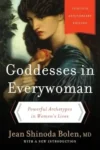
- Jean Shinoda Bolen’s 1984 book maps seven Greek goddesses, Artemis, Athena, Hestia, Hera, Demeter, Persephone and Aphrodite, as patterns active in women’s lives.
- Each feminine archetype has a gift and a shadow, which appears when a woman is possessed by the pattern or when trauma forces it underground.
- Later Jungian writers added the Wild Woman, the Sacred Prostitute, the Medial Woman, the descent to the dark goddess and the Crone.
- In depth therapy archetypes are lenses for noticing which pattern runs a life, where its shadow appears, and what the shadow is protecting.
Are the feminine archetypes the same as the anima?
Not quite, and the difference matters. Carl Jung used the word archetype for an inherited tendency to form certain images and to feel and act in certain ways: mother, child, wise old man, trickster. The archetype itself is never seen directly; we meet it in dreams, myths and the patterns our lives keep falling into.4 For a working introduction, see our piece on applying Jungian archetypes.
The anima is one specific archetype. In Jung’s essay “Concerning the Archetypes, with Special Reference to the Anima Concept” it is the feminine image in a man’s unconscious, the figure he projects onto women and meets in dreams as a guide, a seductress or a mother.4 Jung paired it with the animus, the masculine image in a woman. So the feminine archetypes are wider than the anima. They describe ways of being that live in women’s own psyches, and in men’s too, and later Jungian writers built that wider map. The anima and animus in relationships remain a useful way to see how these images are projected onto partners.
What are Bolen’s seven goddesses in everywoman?
The best known map of feminine archetypes is Goddesses in Everywoman, published in 1984 by the psychiatrist and Jungian analyst Jean Shinoda Bolen.1 Bolen later described how her psychiatric training, which still leaned on Freud’s account of women, did not fit the women she was treating, and how the Greek goddesses gave her a language that did.2 Her seven figures are Greek goddesses, grouped in three families:
The virgin goddesses
- Artemis, the huntress: goal-directed, independent, at home in wild places and in the company of other women.
- Athena, the strategist and “father’s daughter”: clear thinking, craft and competence, comfortable among men and institutions.
- Hestia, the goddess of the hearth: inward, quiet, centred, the contemplative or mystical side of a woman.
Bolen calls them virgin goddesses because each is “one-in-herself”: her sense of worth does not depend on a relationship.1
The vulnerable goddesses
- Hera, the queen of Olympus and goddess of marriage: commitment, loyalty, partnership.
- Demeter, the mother: nurturing, provision, the drive to care for others.
- Persephone, the maiden who becomes queen of the underworld: receptivity, youthfulness, and, in her mature form, a guide to the inner world.
These three are oriented toward relationship, and in the myths each one is wounded through it: Hera betrayed, Demeter robbed of her daughter, Persephone abducted.1
The alchemical goddess
Aphrodite, the lover, stands in a category of her own. She is relational like the vulnerable goddesses but never a victim, and she is the source of creative as well as erotic intensity. Bolen calls her alchemical because anything she touches is changed.1
The everyday labels often attached to Bolen’s scheme, the Mother, the Queen, the Lover, the Maiden, the Huntress, the Wise Woman and the Mystic, line up with Demeter, Hera, Aphrodite, Persephone, Artemis, Athena and Hestia. Bolen’s point was that most women have two or three of these active at once, that one tends to dominate at each stage of life, and that the ones a woman neglects still press for room.
What is the shadow side of each feminine archetype?
Jung defined the shadow as the parts of the personality we do not want to know about, which we tend to meet first in other people through projection.5 An archetype acquires a shadow in two ways. When a woman is possessed by one pattern, its virtues tip into their extremes. When trauma or family pressure forbids a pattern, it goes underground and returns in distorted form. Either way the shadow shows up most clearly in relationships.
Bolen describes the difficulties of each goddess in detail.1 The labels below are common shorthand rather than her own terms, but the patterns are hers:
- The Tyrant, shadow of the Queen. Hera’s jealousy and vindictiveness: control, rage at a perceived rival, and a marriage that matters more than the people in it.
- The Neglectful or Devouring Mother, shadow of the Mother. Demeter can give until she is empty, cling to children who need to leave, or, as in the myth where her grief left the earth barren, withdraw care altogether in depression. Jung’s essay on the mother archetype describes this same double face of the nourishing and the devouring mother.4 Our writing on the mother wound looks at how the child experiences it.
- The Seductress, shadow of the Lover. Aphrodite’s intensity can become serial infatuation, the use of attraction as power, and indifference to what is left behind.
- The Eternal Child, shadow of the Maiden. Persephone before her descent is compliant, passive and dependent, waiting for life to happen to her. Jungians call this the puella aeterna, the eternal girl.
- The Huntress’s shadow. Artemis can be cold to vulnerability in herself and others and quick to punish, as she does Actaeon and Niobe in the myths.
- The Wise Woman’s and the Mystic’s shadows. Athena can cut herself off from feeling and from other women; Hestia can disappear into self-effacement and be taken for granted.
The idea that each archetype has a bright form and two shadow poles was set out most systematically for masculine archetypes by Robert Moore and Douglas Gillette, whose King has the Tyrant and the Weakling as his shadows.13 The same logic helps with the feminine figures: the Queen’s shadow can be tyrannical, but it can also be the woman who never claims any authority at all. Patterns like these also explain why we marry our shadow: the trait we disown is the one we are drawn to, and then fight, in a partner.
How do therapists work with feminine archetypes?
In depth therapy an archetype is a lens, not a personality type. A therapist listens for which pattern is running a client’s life, which one is missing, and where the shadow appears: in a recurring dream, a repeated relationship, a reaction out of proportion to its trigger. The work usually includes:
- Exploring the origins of trauma, since a wound often fixes a woman in one archetype, the overgiving Demeter or the armoured Athena, as protection.
- Learning to set healthy boundaries, which every archetype needs in a different form.
- Developing a more integrated and authentic sense of self, in which several patterns can coexist.
- Engaging with mythology and storytelling, so that a client can see her situation in a larger story and stop reading it only as personal failure. Our exercises drawn from Greek myths show how this works in practice.
- Celebrating the diversity of feminine experience, rather than measuring a woman against one ideal.
Different shadows call for different emphases:
- The Queen’s shadows: boundary work and assertiveness, learning to hold authority without control, or to claim it if it has always been given away.
- The Mother’s shadows: attachment work and inner child healing, often attending to the client’s own unmothered places before her caretaking can soften.
- The Lover’s shadows: exploring intimacy and vulnerability, so that desire connects rather than conquers. Our article on the Lover archetype goes further.
- The Maiden’s shadows: inner child work and maturation, the slow move from Persephone the abducted girl to Persephone the queen who knows the underworld.
- The Huntress’s shadows: working with anger and empowerment, letting rage become directed energy, and making room for softness that has felt dangerous.
Because archetypal patterns are felt in the body before they are understood, we often pair this symbolic work with attention to the nervous system. A client may notice that her chest tightens whenever the Hera pattern of jealousy flares, and that body sensation becomes a doorway. That is where somatic therapy and brain-based trauma work meet the myths.
What does integration of the feminine archetypes look like?
Jung called the lifelong movement toward wholeness individuation. It does not mean becoming every goddess at once. It means that a woman stops being lived by one pattern and its shadow and can draw on what each situation needs: Artemis’s focus at work, Demeter’s care with a sick parent, Hestia’s solitude when she is depleted.
Integration also changes how she relates to other people. A woman who has owned her own Hera no longer needs to find the tyrant only in her mother-in-law. Shadow work that is done well tends to make people less judgmental and more generous, which is why Jungians have always held that individual healing has effects beyond the individual.
What other feminine archetypes have Jungian writers described?
Bolen’s seven goddesses are a starting point. Several other writers named feminine patterns that the goddess scheme leaves out, each with its own gifts and shadows.
The Wild Woman: Clarissa Pinkola Estés
Clarissa Pinkola Estés, a Jungian analyst and cantadora, a keeper of old stories, published Women Who Run With the Wolves in 1992.7 Through tales such as Bluebeard, Vasilisa and Skeleton Woman she describes the Wild Woman: the instinctive, intuitive self that knows when something is wrong. Its shadow is the woman cut off from that instinct, who keeps walking into the same predator’s house. Estés later wrote of the elder form of the same figure in The Dangerous Old Woman (2010).
The Sacred Prostitute: Nancy Qualls-Corbett
In The Sacred Prostitute: Eternal Aspect of the Feminine (1988), the Jungian analyst Nancy Qualls-Corbett drew on the temple traditions associated with Inanna, Ishtar and Aphrodite to describe a figure in whom sexuality and the sacred were not split.8 Her clinical argument is that modern culture separates the two, so that desire is either shameful or merely physical, and that recovering the image helps women, and men’s anima, reunite love and spirit.
The Medial Woman and Toni Wolff’s four forms
The Medial Woman comes from Toni Wolff, Jung’s long-time collaborator, whose essay “Structural Forms of the Feminine Psyche” set out four types: the Mother, the Hetaira or companion, the Amazon and the Medial Woman.6 The Medial Woman is attuned to the unconscious of the people and the age around her, and can give it voice. Her shadow is being flooded by what she channels. Wolff’s Hetaira is close to what others call the Muse, and her Amazon to the Warrioress.
The descent and the father’s daughter
Marion Woodman described, in Addiction to Perfection (1982), how women raised to perform for a patriarchal ideal turn against their own bodies through perfectionism and eating disorders.9 She followed it with The Pregnant Virgin (1985). Sylvia Brinton Perera’s Descent to the Goddess (1981) read the Sumerian myth of Inanna’s descent to her dark sister Ereshkigal as an initiation for such women into the rejected, raging and grieving feminine.10 Maureen Murdock’s The Heroine’s Journey (1990) answered the hero’s journey with a cycle in which a woman first identifies with masculine achievement and then has to descend and reclaim the feminine she left behind.11 Joseph Campbell himself lectured for years on the goddess traditions; those talks were collected as Goddesses: Mysteries of the Feminine Divine in 2013.14 Christine Downing’s The Goddess: Mythological Images of the Feminine (1981) took a more personal route, reading each Greek goddess through the stages of her own life.15
The Crone and the elder archetypes
Bolen’s Goddesses in Older Women (2001) turned to the archetypes that become available after midlife, including the Crone and the wisdom goddesses Sophia, Metis and Hecate.3 The Crone’s gift is truth-telling without needing approval; her shadow is bitterness, the figure culture has so often turned into the witch archetype. Related elder figures include the Matriarch, the Teacher and the Judge, whose shadows are control, rigidity and condemnation.
Role archetypes from Caroline Myss and others
Many names that circulate in women’s groups and archetype card decks come from a different tradition. Caroline Myss’s Sacred Contracts (2001) describes archetypes as patterns of energy that shape a life, including four survival archetypes, the Child, the Victim, the Prostitute and the Saboteur, that everyone carries.12 These figures are closer to roles than to Jung’s deep images, but they are useful for noticing where energy goes. They include:
- Spiritual and healing roles: the Priestess, the Healer, the Shaman and the Seer. The Healer’s gift and shadow are explored in our piece on the wounded healer; the Seer and the Visionary overlap with Wolff’s Medial Woman.
- Creative roles: the Creatrix, the Muse and the Innovator, whose shadows are creative block, living through another’s work, and novelty for its own sake.
- Power roles: the Empress, the Leader, the Warrioress and the Rebel, whose shadows are domination, burnout, needless combat and rebellion without a cause.
- Relational and social roles: the Peacemaker, the Diplomat, the Philanthropist and the Environmentalist, whose shadows are appeasement, self-erasure and rescuing.
- Restless and comic roles: the Adventurer and the Wisecracker, whose shadows are flight from commitment and humour used as armour.
Each of these figures is worth exploring in the same way: name the gift, find the shadow, and ask what the pattern is protecting.
Why does shadow work with feminine archetypes matter in therapy?
Many women arrive in therapy exhausted by a role they did not choose: the one who holds the family together, the one who never gets angry, the one who achieves. Archetypal language lets them see that role as a pattern with a history, older than their family, and therefore something they can step back from. The shadow, which once felt like the worst part of them, often turns out to hold the very energy they need, the anger of Artemis, the desire of Aphrodite, the solitude of Hestia.
At Taproot we use these ideas within Jungian depth therapy, working with dreams, myths and the body together, so that the archetypes a woman lives by become ones she can choose.
Frequently asked questions
What are the seven goddess archetypes?
In Goddesses in Everywoman (1984), Jean Shinoda Bolen describes seven Greek goddesses as feminine archetypes: the virgin goddesses Artemis, Athena and Hestia, who are complete in themselves; the vulnerable goddesses Hera, Demeter and Persephone, who are oriented toward relationship; and Aphrodite, the alchemical goddess of love and creativity. Most women have two or three active at once.
What is the shadow of the mother archetype?
The shadow of the mother archetype is the other face of care. Jung described the mother archetype as both nourishing and devouring. In Bolen’s Demeter it shows as giving until empty, clinging to children who need to leave, or withdrawing care in depression. Children of this shadow often carry what is called a mother wound.
Is the anima the same as the feminine archetype?
No. For Carl Jung the anima is one specific archetype: the feminine image in a man’s unconscious, which he projects onto women and meets in dreams. The feminine archetypes are a wider set of patterns, such as mother, maiden, lover and crone, that operate in women’s psyches and in men’s as well.
What is the Wild Woman archetype?
The Wild Woman archetype comes from Clarissa Pinkola Estés’s Women Who Run With the Wolves (1992). She uses folk tales such as Bluebeard and Vasilisa to describe a woman’s instinctive, intuitive nature, the part that senses danger and knows what she needs. Its shadow is a woman cut off from that instinct and easily captured by predators.
What is the Medial Woman in Jungian psychology?
The Medial Woman is one of four structural forms of the feminine psyche described by Toni Wolff, Jung’s collaborator, alongside the Mother, the Hetaira and the Amazon. The Medial Woman is attuned to the unconscious of the people and the era around her and gives it voice. Her risk is being overwhelmed by what she channels.
Related reading
- The Psychology of Magenta: Emotional Integration, Wholeness, and Spiritual Transcendence
- The Archetype’s in Brand Psychology: Building Authentic Identity Through Jung’s Timeless Wisdom
- Fibromyalgia: A Journey Through Pain and Healing
- Carl Jung’s Shadow: Holding the Tension of Opposites in Depth Psychology
- Can Jungian Archetypes be Evidence-Based?
- Unlocking the Wisdom of Your Dreams: A Journey with the Authors of “Dream Wise”
References
- Bolen, J. S. (1984). Goddesses in everywoman: A new psychology of women. Harper & Row.
- Bolen, J. S. (2019). From penis envy to goddesses in everywoman: Revising theory to fit experience. In E. D. Rothblum & E. Cole (Eds.), Professional training for feminist therapists: Personal memoirs (pp. 35-54). Routledge. https://doi.org/10.4324/9781315792842-4
- Bolen, J. S. (2001). Goddesses in older women: Archetypes in women over fifty. HarperCollins.
- Jung, C. G. (1968). The archetypes and the collective unconscious (R. F. C. Hull, Trans.; 2nd ed., Collected Works Vol. 9, Part 1). Princeton University Press. (Original work published 1959)
- Jung, C. G. (1959). Aion: Researches into the phenomenology of the self (R. F. C. Hull, Trans.; Collected Works Vol. 9, Part 2). Princeton University Press. (Original work published 1951)
- Wolff, T. (1995). Structural forms of the feminine psyche. Psychological Perspectives, 31(1), 77-90. https://doi.org/10.1080/00332929508404852
- Estés, C. P. (1992). Women who run with the wolves: Myths and stories of the wild woman archetype. Ballantine Books.
- Qualls-Corbett, N. (1988). The sacred prostitute: Eternal aspect of the feminine. Inner City Books.
- Woodman, M. (1982). Addiction to perfection: The still unravished bride. Inner City Books.
- Perera, S. B. (1981). Descent to the goddess: A way of initiation for women. Inner City Books.
- Murdock, M. (1990). The heroine’s journey: Woman’s quest for wholeness. Shambhala.
- Myss, C. (2001). Sacred contracts: Awakening your divine potential. Harmony Books.
- Moore, R., & Gillette, D. (1990). King, warrior, magician, lover: Rediscovering the archetypes of the mature masculine. HarperSanFrancisco.
- Campbell, J. (2013). Goddesses: Mysteries of the feminine divine (S. Rossi, Ed.). New World Library.
- Downing, C. (1981). The goddess: Mythological images of the feminine. Crossroad.






0 Comments