
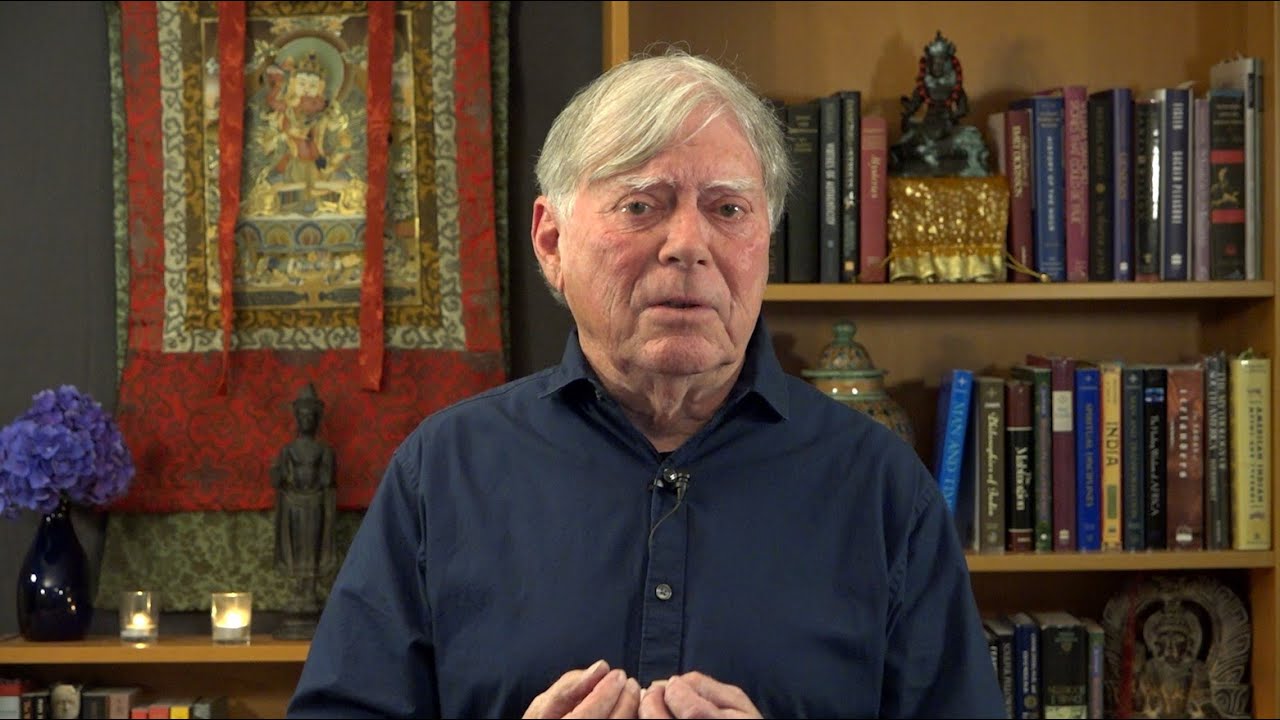
Michael Meade (born 1944) is an American mythologist, storyteller and author who uses old stories to make sense of personal and collective crisis. His core claim is psychological: every person carries an inborn genius, and suffering, including trauma, is an initiation that needs elders, ritual and story to be completed rather than simply survived.
Key takeaways
- Michael Meade, born in New York City in 1944, is a mythologist and storyteller who founded the Seattle-based Mosaic Multicultural Foundation in the 1990s.
- Meade revives the Roman idea of genius: every person is born with an inner spirit and a calling that wants to be lived.
- In Fate and Destiny he argues that fate is what we are given and destiny is what we make of it.
- Meade reads trauma, addiction and youthful risk-taking as rough initiations that need elders, ritual and story to be completed.
- His work with gang-involved youth and combat veterans puts the wounded in a witnessing community where wounds can become gifts.
Who is Michael Meade?
In a culture that trusts facts and data above everything else, Meade insists that people are also creatures of story. He argues that when a society loses its myths it loses its soul, and that without what he calls mythic imagination we become trapped in literalism. A layoff is only a layoff, a diagnosis is only a diagnosis, and a person cannot see the hidden meaning in a personal or collective crisis.
Meade came to wide notice as one of the teachers of the mythopoetic men’s movement of the late 1980s and early 1990s, working alongside the poet Robert Bly and the archetypal psychologist James Hillman. His work reaches well beyond gender. For more than three decades he has brought myth, poetry and mentoring to at-risk youth, gang-involved young people, prisoners, refugees and combat veterans, treating the oldest stories as a working technology for turning wounds into what he calls medicine for the community.
Running through all of it is one teaching: each person is born with a genius, a unique spirit that wants to be expressed, and that genius is usually awakened through some form of initiation.
Michael Meade’s life: from the draft to Mosaic
Meade was born on January 16, 1944, in New York City and grew up in an Irish-American family. He has described a youth split between street fights and gang culture on one side and a love of story and poetry on the other, a love that took hold when a relative gave him a book of mythology in early adolescence. He later earned a bachelor’s degree from St. John’s University in New York.
The decisive event of his early adulthood came during the Vietnam War. Drafted at twenty, he refused to be sent to Vietnam. He was held in a military stockade, went on a long hunger strike and spent time in solitary confinement before he was discharged. Meade has often returned to this episode as the moment he learned what it means to stand alone against a massive system, and it shaped his later thinking about fate and the individual soul.
He spent the following years studying mythology, anthropology, comparative religion and psychology, and learning the craft of telling stories aloud with a drum. In the 1990s he founded the Mosaic Multicultural Foundation in Seattle, a nonprofit network of artists, activists, mentors and community builders. Mosaic runs retreats and events that bring together at-risk youth, refugees, combat veterans and elders, on the premise that the oldest stories are often the most relevant to modern pain.
Meade also teaches as adjunct faculty in depth psychology at Pacifica Graduate Institute, which awarded him an honorary degree, and hosts the weekly Living Myth podcast, where he reads current events through mythic patterns. In his multicultural work he has collaborated with the poet and former gang member Luis J. Rodriguez and the Buddhist teacher Jack Kornfield.
Key milestones in the life of Michael Meade
| Year | Event / Publication |
| 1944 | Born January 16 in New York City. |
| 1960s | Drafted at twenty, refuses deployment to Vietnam, is held in a military stockade and goes on a hunger strike before his discharge. |
| Late 1980s | Teaches with Robert Bly and James Hillman in the mythopoetic men’s retreats. |
| 1992 | Co-edits The Rag and Bone Shop of the Heart with Bly and Hillman. |
| 1990s | Founds the Mosaic Multicultural Foundation in Seattle. |
| 1993 | Publishes Men and the Water of Life: Initiation and the Tempering of Men. |
| 1996 | Co-edits Crossroads: The Quest for Contemporary Rites of Passage. |
| 2010 | Publishes Fate and Destiny: The Two Agreements of the Soul. |
| 2016 | Publishes The Genius Myth. |
| 2018 | Publishes Awakening the Soul: A Deep Response to a Troubled World. |
Meade, Bly, Hillman and the men’s movement
The mythopoetic men’s movement grew out of weekend retreats in which Bly, Hillman, Meade and others told fairy tales, read poems and led men in drumming, ritual and frank talk about fathers, grief and anger. Bly’s Iron John (1990), a reading of the Grimm tale of the wild man, became its best-known book.12 The sociologist Michael Schwalbe, who studied one such group of men closely over several years, described the movement as an attempt to build a men’s community around feeling and myth rather than around competition.11
The three teachers worked as a trio. In 1992 they published The Rag and Bone Shop of the Heart, a large anthology of poems arranged by theme for men’s gatherings.6 Meade’s particular role was the storyteller: he carried the tales and the drum, and he pressed the group to treat the stories as maps of the psyche rather than as entertainment. Over time he stepped back from the label of the men’s movement and widened his audience to women, young people and whole communities.
What is mythic imagination?
For Meade, myth is not a false story about the past. It is a story that is true on the inside, a pattern that keeps repeating in individual lives and in history. Mythic imagination is the capacity to see an experience on two levels at once: what is literally happening, and the older pattern it belongs to. A person in the middle of a divorce, an addiction or a war is also, at another level, in the dark forest, the underworld or the belly of the whale.
This places Meade in a line that runs from Carl Jung through Joseph Campbell to Hillman, and close to storytelling psychologists such as Clarissa Pinkola Estés and Robert A. Johnson. In The World Behind the World (2008) he describes a second, invisible world of meaning and spirit that sits behind ordinary events and that myth and ritual keep open.5 When that world is forgotten, he argues, people lose the sense that their lives belong to a larger story.
What does Meade mean by genius?
Meade challenges the modern idea that genius belongs only to the extraordinarily gifted, the Einsteins and Mozarts. He goes back to the Roman meaning of the word. For the Romans a genius was a guardian spirit born with each person, the Latin counterpart of the Greek daimon; the word comes from the Latin root for begetting. In The Genius Myth (2016) Meade argues that everyone has such a genius, an inner spirit with its own gifts, temperament and calling.3
The core idea is that we are not blank slates. Each person arrives seeded with a unique pattern that wants to grow. Meade sets this against the hero myth: the heroic journey is usually told about a chosen few, while the genius myth holds that every life carries a genuine calling. When that inner genius is ignored, shamed or trained out of someone, Meade reads the resulting depression, restlessness and anxiety as signs of a life lived against its grain. Healing, in his view, means uncovering the original seed.
The idea is close to Hillman’s acorn theory in The Soul’s Code (1996), which holds that each person carries a particular image of who they are meant to be, the way an acorn holds the oak.8 Hillman argued that this image calls a life toward its character; Meade develops the same intuition in the language of the storyteller and the village.
Fate and destiny: the two agreements of the soul
In Fate and Destiny: The Two Agreements of the Soul (2010) Meade distinguishes two forces that shape every life.2
- Fate is what you are given: your family, your body, your era, the wounds that happened to you. You do not choose your fate, and it often appears as limitation.
- Destiny is what you make of that fate. It is the destination the soul is trying to reach, and it can only be reached by going through fate rather than around it.
For trauma recovery this distinction does a lot of work. The events cannot be undone, so recovery begins with accepting them as part of one’s fate. That acceptance is not resignation. Meade argues that the very place where a person was wounded is often where their particular gift is hidden, so the work is to turn fate toward destiny. A line popularly attributed to Rumi, that the wound is where the light enters, carries the same intuition, and Meade returns to it in his own terms when he speaks of the wound as the doorway to the genius.
What is the Water of Life?
Meade’s first major book, Men and the Water of Life: Initiation and the Tempering of Men (1993), is built around stories, chief among them the Grimm tale of the water of life.1 In the tale a king lies dying and his sons set out to find the water that can heal him. The proud elder brothers are trapped in a ravine; the youngest, who answers a dwarf with courtesy, is shown the way, brings back the water and survives the betrayal of his brothers.
Meade reads the water of life as the vitality a person or culture needs when the old order is failing. Between the stories he works through fathers and sons, anger, grief, the warrior and the elder, and the ways men are tempered like metal: heated, struck and cooled until they hold a shape. He revised and expanded the book as The Water of Life: Initiation and the Tempering of the Soul in 2006, widening it beyond men.
How does Meade understand trauma as a rough initiation?
Meade looks at trauma less as a medical disorder than as a rough initiation. The structure of initiation comes from anthropology. Arnold van Gennep showed in The Rites of Passage (1909) that rites across cultures move through three phases: separation from the old status, a threshold or liminal period, and incorporation into a new one.9 Victor Turner later described that middle, liminal phase as a time when ordinary identity dissolves and initiates are held together by elders and by the bond with each other.10
Traditional initiation rites deliberately broke the young person’s attachment to childhood comfort, an ordeal Meade compares to cooking, and they did so inside a container of elders, ritual and story. Modern societies have largely abandoned those rites. Meade argues that the need for initiation does not disappear; it goes underground. The psyche then seeks it through unconscious means: drugs and drinking, dangerous driving, gang violence, accidents, sudden losses, war.
From this angle trauma is an initiation that started without anyone there to guide it. The person has been separated from ordinary life and thrown into the threshold, but no one helps them return and be received with a changed identity. The goal of therapy, or of mentoring, is to complete the initiation: to help the person come back across the threshold and harvest the wisdom of the darkness they survived. This links Meade to the archetypal reading of trauma developed by Donald Kalsched, who also sees the psyche working to protect a core of the self until it can be safely reached.
Initiation in practice: youth, veterans and elders
Meade has tested the initiation idea in rooms full of people who live it. With gang-involved and incarcerated young people he reads gang initiation, risk-taking and violence as the young person’s attempt to be initiated when the surrounding culture offers no rite. His answer is to put the young people in a circle with mentors and elders, tell them old stories, invite them to answer with their own poems and stories, and let the adults be moved by what the young people say. The 1996 collection Crossroads: The Quest for Contemporary Rites of Passage, which he co-edited with Louise Carus Mahdi and Nancy Geyer Christopher, gathers essays by teachers, therapists and youth workers on rebuilding such rites.7
His work with combat veterans follows the same pattern. Mosaic retreats and welcome-home events bring veterans together with civilians, elders and sometimes young people, so that what veterans carry home can be spoken, witnessed and received by a community. Meade’s view is that a warrior returning from war has crossed a threshold that his or her society does not know how to receive, and that the return itself needs a rite. Clinicians now describe part of what veterans carry as moral injury: lasting harm from perpetrating, failing to prevent or witnessing acts that violate deeply held moral beliefs.13 Litz and colleagues proposed that repair requires not only processing the memories but also reconnecting with community and making amends, which is close to what Meade’s ceremonies try to provide.
How Meade’s ideas work in therapy
We find Meade useful at Taproot because he gives clients a frame in which their suffering means something without being excused or prettified. Many people arrive with a story of themselves as damaged. A mythic frame offers another story: something happened that separated them from ordinary life, they have been living on the threshold, and the work now is to come back changed.
In practice this shapes several things a depth-oriented therapist does. We listen for the initiatory pattern in addiction, risk-taking and repeated crises, especially in young adults, and treat it as an attempt to grow up rather than only as a symptom. We ask what a person’s genius has been trying to do: what they loved before they learned to hide it, what keeps returning in dreams and daydreams. We use stories and images, a practice laid out in using mythology as a therapist, so that a client can see their situation from the inside of a pattern instead of only from the outside. And we distinguish fate from destiny: what cannot be changed has to be grieved and accepted before it can be put to use.
Meade’s emphasis on the body and on ritual also fits the brain-based and somatic trauma work we do. A rough initiation lives in the nervous system as much as in the story a person tells. Approaches such as Brainspotting for trauma help process what the body is still holding, while the mythic frame helps a person decide what that experience will mean. For men in particular, his work sits naturally beside that of James Hollis and Robert Moore on the psychology of the second half of life and the mature masculine.
Legacy: weaving the world back together
Meade’s legacy is the restoration of community through story. He teaches that when people share their wounds in a ritual setting, in front of others who are willing to be affected, the wounds can become gifts to the village rather than private shames. The village needs the wounded, because their stories carry knowledge it lacks.
In Why the World Doesn’t End (2012) and Awakening the Soul: A Deep Response to a Troubled World (2018) he applies this to a time he describes as an unraveling, when institutions are failing and the climate is shifting.4 His reading of world-ending myths is that the end of one world is always the beginning of another. The task of an awakened person is to find the thread of their own genius and use it to help weave the world back together. That is a call to the kind of soul-centered life described by Thomas Moore, and to the communal ritual that runs through the rituals of healing.
Michael Meade’s major books
- Men and the Water of Life: Initiation and the Tempering of Men (HarperSanFrancisco, 1993)
- The Water of Life: Initiation and the Tempering of the Soul (Greenfire Press, 2006)
- The World Behind the World (Greenfire Press, 2008)
- Fate and Destiny: The Two Agreements of the Soul (Greenfire Press, 2010)
- Why the World Doesn’t End (Greenfire Press, 2012)
- The Genius Myth (Greenfire Press, 2016)
- Awakening the Soul: A Deep Response to a Troubled World (Greenfire Press, 2018)
Readers who want the wider background can start with Bly’s Iron John, Hillman’s The Soul’s Code and van Gennep’s The Rites of Passage.
Meade’s conviction that a wound can become a doorway is close to the heart of our work. For a person living through a rough initiation of their own, our Jungian therapy joins depth psychology with somatic trauma work, and Taproot Therapy Collective is the place to start that conversation.
Frequently asked questions
Who is Michael Meade?
Michael Meade is an American mythologist, storyteller and author, born in New York City in 1944. He taught with Robert Bly and James Hillman in the mythopoetic men’s movement, founded the Mosaic Multicultural Foundation in Seattle, hosts the Living Myth podcast and works with at-risk youth, veterans and communities through myth and ritual.
What does Michael Meade mean by the genius myth?
In The Genius Myth (2016) Michael Meade uses genius in its old Roman sense: a guardian spirit born with each person. He argues that everyone, not just the exceptionally gifted, carries a unique inner pattern and calling, and that ignoring it often shows up as depression, restlessness or anxiety.
What is the difference between fate and destiny according to Michael Meade?
In Fate and Destiny: The Two Agreements of the Soul (2010), Michael Meade defines fate as what we are given, such as family, body, era and wounds, and destiny as what we make of it. Destiny is reached by going through fate, which is why accepting painful events matters for healing.
What does Michael Meade say about trauma and initiation?
Michael Meade sees trauma as a rough initiation. Traditional rites of passage separated a person from ordinary life, held them on a threshold and welcomed them back changed. Modern life lacks these rites, so crises initiate people without guidance, and therapy or mentoring helps complete the return.
What is the Mosaic Multicultural Foundation?
The Mosaic Multicultural Foundation is a Seattle-based nonprofit founded by Michael Meade in the 1990s. It brings mentors, artists, storytellers and elders together with at-risk youth, refugees and combat veterans in retreats and events that use myth, poetry and ritual to address personal and communal wounds.
Related reading
- Francine Shapiro: From Cancer Diagnosis to Revolutionary Trauma Treatment Through Eye Movements
- William Blake and the Visionary Imagination
- Who Is Stanislas Dehaene? The Neuroscientist Who Discovered How Consciousness Ignites in the Brain
- The Archetypal Psychology of June Singer: Exploring the Creative Unconscious
- Henry Corbin: Visionary of the Imaginal Realm
- Richard Tarnas: Cultural History Through Astrology
References
- Meade, M. (1993). Men and the water of life: Initiation and the tempering of men. HarperSanFrancisco.
- Meade, M. (2010). Fate and destiny: The two agreements of the soul. Greenfire Press.
- Meade, M. (2016). The genius myth. Greenfire Press.
- Meade, M. (2018). Awakening the soul: A deep response to a troubled world. Greenfire Press.
- Meade, M. (2008). The world behind the world: Living at the ends of time. Greenfire Press.
- Bly, R., Hillman, J., & Meade, M. (Eds.). (1992). The rag and bone shop of the heart: Poems for men. HarperCollins.
- Mahdi, L. C., Christopher, N. G., & Meade, M. (Eds.). (1996). Crossroads: The quest for contemporary rites of passage. Open Court.
- Hillman, J. (1996). The soul’s code: In search of character and calling. Random House.
- van Gennep, A. (1960). The rites of passage (M. B. Vizedom & G. L. Caffee, Trans.). University of Chicago Press. (Original work published 1909)
- Turner, V. (1969). The ritual process: Structure and anti-structure. Aldine.
- Schwalbe, M. (1996). Unlocking the iron cage: The men’s movement, gender politics, and American culture. Oxford University Press.
- Bly, R. (1990). Iron John: A book about men. Addison-Wesley.
- Litz, B. T., Stein, N., Delaney, E., Lebowitz, L., Nash, W. P., Silva, C., & Maguen, S. (2009). Moral injury and moral repair in war veterans: A preliminary model and intervention strategy. Clinical Psychology Review, 29(8), 695–706. https://doi.org/10.1016/j.cpr.2009.07.003










0 Comments