
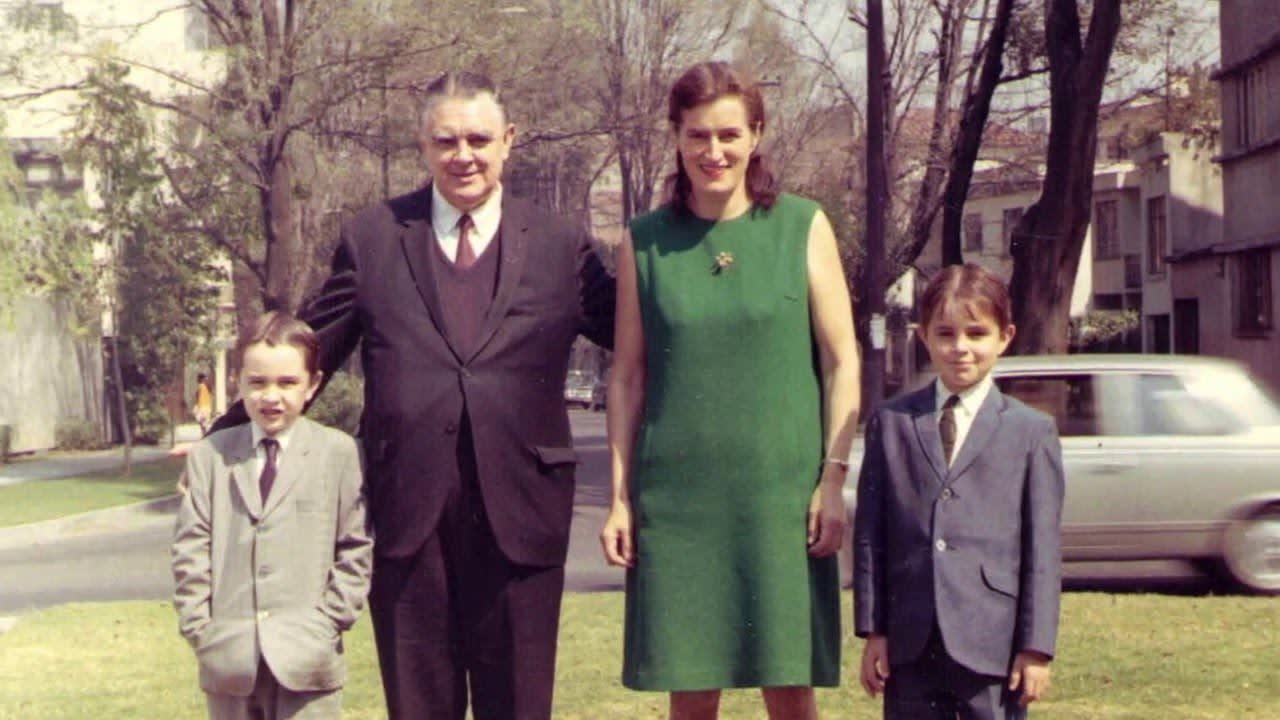
Victor Turner (1920-1983) was a Scottish-born anthropologist who studied ritual among the Ndembu of Zambia and turned what he saw into a theory of how people change. His key ideas, liminality, communitas, social drama and the anthropology of performance, describe the in-between state where an old identity has ended and a new one has not yet formed, which is why therapists still use them.
Key takeaways
- Victor Turner (1920-1983) built his theory of ritual from fieldwork among the Ndembu of Zambia between 1950 and 1954.
- Liminality is the in-between phase of a transition, when an old status has ended and a new one has not yet begun.
- Communitas is the direct, equal bond that forms among people who share a liminal state, and Turner saw social life moving between it and structure.
- A social drama unfolds in four phases: breach, crisis, redress, and either reintegration or recognition of schism.
- Therapists use Turner’s ideas to understand life transitions, the therapy room as a protected threshold, and symbols that carry both meaning and bodily feeling.
Who was Victor Turner?
Victor Witter Turner was born in Glasgow in 1920 and died in Charlottesville, Virginia, in December 1983. His mother, Violet Witter, was an actress, and his later habit of seeing social life as something people perform had early roots in the theatre. He began studying English at University College London, served in the Second World War as a conscientious objector in a non-combatant bomb disposal unit, and returned after the war to take a degree in anthropology.
He went on to the University of Manchester, where he wrote his doctorate under Max Gluckman, the founder of what became known as the Manchester School of social anthropology. Gluckman’s group was interested in conflict: how societies hold together not in spite of quarrels but through the way quarrels are handled. From 1950 to 1954 Turner worked as a research officer for the Rhodes-Livingstone Institute and lived with his wife, Edith Turner, and their children among the Ndembu, a matrilineal people of the Mwinilunga district in what was then Northern Rhodesia and is now Zambia.
The Ndembu fieldwork fed every book he wrote. The first, Schism and Continuity in an African Society (1957), was a study of village politics.1 The later Ndembu books, The Forest of Symbols (1967), The Drums of Affliction (1968) and The Ritual Process (1969), turned to ritual, and they made his name.2,3,4 In 1958 Victor and Edith Turner became Roman Catholics, a choice that shaped his later interest in pilgrimage and his sympathy for religious experience as something real to the people who have it.
Turner moved to the United States in the 1960s. He taught at Cornell, then joined the Committee on Social Thought at the University of Chicago, and from 1977 until his death held a chair in anthropology and religion at the University of Virginia. In these American years his range widened. He wrote on Christian pilgrimage with Edith Turner, on political history as drama, on play and flow, on theatre with the director Richard Schechner, and, at the very end, on the brain and the body.
The thread through all of it is process. Most anthropologists of his generation described societies as structures: kinship charts, political offices, systems of rules. Turner was more interested in what happens when structure loosens, when a person or a group is between one state and the next. He argued that rituals, symbols and performances do not simply mirror a social order; they are the means by which people move through change and sometimes remake the order itself. Mathieu Deflem’s review of his method calls it “processual symbolic analysis,” a name that fits.15
That focus is why his work matters to a therapist. A person in therapy is very often in exactly the condition Turner spent his life describing: an old way of living has broken down, a new one is not yet available, and the time in between is frightening and fertile at once. I use Turner’s insights in therapy work frequently at my practice.
His ideas developed in a rough sequence: the reading of symbols, the ritual process and liminality, communitas and the liminoid, pilgrimage, social drama, play and flow, the body and brain, transgression, politics, and performance. Each one ends up somewhere near the consulting room.
How did Turner read ritual symbols?
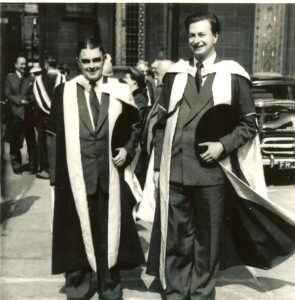
Turner’s first major contribution was a method for interpreting ritual symbols, set out in the essays collected in The Forest of Symbols.2 He defined a ritual symbol as the smallest unit of ritual that still carries the specific properties of ritual behaviour: an object, an action, a gesture, a place or a colour that the participants treat as meaningful. The question was how to find out what such a thing means without simply imposing the anthropologist’s theory on it.
His approach differed from the structural semiotics that grew out of Ferdinand de Saussure and was then being applied to myth by Claude Lévi-Strauss. Saussurean analysis treats a sign as a term in an abstract system of contrasts. Turner wanted to know what symbols do to the people who use them in a particular rite, on a particular day, with particular quarrels in the background. His intellectual debts were to Émile Durkheim on the social force of the sacred, to Gluckman on conflict, and, openly, to Sigmund Freud on the way a symbol condenses several meanings and ties them to bodily desire. Later readers have often placed his work alongside the phenomenology of Edmund Husserl and Maurice Merleau-Ponty, because like them he started from lived experience rather than abstract systems, but his own philosophical source in the late work was Wilhelm Dilthey.
Dominant symbols and the milk tree
Turner distinguished dominant symbols, which recur across many rituals and carry the weight of the whole tradition, from instrumental symbols, which serve a particular purpose in a single rite. His best-known example is the mudyi, the “milk tree” (Diplorhynchus condylocarpon), which oozes a white latex when its bark is cut. The mudyi is the dominant symbol of Nkang’a, the Ndembu girls’ puberty ritual. The novice is wrapped in a blanket and laid at the foot of a young mudyi tree, where she must lie motionless for most of a day while the women dance around her.
When Turner asked Ndembu women what the tree meant, they told him it stood for breast milk, for the mother’s breasts, and from there for the bond between mother and child. More broadly, it stood for the matrilineage, the line of descent through women on which Ndembu society is organized, and for womanhood, for learning, and for the continuity of the group. A single tree held together a nursing infant, a line of grandmothers and the principle of social order.
He identified three properties of dominant symbols. The first is condensation: many things are represented in one form. The second is unification of disparate meanings: the things represented are linked by an obvious association, here the whiteness and the flow of the milky sap. The third, and the most interesting for psychology, is polarization of meaning. At one pole, which he called ideological or normative, a symbol points to moral and social order: matriliny, the rules of residence, the duties of women. At the other pole, which he called sensory or “orectic,” meaning related to desire and feeling, it points to physiological processes and strong emotions: milk, the breast, nursing, the body.
In ritual, Turner argued, the two poles exchange qualities. The raw emotional energy of the sensory pole is attached to social norms, so that obligations become desirable, and the norms in turn give shape and meaning to bodily feeling. He described the result as making the obligatory desirable. A therapist will recognize the pattern: the images that matter most in a person’s life are seldom purely ideas or purely sensations. They carry a felt body charge and a moral meaning at the same time.
The mudyi also showed Turner that one symbol can mean opposed things to different people. In Nkang’a the tree stands for the unity of all Ndembu women, but at certain moments in the rite it also marks the separation of the novice from her own mother, and the women of the novice’s own village from the women of other villages. The same tree that announces harmony stages a conflict. A dominant symbol gathers up the tensions of a group as well as its ideals.
Exegetical, operational and positional meaning
To interpret a symbol without projecting onto it, Turner examined three fields of meaning. Exegetical meaning is what participants say a symbol means, what an Ndembu ritual specialist or a novice explains when asked. Operational meaning is what is done with the symbol: who handles it, who is excluded, which feelings people show in its presence. Positional meaning is the symbol’s relation to other symbols in the same rite or in the wider system, such as the opposition between white and red objects.
The three fields often disagree, and the disagreement is informative. People may say a rite is about the unity of women while their behaviour around the symbol shows rivalry. Turner thought the anthropologist had to attend to all three, and to the social situation, to grasp what a symbol really does. The parallel with clinical listening is close: what a client says a dream image means, how the client behaves when the image comes up, and where the image sits among the person’s other images are three different kinds of evidence.
Colour, instrumental symbols and the mukula tree
Positional meaning comes out most clearly in Turner’s essay on colour classification in Ndembu ritual. The Ndembu ritual palette is built on a triad of white, red and black. White, the colour of the milk tree and of white clay, is tied to goodness, health, purity, milk and semen. Red, the colour of the mukula tree (Pterocarpus angolensis), which exudes a red gum, is tied to blood in all its ambivalence: the blood of birth and menstruation, of hunting and killing, of circumcision. Black is tied to death, sexual passion, night and misfortune. Instrumental symbols, the leaves, medicines, clays and gestures that fill out each rite, take their sense from where they sit in this scheme.
Turner went further and suggested that the colour triad may rest on the most basic experiences of the human body, the substances the body produces and the states it passes through. Whether or not that wider claim holds everywhere, it is an early version of a view that symbolic meaning grows out of bodily experience, which he returned to at the end of his life.
Comparative symbology, myth and literature
From the 1970s Turner described his project as “comparative symbology,” a broad study of symbols across cultures and genres, including myth, literature and drama in complex societies as well as tribal ritual. He wrote the entry on myth and symbol for the International Encyclopedia of the Social Sciences (1968), and in “Social Dramas and Stories about Them” (1980) he argued that narrative grows out of social drama: people tell stories in order to make sense of breaches and crises after the fact, and the stories then feed back into how later conflicts are conducted.8
This literary turn found readers in comparative literature, folklore and religious studies. It also put Turner in the same conversation as the “thick description” of Clifford Geertz, whose essays in The Interpretation of Cultures (1973) also treated culture as a text to be read, and later with James Clifford and George Marcus, whose edited volume Writing Culture (1986) questioned how ethnographers write. The poets and translators of “ethnopoetics,” such as Jerome Rothenberg and Dennis Tedlock, who set out to present oral and ritual traditions as literature, were working in the same years, and writers on border identity such as Gloria Anzaldúa, in Borderlands/La Frontera (1987), wrote about in-between states in closely related terms.
What is liminality?
Liminality is the in-between phase of a transition, the period when a person has left one status and has not yet entered the next. The word comes from the Latin limen, “threshold.” Turner took the idea from the French folklorist Arnold van Gennep, whose Les Rites de passage (1909) showed that rites of passage everywhere tend to fall into three phases: separation from the old state, a marginal or liminal phase, and incorporation into the new state.
Van Gennep had treated the middle phase as one part of a structure. Turner made it the center of attention. In his 1964 essay “Betwixt and Between: The Liminal Period in Rites de Passage,” reprinted in The Forest of Symbols, he described liminal persons as structurally invisible: they are no longer classified the way they were, and not yet classified the way they will be.2 They are often treated as dead, or as unborn infants. They may be stripped, painted, hidden, made to lie still, deprived of names, dressed identically, or made to submit to elders without complaint. The symbolism of the liminal period is the symbolism of tombs and wombs, of darkness, of the wilderness, of the moon in eclipse.
Turner saw that this ambiguity was not a defect of the rite but its working part. Because liminal people are outside the ordinary scheme, they can be taught, reshaped and given new knowledge. Ndembu novices in the liminal period of initiation receive instruction in the sacred lore of their people, are shown sacred objects and are told the meanings of masks and songs. The old self is taken apart so that the new one can be assembled.
Ndembu rites of passage
Ndembu ritual gave Turner his examples. In Nkang’a, the girl lying beneath the milk tree is in the liminal phase in the most literal way: covered, immobile, unseen, ritually dead to her childhood. After a period of seclusion she reappears as a woman ready for marriage. In Mukanda, the boys’ circumcision rite, the novices are separated from their mothers and from the village, circumcised, and secluded in a lodge in the bush for weeks or months, where they are taught by the men, endure hardship and learn songs and lore. They return as men who belong to the moral community of adult males. The roots and therapeutic value of initiation rites show the same three-part movement across many cultures.
His most striking example comes from The Ritual Process: the installation of a senior chief, the Kanongesha. Before he takes office, the chief-elect and his ritual wife are secluded in a small shelter, dressed in ragged waist-cloths, and made to sit hunched in an attitude of shame. A ritual official harangues him, and anyone he has wronged may insult him to his face and demand redress. The man about to hold the highest office is first made the lowest of the low. Turner read this as a lesson that the chief’s authority belongs to the whole community, and that the person who holds it must first be stripped of his private self-interest.4
He also analyzed rituals of affliction, rites performed when a person suffers illness, misfortune or infertility that the Ndembu attribute to an ancestral shade. The Ritual Process opens with Isoma, a rite for women who have miscarried or lost children, and The Drums of Affliction describes a whole family of cult rituals of this kind.3 In these rites the sufferer passes through the same liminal sequence as an initiate and, if healed, may become a member and later a practitioner of the cult that treated her. The patient becomes the healer, a pattern Jungians know as the wounded healer.
The scholar of religion Mircea Eliade was describing initiation in the same years, in Rites and Symbols of Initiation (1958), as a symbolic death and rebirth. Turner’s emphasis was more social than Eliade’s. He wanted to know what liminality does to relationships between people, which led him to communitas.
What is communitas?
Communitas is Turner’s name for the bond that forms among people who share a liminal state. He chose a Latin word to avoid the ordinary meanings of “community.” It describes an unstructured, direct relationship between people who meet one another as equals, stripped of rank and role. Novices secluded together, pilgrims on the road, people in a disaster or a movement often describe it: a sudden sense of being with others completely, without the usual barriers.
In The Ritual Process Turner set communitas against structure, the ordinary arrangement of statuses, offices, property and obligations. He called communitas “anti-structure.” He did not mean it was chaos. He meant that human beings need both modes. Structure lets a society organize labour, property and law. Communitas renews the sense that beneath every role there is a person who matters equally. A society with only structure grows rigid and alienating. A society with only communitas cannot survive. Turner described social life as a dialectical process moving back and forth between the two.4
He distinguished three forms. Existential or spontaneous communitas is the raw experience itself, which cannot last. Normative communitas is what happens when a group tries to preserve that experience by turning it into an enduring organization, with rules. Ideological communitas is a utopian picture of society based on it. His historical examples included the early Franciscans, whose dispute over absolute poverty showed how a spontaneous communitas of poor friars became a structured order, as well as millenarian movements and the American counterculture of the 1960s, whose language of love and brotherhood he heard as an attempt to live in permanent liminality.
This dialectic anticipated later social theory, such as Pierre Bourdieu’s Outline of a Theory of Practice (1977 in English), that moved away from static, functionalist pictures of society toward accounts of how people produce and change their social world through action. For therapy the distinction is practical. Many people come to therapy suffering from too much structure, roles that have hardened into a prison, and many come after communitas has collapsed into isolation. A good group, a good marriage and a good therapeutic relationship move between the two.
What is the difference between liminal and liminoid?
Turner noticed that the experience of liminality survives in industrial societies, but in a changed form. In the 1974 essay “Liminal to Liminoid, in Play, Flow, and Ritual: An Essay in Comparative Symbology,” reprinted in From Ritual to Theatre (1982), he introduced the word “liminoid” for these modern relatives of the liminal.10
Liminal rites in tribal and agrarian societies are obligatory, collective and tied to the calendar or the life cycle. Everyone goes through them, and they serve the society’s need to move people into new roles. Liminoid experiences in modern societies are optional and individual. They happen in leisure time rather than as part of work or religious duty: art, theatre, sport, music festivals, travel, carnival, retreats. They are often produced by individuals or small groups, sold as commodities, and critical of the mainstream rather than in its service.
Turner did not treat the liminoid as a lesser copy. Modern art and theatre, he argued, are where complex societies do much of their experimenting, imagining alternatives to the present order. But the liminoid lacks the guarantee of a recognized return. A person can have a powerful experience at a festival or on a retreat and come home to a life that has not changed, with no community to receive the new self. Scholars of social movements and subcultures have since used his framework to study protest, festival and popular resistance, and to ask how the creative charge of the liminal is absorbed and sold back.
Therapy itself has a liminoid quality. It is chosen, private and set apart in time and space, and it relies on the client to bring what happens there back into ordinary life. Part of a therapist’s job is to help with that incorporation phase that modern life often leaves out.
How did Turner understand pilgrimage?
Pilgrimage became the major extension of Turner’s ritual theory into complex societies. In Image and Pilgrimage in Christian Culture (1978), written with Edith Turner, he and his wife studied pilgrimages to the shrine of the Virgin of Guadalupe in Mexico, to Lourdes, to Lough Derg and Knock in Ireland, and to other Christian sites, and compared them with pilgrimage in other religions.6 A further collection, Process, Performance, and Pilgrimage (1979), gathered essays from his Indian lectures on the same themes.
The Turners argued that pilgrimage is the liminal phase of a rite of passage spread out over the length of a journey. The pilgrim separates from home and ordinary status, travels through a long middle period of hardship, ordeal and exposure, and is incorporated again on return, often with a changed standing. Because pilgrimage in the world religions is voluntary rather than obligatory, they called it “liminoid” or quasi-liminal. On the road and at the shrine, pilgrims of different classes and regions meet in something close to communitas, and many describe the meeting as the heart of the experience.
Pilgrimage, in their account, is never simply outside structure. Churches and states try to control shrines, set up rules, collect revenue and decide which apparitions are recognized. A pilgrimage can renew the established order or challenge it. The Turners pointed to the Virgin of Guadalupe, whose image was carried by Father Miguel Hidalgo’s insurgents in 1810 at the start of the Mexican war of independence, as an example of how a pilgrimage symbol can become a political banner. They were also alert to the way different groups contest the meaning of the same sacred journey.
The mythologist Joseph Campbell had built his monomyth of the hero’s departure, initiation and return in The Hero with a Thousand Faces (1949) on the same three-part pattern as the rites of passage that van Gennep described. The Turners added the social side: the pilgrim does not travel alone, and the companions met on the road matter as much as the destination. Later researchers have used their framework to study secular travel and tourism, from backpacking to visits to war memorials and the homecoming journeys of diaspora communities, as journeys that promise a temporary release from everyday roles.
What is a social drama?
The social drama was Turner’s first theoretical idea, introduced in Schism and Continuity in an African Society and developed for the rest of his career.1 It is a unit of social process that arises when conflict comes into the open, and it unfolds in four phases.
- Breach. Someone publicly breaks a norm or rule that governs relations in the group. The breach is often deliberate and symbolic, an act that stands for a deeper grievance.
- Crisis. The conflict widens. People take sides, old divisions surface, and the tension spreads along the existing fault lines of the group.
- Redress. Leaders or representatives use formal and informal means to contain the crisis: advice, arbitration, courts, ritual, sometimes violence.
- Reintegration or recognition of schism. Either the disturbed group is reconciled, or the split is accepted and the parties separate, as when a faction leaves to found a new village.
In Schism and Continuity Turner traced a series of such dramas in one Ndembu village over years, centered on a man named Sandombu, whose ambition to become headman repeatedly brought him into conflict with his matrilineal kin. He showed how Ndembu village life was shaped by a structural contradiction between matrilineal descent, which ties a man to his mother’s kin, and virilocal marriage, which brings wives to live in their husband’s village. Social dramas made this hidden contradiction visible.
Turner argued that social dramas occur in every society and at every scale, from family arguments to national crises. In Dramas, Fields, and Metaphors (1974) he applied the model to history: to the Mexican insurrection led by Hidalgo in 1810, and to the conflict between Thomas Becket and King Henry II at the Council of Northampton in 1164, where Becket’s choice of martyrdom followed a religious script.5 Other scholars have since used the four phases to analyze political scandals, including Watergate, and revolutionary episodes from 1968 to the uprisings of the Arab Spring.
The redressive phase interested him most, because there a society reflects on itself. Trials, rituals and public performances are moments when a group looks at its own values and asks what has gone wrong. He came to think that theatre itself grew out of the redressive phase of social drama, and that stage drama in turn gives people models for living through real conflicts. Social dramas are, in that sense, a group’s commentary on itself.
Families in crisis follow the same pattern with painful accuracy. A breach (an affair, a disclosure, a child’s refusal), a crisis in which relatives take sides, attempts at redress, and then either reconciliation or a lasting split. Family therapists and individual therapists working with relational injury often find Turner’s sequence a clearer map than a diagnosis.
How did Turner connect play, flow and ritual?
In his later work Turner treated play as a serious human capacity closely related to liminality. He drew on the Dutch historian Johan Huizinga, whose Homo Ludens (1938) argued that play is older than culture and underlies law, poetry, war and religion, and on the French sociologist Roger Caillois, whose Man, Play and Games (1958 in French) classified games into competition, chance, imitation and vertigo.
For Turner, play is a frame that suspends ordinary rules so that new ones can be tried out. Inside the play frame, people can test roles, invert hierarchies, experiment with identity and imagine alternatives without committing to them. That is precisely what the liminal phase of ritual permits. The subtitle of From Ritual to Theatre is The Human Seriousness of Play, and the book argues that ritual, theatre and play are related ways of putting the subjunctive mood, the “as if” and “what if,” into action.10
He insisted that even highly formal rituals contain improvisation. Ndembu ritual specialists varied medicines, songs and sequences to fit the patient and the situation, and the rite’s effect depended partly on how well they read the moment. Ritual was a living performance, not a fixed script. That improvisational element is what lets a rite create new meaning in the moment rather than merely repeat old meaning.
In the same 1974 essay Turner took up the concept of flow from the psychologist Mihaly Csikszentmihalyi, whose studies of chess players, rock climbers, dancers and surgeons, published in Beyond Boredom and Anxiety (1975), described a state of complete absorption in which action and awareness merge, self-consciousness drops away, and the activity becomes its own reward.10 Turner saw flow as an individual counterpart of communitas. Both involve a loss of ordinary self-monitoring, both feel intrinsically rewarding, and both happen most readily in frames set apart from everyday life.
Theatre artists took his ideas up quickly. The “happenings” and environmental theatre of the 1960s had already blurred performer and audience. Turner gave these experiments an anthropological vocabulary, and site-specific and participatory theatre since then has often cited him. Game studies and the anthropology of art have used his work to ask how play operates in different cultures.
For a therapist, Turner’s account of play describes something clinicians have known since Donald Winnicott: change happens most easily in a space that is protected and not quite real, where a person can try out a feeling or a way of being without immediately paying the full price for it.
What did Turner say about the body and the brain?
In the last years of his life Turner turned to the biology of ritual. His lead essay “Body, Brain, and Culture,” given at a 1982 symposium and published in Zygon in 1983, called for anthropologists to take neuroscience seriously.11 He argued that culture is not written on a blank slate. Human beings come with bodies and brains shaped by evolution, and rituals work in part because they engage those bodies directly through rhythm, music, dance, fasting, pain, darkness, chanting and repetition.
He drew on the neuroscience available to him. Paul MacLean’s model of a “triune brain,” with older brainstem and limbic layers beneath the neocortex, offered him a way to think about how ritual reaches below verbal thought, and research on the two cerebral hemispheres suggested to him that ritual coordinates analytic and holistic modes of processing. MacLean’s three-layer model has since been replaced in neuroscience by more integrated accounts of brain evolution, but Turner’s central point, that ritual speaks to systems in the brain and body older than language, does not depend on it.
Turner was also responding to the “biogenetic structuralism” of the psychiatrist Eugene d’Aquili and the anthropologist Charles Laughlin, whose edited volume The Spectrum of Ritual (1979) proposed that repetitive ritual drives the autonomic nervous system.12 In that volume, d’Aquili, Laughlin and the anthropologist Barbara Lex argued that rhythmic stimulation such as drumming and chanting first excites the arousing, or ergotropic, system and then, at high intensity, triggers the calming, or trophotropic, system as well. They proposed that the simultaneous activation of both produces the ecstatic states and sense of union that ritual participants report. Turner welcomed this as a biological description of what he had called the sensory pole of symbols and the experience of communitas.
Later research has tested parts of this picture. In a 2011 study of the annual fire-walking ritual in the Spanish village of San Pedro Manrique, Ivana Konvalinka, Dimitris Xygalatas and colleagues recorded heart rates of fire-walkers and spectators. The heart-rate patterns of fire-walkers and of spectators who were their friends and relatives rose and fell together, while unrelated spectators did not show the same synchrony.14 Shared arousal followed the lines of social closeness, a measurable trace of what Turner called communitas.
Turner also thought the influence runs both ways. Culture, he argued, shapes the development of the brain and nervous system, and different cultural environments give rise to different patterns of embodied experience. His late essays, collected by Edith Turner in On the Edge of the Bush (1985), were an early attempt at what is now called neuroanthropology. Clinicians in the field of interpersonal neurobiology, such as Allan Schore, make a related argument about how early relationships shape the regulating systems of the right brain.
Ritual and healing
Turner’s interest in the body grew directly from his work on Ndembu healing. In “An Ndembu Doctor in Practice,” reprinted in The Forest of Symbols, he described Ihamba, a rite in which a doctor removes the tooth of a dead hunter, believed to have lodged in the patient’s body and to be biting him.2 Turner observed that the doctor spent much of the rite drawing out the grievances and hidden resentments in the patient’s village, inviting people to confess their ill will. The patient’s sickness was treated as a symptom of disturbed relationships, and the cure involved healing those relationships in public. He argued that the Ndembu doctor worked something like a group therapist.
Edith Turner later returned to Ihamba in Experiencing Ritual (1992), describing her own participation in a rite in 1985. Ndembu healing, in both their accounts, worked through the body, the senses, the community and the symbol at once. The rituals of healing found across cultures share that combination, and the links between trauma, ritual and the preconscious mind help explain why it can reach what words alone do not.
How do ritual and transgression work together?
Turner saw that the liminal period very often involves the breaking of rules. Initiates may be required to steal, to be insulted, to handle forbidden things or to witness the sacred objects that ordinary people must not see. Festivals invert hierarchies. Sacred clowns mock what is holy. The British anthropologist Mary Douglas, in Purity and Danger (1966), argued that what falls between categories is felt as polluting and dangerous, and that it is also a source of power. The French writer Georges Bataille had argued that the sacred is reached through transgression of the very taboos that create it. Turner’s work on liminality fits beside both.
In The Ritual Process he wrote about “rituals of status reversal,” in which people of low status are given temporary power over their superiors.4 Examples included the Apo ceremony of the Ashanti, in which people were licensed to criticize their rulers openly, and the Holi festival in an Indian village described by the anthropologist McKim Marriott, in which the poor, the young and women chased and beat the rich, the old and men. Halloween in America, with children playing monsters and demanding tribute from adults, belongs to the same family. Ritual joking, obscenity and mockery licensed for a fixed time allow feelings that are normally hidden to be expressed.
Turner saw these reversals as double-edged. They can release tension and so protect the existing order; once the festival is over, everyone returns to their place, and the hierarchy may be stronger for having been mocked. But they also show people that the order is not natural, and in some historical moments a rite of reversal has become the beginning of a real revolt. The figure of the trickster archetype carries the same ambiguity: the breaker of rules is both destroyer and renewer.
For therapy the lesson is that change often involves breaking an internal rule. A client may need to say what the family never said, feel what was forbidden, or let a hidden part of the self speak. The liminal setting of therapy can hold that transgression safely and lead it to a return, which is the difference between creative transformation and simple chaos.
What did Turner say about politics and power?
Turner’s political anthropology grew out of the Manchester School’s interest in conflict. He treated politics as process: a field in which individuals and groups compete for power, form alliances, break them, and use symbols and rituals as resources. In Dramas, Fields, and Metaphors he introduced the terms “field” and “arena” for the social spaces in which these contests unfold, and he argued that political action often follows “root paradigms,” deep cultural models, such as martyrdom in the case of Becket, that guide what people do in a crisis without their fully choosing it.5
He was interested in how marginal and subordinate groups use ritual and performance to challenge power. The liminal and the marginal, in his account, are related positions: people at the edge of a structure are well placed to see its arbitrariness. Prophets, poets, court jesters, wandering holy men and members of millenarian movements speak from the threshold. Their communitas can become a source of moral criticism of the established order.
He also saw the reverse. Political elites have always tried to control ritual, to own the symbols of the sacred, and to stage ceremonies that make their authority seem natural. The installation of the Kanongesha shows a society reminding its chief that his power comes from below. A state ceremony can do the opposite, using the trappings of communitas to make citizens identify with rulers. Ritual can serve both.
Later scholars in postcolonial studies, the study of nationalism and globalization, and political anthropology have used his ideas to study independence movements, protests, elections and national commemorations as performances in which power is claimed and contested.
Schism and Continuity in an African Society
Schism and Continuity in an African Society (1957), based on his Manchester doctorate, remains one of the classic ethnographies of Africa.1 It describes Ndembu villages as small, unstable groupings built around a core of matrilineal kin. Because descent and inheritance passed through women while wives lived in their husbands’ villages, every village was pulled between the loyalty of men to their sisters’ sons and the loyalty of fathers to their own children. Villages regularly split, and ambitious men founded new ones.
The book’s method, now called the extended case method, followed the same people across years of disputes, so that the reader can watch structure being made and unmade. Turner showed that ritual played a central part in containing these conflicts. When illness or misfortune struck, Ndembu divination often identified a social cause, such as a grudge between kin, and the rituals of affliction that followed brought the parties together. The Chihamba rite, which Turner later wrote about in “Chihamba, the White Spirit” (1962), and Ihamba both drew the whole community into the treatment of one sufferer.
Turner did not idealize these rites. Sometimes they failed, and villages divided anyway. He also recorded how colonial administration, labour migration, cash crops and Christian missions were reshaping Ndembu life in the 1950s, creating new kinds of conflict and new forms of ritual. The book helped overturn the picture of African societies as static and timeless by showing a society in constant, ordered motion.
How did Turner shape performance studies and experimental ethnography?
In the last decade of his life Turner worked closely with the theatre director and scholar Richard Schechner of New York University. They organized workshops in which anthropology students acted out ethnographic material, such as scenes from Ndembu ritual or a Native American ceremony, to learn about a culture from the inside. Turner described this as “performing ethnography.” Their collaboration helped found performance studies as an academic field, which studies ritual, theatre, sport, festival and everyday self-presentation as forms of the same human activity.
From Ritual to Theatre (1982) is Turner’s own collection of essays from this period, published in a performance series edited by Schechner and Brooks McNamara.10 The Anthropology of Performance (1986), published after his death with a preface by Schechner, gathers his last essays on the subject.13 In them he argued that social dramas and stage dramas feed each other: stage plays grow out of the redressive phase of social conflict, and the conventions of theatre then shape how people perform their real conflicts. Performance is not a reflection of social life but one of the ways social life is made.
The anthropology of experience
Turner’s late work is often called the anthropology of experience, after the volume he edited with Edward Bruner, The Anthropology of Experience (1986).7 Here he drew on the German philosopher Wilhelm Dilthey, who distinguished mere experience, the passive flow of events, from “an experience” (Erlebnis), a lived episode that stands out, has a beginning and an end, and demands to be expressed and interpreted. Turner argued that performances are the way cultures complete such experiences: a rite, a story or a play takes a disturbing event and gives it form and meaning.
This work coincided with what anthropologists called the “crisis of representation” of the 1980s, when the authority of the detached ethnographer came under question. Turner’s own answer was not to abandon description but to make it more participatory: ethnographers and the people they study would collaborate in producing meaning, and ethnographic writing could include performance, dialogue and experiment. His influence can be seen in community-based theatre, in participatory action research and in the reflexive ethnography that followed.
Dilthey’s distinction will be familiar to anyone who works with trauma. A traumatic event is often an experience that never became “an experience”: it was never completed, given form or integrated, and so it keeps returning as fragments. Turner’s view that cultures complete experience through performance and story is close to what trauma therapy tries to do for one person.
How do therapists use Turner’s ideas?
Turner was an anthropologist, not a clinician, but his concepts entered psychotherapy early and stayed. Depth psychologists took them up because they describe the shape of the change that therapy hopes to make. At Taproot we use them as a working map, especially in Jungian therapy and in trauma work.
Life transitions as liminal periods
The Jungian analyst Murray Stein built his book In Midlife (1983) on Turner’s and van Gennep’s model.9 Stein described the midlife crisis as a liminal passage: the old identity dies, a period of disorientation, grief and confusion follows, and only later does a new and more authentic sense of self take shape. Murray Stein’s account of individuation treats such passages as the normal stuff of psychological development rather than as breakdowns to be fixed.
We see the same structure in divorce, bereavement, a diagnosis, leaving a religion, retirement, coming out, a child leaving home or a career ending. A person in such a passage often feels that something is wrong with them: they no longer know who they are, the old rules no longer work, and they cannot yet see what comes next. Turner’s description of liminality helps a client recognize this disorientation as a recognizable stage of change rather than a failure. The ambiguity is the work.
The therapy room as a threshold space
Robert Moore, the Jungian analyst and theologian who taught at the Chicago Theological Seminary, used Turner’s concepts to describe the therapist’s task as guarding a sacred, liminal space, the role that ritual elders once held. Robert Moore’s archetypal psychology argued that modern people lack the initiatory structures that once held them through transitions, and that without a container, liminal energy tends either to stall in depression or to spill out in destructive acting out. The storyteller Michael Meade made a related argument about the absence of initiation for young men in the West.
A therapy session has the features Turner described. It happens at a fixed time in a set-apart place. The ordinary roles of the client’s life are suspended. Things can be said that cannot be said elsewhere. The therapist holds the frame so that the client can let structure loosen safely. Then the client returns to ordinary life, ideally with something new. Thinking about sacred spaces in therapy in Turner’s terms helps clinicians take that frame seriously: the consistency of time, place and attention is what makes the threshold safe enough to cross.
Symbols with two poles
Turner’s analysis of the dominant symbol, with a normative pole and a sensory pole, maps closely onto how Jungian therapists work with dream images and how somatic therapists work with felt sensation. A powerful image in a dream usually has both a meaning (a moral or relational theme in the dreamer’s life) and a bodily charge (a tightness, a warmth, a dread). Work that only interprets meaning stays in the head. Work that only tracks sensation may lack direction. Turner’s account suggests that change happens where the two meet.
That is close to what happens in Brainspotting therapy for trauma. The therapist helps the client find an eye position connected with a felt sense of the problem and then follows what the body and mind produce while the client attends to that spot. Images, memories and sensations arise together. In Turner’s language, the session works the sensory and normative poles at once, inside a protected frame where ordinary self-monitoring loosens.
Communitas, groups and trauma
Trauma often leaves a person stuck in a liminal state that never finished: separated from the old self, unable to return, without a community to receive them. Veterans, survivors of abuse and people who have lived through disasters frequently describe exactly this. Turner’s model suggests that recovery needs not only processing of the event but also a form of reincorporation: a place to belong again and a story that can be told.
Communitas also explains why the bond formed in therapy groups, recovery fellowships and grief circles can be so strong. People who share a threshold meet each other without the usual defenses. Turner’s warning applies here too: communitas cannot be permanent, and a healthy group helps its members carry what they found back into ordinary relationships.
Social drama in families and couples
The four phases of social drama give a clear frame for family and couples conflict. A therapist can help a family see where they are in the sequence, recognize the original breach beneath the visible fight, notice how the crisis has spread along older fault lines, and look for forms of redress that might allow reintegration. Sometimes the honest outcome is the recognition of schism, and Turner’s model treats that as a legitimate ending rather than a failure.
Why does Turner still matter?
Turner’s terms have spread far beyond anthropology. Liminality is now used in theology, literary studies, organizational studies, nursing, education and psychotherapy, and the word “liminal” has entered everyday speech. Communitas, social drama and the liminoid are standard tools in religious studies, theatre studies and the study of social movements. His collaboration with Schechner helped found an academic discipline.
He helped connect the humanities and the social sciences by showing that ritual, literature, theatre and politics can be studied with the same concepts. He moved anthropology away from static pictures of society toward process, conflict and change, and away from the detached observer toward reflexive, participatory fieldwork. He also took seriously the body and the senses as sources of meaning, at a time when much of social science treated culture as a matter of ideas alone.
Above all, he described the in-between with unusual care. Most theories of human life are about states: roles, structures, identities, diagnoses. Turner was about passages. That is why his work keeps finding readers among people whose job is to help others through change.
At Taproot, Turner’s ideas sit close to the center of how we think about therapy: a protected threshold where an old way of living can come apart and a new one can form, with someone to hold the frame and help with the return. If you are in the middle of a transition and want company through it, you can contact Taproot Therapy Collective.
Frequently asked questions
What does liminal mean in Victor Turner’s work?
For Victor Turner, liminal describes the middle phase of a rite of passage, taken from Arnold van Gennep’s three stages of separation, transition and incorporation. A liminal person has left an old status and not yet entered a new one. Turner showed that this ambiguous state, often symbolized as death or a return to the womb, is where people are reshaped, taught and bonded to each other.
What is the difference between communitas and community?
Victor Turner used the Latin word communitas to name something different from an ordinary community. A community is an organized group with roles and rules. Communitas is the spontaneous, equal bond that forms when those roles fall away, as among initiates, pilgrims or people in a crisis. Turner argued that societies need both structure and communitas, and that each renews the other.
What is the difference between liminal and liminoid?
Turner introduced liminoid in a 1974 essay to describe modern experiences that resemble liminality. Liminal rites in tribal societies are obligatory, collective and tied to the life cycle. Liminoid experiences, such as art, theatre, festivals, retreats and travel, are optional, individual and part of leisure, and they often criticize the social order instead of serving it.
What are the four stages of Victor Turner’s social drama?
Victor Turner’s social drama has four stages. A breach is a public violation of a norm. A crisis follows as people take sides and the conflict spreads. Redress is the attempt to contain it through advice, courts, ritual or force. The last stage is either reintegration of the parties or open recognition of a lasting split. Turner first described it in Schism and Continuity in an African Society (1957).
Why do therapists use Victor Turner’s ideas?
Therapists use Victor Turner’s ideas because liminality describes what many clients are living through: an old identity has broken down and a new one has not formed. Jungian analysts such as Murray Stein and Robert Moore applied his model to midlife and to the therapy room as a protected threshold. His account of symbols with a bodily pole and a meaning pole also fits somatic and depth work.
What was the mudyi tree in Ndembu ritual?
The mudyi, or milk tree, was Victor Turner’s best-known example of a dominant symbol. It oozes a white latex and is central to Nkang’a, the Ndembu girls’ puberty rite. Ndembu women told Turner it stood for breast milk and the mother-child bond, and more widely for matriliny and womanhood, yet the rite also used it to stage tension between the novice and her mother.
Related reading
- The Secret Carl Jung: Uncovering the Censored Material from Memories, Dreams, Reflections
- Unraveling the Mystery of the Roman Dodecahedra:
- The Interpersonal Theory of Psychiatry: Harry Stack Sullivan’s Vision of the Social Self
- Unlocking Cosmology and Worldview with the Beebe Model
- The Changing Images of Man: SRI’s Vision of Human Transformation Through the Lens of Jung, Campbell, and the Metamodern Era
- Ernst Cassirer: Philosopher of Symbolic Forms and Cultural Theory
References
- Turner, V. W. (1957). Schism and continuity in an African society: A study of Ndembu village life. Manchester University Press.
- Turner, V. W. (1967). The forest of symbols: Aspects of Ndembu ritual. Cornell University Press.
- Turner, V. W. (1968). The drums of affliction: A study of religious processes among the Ndembu of Zambia. Clarendon Press.
- Turner, V. W. (1969). The ritual process: Structure and anti-structure. Aldine.
- Turner, V. W. (1974). Dramas, fields, and metaphors: Symbolic action in human society. Cornell University Press.
- Turner, V., & Turner, E. (1978). Image and pilgrimage in Christian culture: Anthropological perspectives. Columbia University Press.
- Turner, V. W., & Bruner, E. M. (Eds.). (1986). The anthropology of experience. University of Illinois Press.
- Turner, V. (1980). Social dramas and stories about them. Critical Inquiry, 7(1), 141-168. https://doi.org/10.1086/448092
- Stein, M. (1983). In midlife: A Jungian perspective. Spring Publications.
- Turner, V. (1982). From ritual to theatre: The human seriousness of play. PAJ Publications.
- Turner, V. (1983). Body, brain, and culture. Zygon: Journal of Religion and Science, 18(3), 221-245. https://doi.org/10.1111/j.1467-9744.1983.tb00512.x
- d’Aquili, E. G., Laughlin, C. D., & McManus, J. (Eds.). (1979). The spectrum of ritual: A biogenetic structural analysis. Columbia University Press.
- Turner, V. (1986). The anthropology of performance. PAJ Publications.
- Konvalinka, I., Xygalatas, D., Bulbulia, J., Schjødt, U., Jegindø, E.-M., Wallot, S., Van Orden, G., & Roepstorff, A. (2011). Synchronized arousal between performers and related spectators in a fire-walking ritual. Proceedings of the National Academy of Sciences, 108(20), 8514-8519. https://doi.org/10.1073/pnas.1016955108
- Deflem, M. (1991). Ritual, anti-structure, and religion: A discussion of Victor Turner’s processual symbolic analysis. Journal for the Scientific Study of Religion, 30(1), 1-25. https://doi.org/10.2307/1387146















0 Comments