
The Consciousness Instinct (2018) is the neuroscientist Michael Gazzaniga’s argument that consciousness is not a thing housed in one part of the brain. It is what a confederation of semi-independent processing modules produces as they work in parallel and compete for the moment. Behind the book sits his split-brain finding: a left-hemisphere “interpreter” that stitches their output into the single story we experience as a self.1
That interpreter is the clearest laboratory picture we have of what psychoanalysis calls rationalization: a sincere, fluent explanation produced by a system that never had access to the real cause. This article argues that the interpreter is the machinery rationalization runs on, and that this has a practical consequence. In therapy, a person’s first explanation for a feeling is a hypothesis, not a report, and change often comes from what the story leaves out.
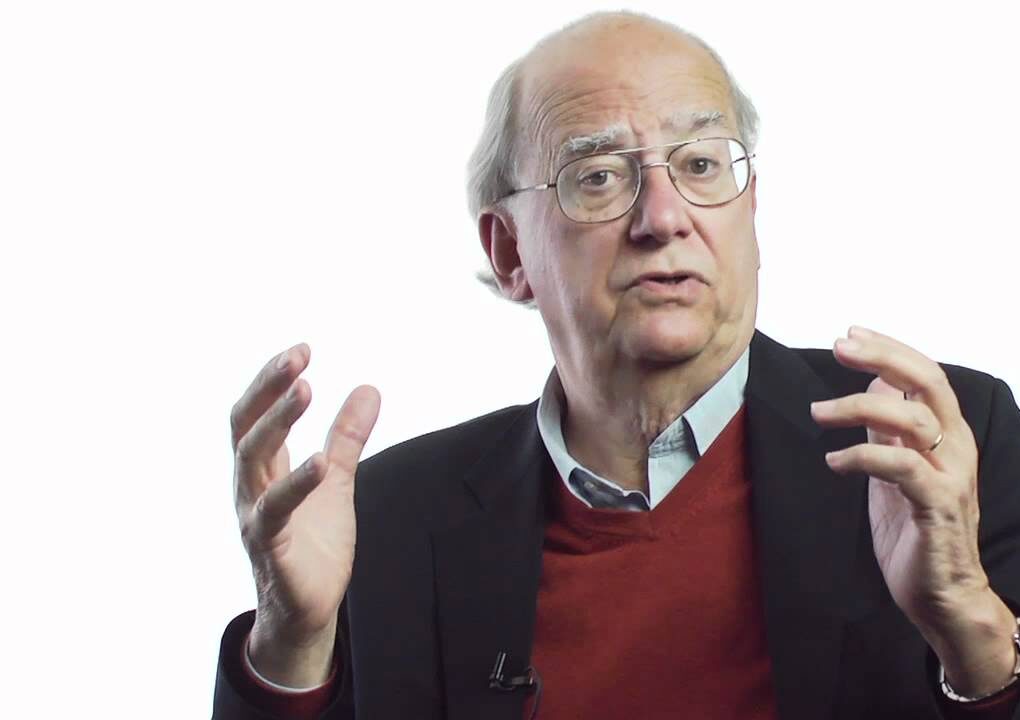
Who Michael Gazzaniga is
Gazzaniga, born in Los Angeles in 1939, is a cognitive neuroscientist. He studied at Dartmouth and took his PhD in psychobiology at Caltech under Roger Sperry, where he had primary responsibility for starting the human split-brain studies.2 The first report from that work, published in 1962, described a 48-year-old war veteran whose corpus callosum and other connecting fibers between the hemispheres had been cut to control severe epilepsy.38 Sperry shared the 1981 Nobel Prize in Physiology or Medicine for this line of research.
In the late 1970s Gazzaniga and the psychologist George A. Miller coined the term “cognitive neuroscience.” He founded the Journal of Cognitive Neuroscience, directed the SAGE Center for the Study of the Mind at UC Santa Barbara, served on the President’s Council on Bioethics and was founding director of the MacArthur Foundation’s Law and Neuroscience Project.2 His 2009 Gifford Lectures in Edinburgh became Who’s in Charge? Free Will and the Science of the Brain (2011).4 The Consciousness Instinct (Farrar, Straus and Giroux, 2018) tries to pull five decades of that work into one account of how brains make minds.
What The Consciousness Instinct argues
The book surveys the mind–body problem from the ancient Greeks onward and goes after the centuries-old picture of the brain as a machine. The publisher’s summary states his reply in one line: “brains make machines, but they cannot be reduced to one.”1 His alternative has three parts.
First, the brain is modular. In the publisher’s summary, it is “a confederation of independent modules working together.”1 Gazzaniga had stated the core idea in a 2012 essay: “From moment to moment, different modules or systems compete for attention, and the winner emerges as the neural system underlying that moment’s conscious experience.”6
Second, consciousness has no single address. It survives many kinds of brain injury and disease, which he reads as evidence that no one region produces it. Kirkus Reviews quotes his summary: “consciousness is not a ‘thing.’ It is the result of a process embedded in an architecture, just as a democracy is not a thing but the result of a process.”5
Third, he looks to physics and theoretical biology for help with the gap between brain and mind, drawing on thinkers from William James to Niels Bohr.5 One source is the physicist and theoretical biologist Howard Pattee, known for his work on the “symbol–matter problem”: how a physical system such as a cell comes to be governed by arbitrary codes such as DNA. Pattee called the divide between symbolic description and physical dynamics the “epistemic cut.”7 For the longer backstory, see our history of how psychology lost consciousness and neuroscience found it again.
An earlier version of this page described Gazzaniga as a theorist of “biosemiotics” and quoted him at length, with page numbers, on Jungian archetypes, a “sea of archetypes and symbols” and individuation. Those passages could not be verified and do not match any published description of the book, so they are gone. Biosemiotics is one of the fields Pattee’s work shaped; Gazzaniga draws on Pattee without being a biosemiotician. The links to Jung are ones a reader has to build, and the rest of this article builds them. The book is also a synthesis and a proposal rather than a tested theory. It is one of several competing accounts of consciousness, alongside Bernard Baars’s global workspace theory and others, and the field has not settled on any of them.
The interpreter: what the split-brain experiments showed
The split-brain method depends on the wiring of the visual system. An image flashed briefly to the left of a fixation point goes to the right hemisphere, and one flashed to the right goes to the left. In most people the speech centers sit in the left hemisphere. Once the corpus callosum is cut, the two halves cannot share what they saw.8
In the 1970s Gazzaniga and his graduate student Joseph LeDoux tested a patient known as P.S. A chicken claw was flashed to his left hemisphere and a snow scene to his right. From a set of picture cards, his right hand chose a chicken and his left hand chose a snow shovel. Asked why, he said: “Oh, that’s simple. The chicken claw goes with the chicken, and you need a shovel to clean out the chicken shed.”8 The speaking hemisphere had never seen the snow. It saw the left hand pointing at a shovel and supplied a reason. As Gazzaniga later wrote, “the left hemisphere did not say, ‘I don’t know,’ which was the correct answer.”6 Gazzaniga came to call this explaining system the interpreter; he and LeDoux gave an early detailed account of it in The Integrated Mind (1978).9
It works on feelings too. In another experiment a frightening fire-safety film was shown only to a patient’s right hemisphere. She thought she had seen “just a white flash,” yet she felt afraid, and her speaking hemisphere found a cause in the room: “I know I like Dr. Gazzaniga, but right now I’m scared of him for some reason.”6 The fear was real. The explanation was invented.
Gazzaniga’s 2000 review in Brain tied the interpreter to an ordinary experience: many functions run before we are aware of them, yet “our subjective belief and feeling is that we are in charge of our actions.”10
Part of this work is now disputed. In 2017 Yair Pinto, Victor Lamme and colleagues tested two split-brain patients. Both could report the presence of stimuli anywhere in the visual field, and locate them well above chance, with either hand or in speech, and the authors concluded that the surgery splits perception without creating two conscious perceivers.11 Volz and Gazzaniga answered that such results can be explained by cross-cueing: patients who have lived with the surgery for years learn to pass information from one hemisphere to the other through behavior.8 A 2020 review written jointly by researchers from both camps concluded that the evidence is not yet sufficient to say whether consciousness in these patients is split or unified.12 That dispute is one of the running fights traced in our history of neurology’s biggest feuds.
Rationalization: depth psychology’s older name for it
The Welsh psychoanalyst Ernest Jones, later Freud’s biographer, gave psychoanalysis the word “rationalization” in a 1908 paper, “Rationalization in every-day life.” He meant inventing a reason for an attitude or action whose real motive goes unrecognized.13 Freud took the term up, and psychoanalysis has treated it ever since as a defense: the reason is plausible, sincerely believed and wrong, and it spares the person a motive they would rather not see.
Now compare the shovel. P.S. was not defending against anything. His speaking hemisphere lacked the information for anatomical reasons and filled the gap with the most sensible story available. That suggests a sharper version of the depth-psychological idea. The explaining machinery confabulates whenever it lacks access, defensively or not, and defense is one of the reasons access goes missing. Repression does not have to invent the habit of false explanation. It only has to keep something out of view, and the interpreter does the rest.
Intact brains do the same thing. In 1977 Richard Nisbett and Timothy Wilson reviewed evidence that people’s reports about why they acted rest on implicit theories of what should have caused the behavior, not on direct access to their own mental processes. Such reports are accurate mainly when the real cause happens to be salient and plausible.14 In the choice-blindness experiments, participants picked the more attractive of two faces and were sometimes handed the face they had rejected, by sleight of hand. They often failed to notice the swap and offered reasons for a choice they had not made.15 In a 2012 version using a survey of moral opinions, 69 percent of participants missed at least one of two reversals of their own stated views, and many argued coherently for the opposite of what they had written moments before.16 These studies use different methods and do not show a left-hemisphere mechanism at work. They show the same behavior: confident reasons, produced after the fact, by people who do not know they are missing the facts.
Jung’s complexes and the modular mind
Jung reached a modular picture of the psyche by another route. In his word-association experiments at Zurich’s Burghölzli clinic in the early 1900s, hesitations and odd responses clustered around emotionally charged themes, which he called complexes. In “A Review of the Complex Theory” he wrote that “complexes can have us,” and that their existence “throws serious doubt on the naive assumption of the unity of consciousness.”17 He described a complex as having a relatively high degree of autonomy, so that the conscious mind controls it only to a limited extent and it behaves like a foreign body in consciousness.
Complexes and Gazzaniga’s modules are not the same thing. Modules are evolved processing systems for jobs such as recognizing faces or producing speech. Complexes are emotionally loaded clusters of memory and expectation that form through experience. But both reject the idea of a single executive self, and both put the felt unity of the person downstream of many parts. What Gazzaniga adds is a candidate mechanism for why the multiplicity feels like one person: the interpreter, which narrates whatever a part does as though “I” had decided it.
Jung’s persona, which he described as a mask meant both to make a definite impression on others and to conceal the individual’s true nature, is a related but different thing.18 The persona faces outward. The interpreter’s story is told mostly to oneself, though it often keeps the persona in place.
Underneath the story: Damasio and the feeling body
The neurologist Antonio Damasio came at the self from the body. In Descartes’ Error (1994) he described patients with damage to the ventromedial prefrontal cortex whose intellect tested normally but whose real-life decisions fell apart.19 From cases like these came the somatic marker hypothesis: bodily signals tied to past outcomes bias decisions, often before deliberate reasoning is finished.20 He later distinguished a transient core self, generated each time the organism engages an object, from an autobiographical self built gradually from memories of past and anticipated experience.2122 In his account with Gil Carvalho, feelings are mental experiences of body states.23
The somatic marker hypothesis is less settled than popular retellings suggest. Its main evidence came from the Iowa Gambling Task, and a 2006 review concluded that those findings have other plausible explanations and that the hypothesis needs more empirical support.24 Tiago Maia and James McClelland found that participants knew much more about the task than had been thought, and could report the advantageous strategy more reliably than they acted on it, which, they argued, removed the need to invoke nonconscious markers to explain performance on that task.25 Damasio’s broader claim, that feeling is grounded in the body’s regulation of itself, does not rest on that one task.
Put Damasio beside Gazzaniga and the frightened patient makes more sense. A body state came first. The explanation came second and attached itself to the nearest plausible cause. The interpreter did not create the fear. It narrated it.
What this looks like in therapy
None of this makes people’s explanations of themselves worthless. It means they arrive late, and a few clinical habits follow.
Treat the first explanation as a hypothesis. “I snapped because I was exhausted” may be true. It may also be the interpreter doing what it did with the shovel: noticing the behavior and supplying the most plausible cause on hand. Arguing with the explanation tends to recruit the interpreter to defend it, and the choice-blindness work shows how readily people build arguments for positions they never held.16 The more useful move is to slow the sequence down. What happened in the body first? What feeling came with it? When did the explanation show up? Learning to notice an explanation as an event, rather than simply believing it, is a form of the metacognition we use in trauma therapy.
Watch for feelings that land on whoever is in the room. The patient who felt afraid and decided the cause was her examiner is a laboratory version of something therapists see often. A feeling with an older or unrelated source attaches to a partner, a boss or the therapist because they are present and plausible. Freud called the therapy version transference. The split-brain result does not prove his theory, but it shows how ordinary the underlying move is and how sincere it feels from the inside.
Let the unexplained parts be noticed before the story closes. If the felt unity of the self is assembled downstream of many parts, a symptom is often a part acting without the narrator’s knowledge. Jungian depth therapy works with dreams and images, Internal Family Systems therapy speaks with parts directly, and somatic therapy tracks sensation before interpretation. In different vocabularies, each slows the rush to explanation so that material the story left out can be seen.
Aim for a story with more agency, not a flawless one. The interpreter is not the enemy. People need a story to act from. In one small longitudinal study of 47 adults in psychotherapy, Jonathan Adler found that themes of agency in their written narratives increased over treatment and that those increases came before improvements in mental health; coherence did not increase in the same way.26 The goal is less a final, true account than an interpreter that can hold more of the facts, including unflattering ones, and that leaves a person feeling like the author of their life again rather than a bystander to their own reactions.
If your own explanations arrive quickly and fit a little too neatly, that is not a character flaw. It is how brains work. Taproot Therapy Collective in Hoover offers depth-oriented and parts-based therapy for people who want to look underneath their own story. You can read about our Jungian approach or reach us through the contact page.
References
- Gazzaniga, M. S. (2018). The consciousness instinct: Unraveling the mystery of how the brain makes the mind. Farrar, Straus and Giroux.
- University of California, Santa Barbara, Department of Psychological & Brain Sciences. (n.d.). Michael Gazzaniga (emeriti faculty profile). https://psych.ucsb.edu/people/emeriti/michael-gazzaniga
- Gazzaniga, M. S., Bogen, J. E., & Sperry, R. W. (1962). Some functional effects of sectioning the cerebral commissures in man. Proceedings of the National Academy of Sciences, 48(10), 1765–1769. https://doi.org/10.1073/pnas.48.10.1765
- Gazzaniga, M. S. (2011). Who’s in charge? Free will and the science of the brain. Ecco.
- Kirkus Reviews. (2018, February 1). The consciousness instinct: Unraveling the mystery of how the brain makes the mind, by Michael S. Gazzaniga (book review). https://www.kirkusreviews.com/book-reviews/michael-s-gazzaniga/the-consciousness-instinct/
- Gazzaniga, M. S. (2012, March 1). The storyteller in your head. Discover. https://www.discovermagazine.com/the-storyteller-in-your-head-17110
- Pattee, H. H. (2001). The physics of symbols: Bridging the epistemic cut. Biosystems, 60(1–3), 5–21. https://doi.org/10.1016/S0303-2647(01)00104-6
- Volz, L. J., & Gazzaniga, M. S. (2017). Interaction in isolation: 50 years of insights from split-brain research. Brain, 140(7), 2051–2060. https://doi.org/10.1093/brain/awx139
- Gazzaniga, M. S., & LeDoux, J. E. (1978). The integrated mind. Plenum Press. https://doi.org/10.1007/978-1-4899-2206-9
- Gazzaniga, M. S. (2000). Cerebral specialization and interhemispheric communication: Does the corpus callosum enable the human condition? Brain, 123(7), 1293–1326. https://doi.org/10.1093/brain/123.7.1293
- Pinto, Y., Neville, D. A., Otten, M., Corballis, P. M., Lamme, V. A. F., de Haan, E. H. F., Foschi, N., & Fabri, M. (2017). Split brain: Divided perception but undivided consciousness. Brain, 140(5), 1231–1237. https://doi.org/10.1093/brain/aww358
- de Haan, E. H. F., Corballis, P. M., Hillyard, S. A., Marzi, C. A., Seth, A., Lamme, V. A. F., Volz, L., Fabri, M., Schechter, E., Bayne, T., Corballis, M., & Pinto, Y. (2020). Split-brain: What we know now and why this is important for understanding consciousness. Neuropsychology Review, 30(2), 224–233. https://doi.org/10.1007/s11065-020-09439-3
- Jones, E. (1908). Rationalization in every-day life. The Journal of Abnormal Psychology, 3(3), 161–169. https://doi.org/10.1037/h0070692
- Nisbett, R. E., & Wilson, T. D. (1977). Telling more than we can know: Verbal reports on mental processes. Psychological Review, 84(3), 231–259. https://doi.org/10.1037/0033-295X.84.3.231
- Johansson, P., Hall, L., Sikström, S., & Olsson, A. (2005). Failure to detect mismatches between intention and outcome in a simple decision task. Science, 310(5745), 116–119. https://doi.org/10.1126/science.1111709
- Hall, L., Johansson, P., & Strandberg, T. (2012). Lifting the veil of morality: Choice blindness and attitude reversals on a self-transforming survey. PLoS ONE, 7(9), e45457. https://doi.org/10.1371/journal.pone.0045457
- Jung, C. G. (1969). The structure and dynamics of the psyche (2nd ed., R. F. C. Hull, Trans.; Collected works, Vol. 8). Princeton University Press.
- Jung, C. G. (1966). Two essays on analytical psychology (2nd ed., R. F. C. Hull, Trans.; Collected works, Vol. 7). Princeton University Press.
- Damasio, A. R. (1994). Descartes’ error: Emotion, reason, and the human brain. G. P. Putnam’s Sons.
- Bechara, A., & Damasio, A. R. (2005). The somatic marker hypothesis: A neural theory of economic decision. Games and Economic Behavior, 52(2), 336–372. https://doi.org/10.1016/j.geb.2004.06.010
- Damasio, A. R. (1998). Investigating the biology of consciousness. Philosophical Transactions of the Royal Society of London. Series B: Biological Sciences, 353(1377), 1879–1882. https://doi.org/10.1098/rstb.1998.0339
- Damasio, A. R. (1999). The feeling of what happens: Body and emotion in the making of consciousness. Harcourt Brace.
- Damasio, A., & Carvalho, G. B. (2013). The nature of feelings: Evolutionary and neurobiological origins. Nature Reviews Neuroscience, 14(2), 143–152. https://doi.org/10.1038/nrn3403
- Dunn, B. D., Dalgleish, T., & Lawrence, A. D. (2006). The somatic marker hypothesis: A critical evaluation. Neuroscience & Biobehavioral Reviews, 30(2), 239–271. https://doi.org/10.1016/j.neubiorev.2005.07.001
- Maia, T. V., & McClelland, J. L. (2004). A reexamination of the evidence for the somatic marker hypothesis: What participants really know in the Iowa gambling task. Proceedings of the National Academy of Sciences, 101(45), 16075–16080. https://doi.org/10.1073/pnas.0406666101
- Adler, J. M. (2012). Living into the story: Agency and coherence in a longitudinal study of narrative identity development and mental health over the course of psychotherapy. Journal of Personality and Social Psychology, 102(2), 367–389. https://doi.org/10.1037/a0025289


















0 Comments