
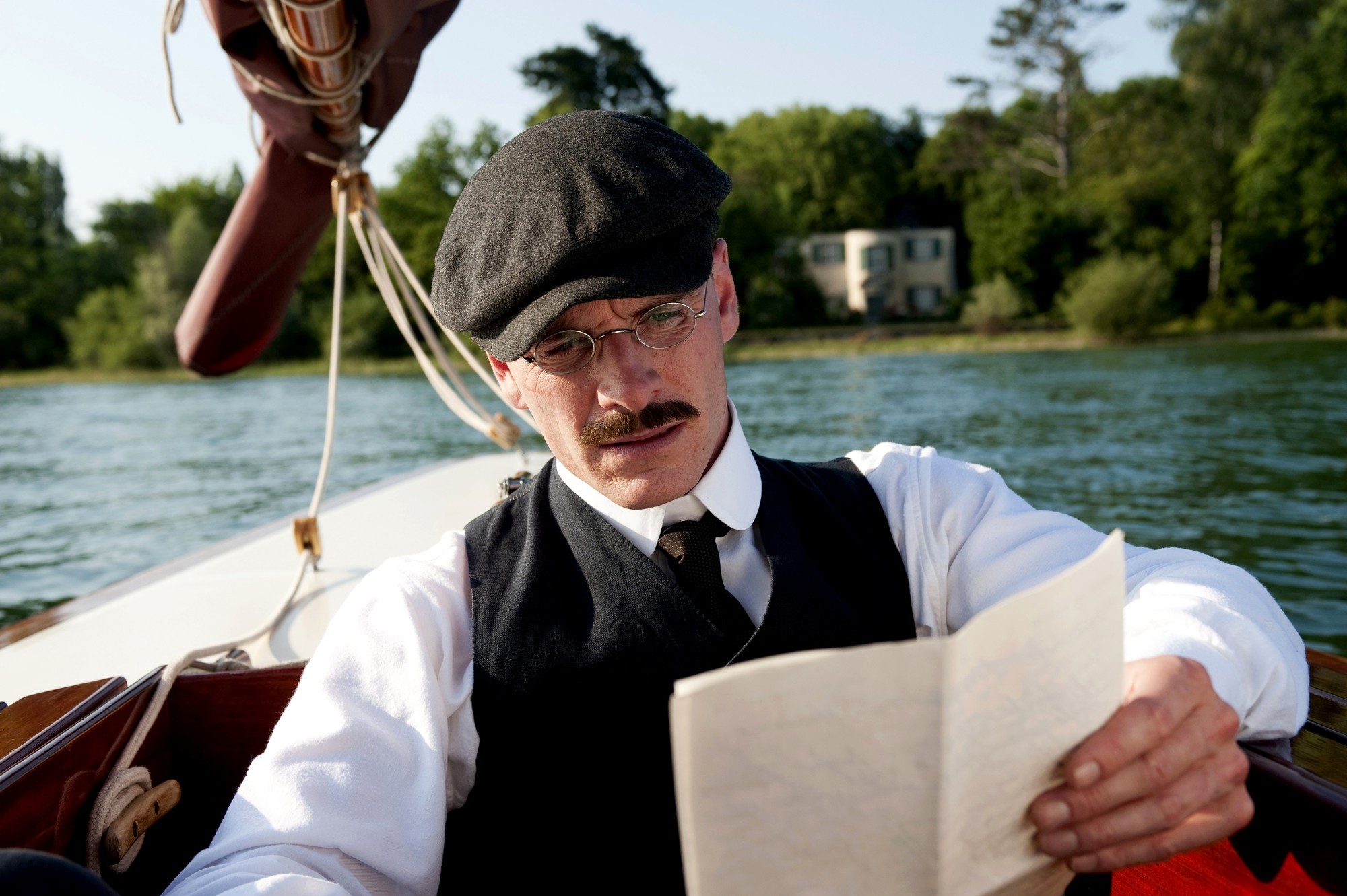
During the Second World War, Carl Jung advised Allen Dulles, head of the American Office of Strategic Services (OSS) station in Bern, on the psychology of Hitler, the Nazi leadership and the German public. The formal OSS profiles of Hitler were written by Henry Murray and Walter Langer. Jung’s lasting contribution was his archetypal reading of fascism as a collective possession.
Key takeaways
- Carl Jung advised Allen Dulles, head of the OSS station in Bern, on Hitler and the German psyche, and appeared in Dulles’s reports as Agent 488.
- The OSS psychological profiles of Hitler were written in 1943 by Henry Murray and Walter Langer, and both named suicide as his most likely end.
- Jung read Nazism as a collective possession, the reawakening of the Wotan archetype and the projection of a humiliated nation’s shadow onto scapegoats.
- Jung’s archetypal approach complements Adorno’s authoritarian personality, Reich’s mass psychology and Deleuze and Guattari’s theory of desire.
- Jung’s long struggle with Nietzsche shaped his ideas of inflation and possession, the concepts he then applied to fascism.
Did Carl Jung work with the CIA?
Not with the CIA itself, which was founded in 1947, two years after the war ended. Carl Jung, the Swiss psychiatrist who founded analytical psychology, worked during the war with its predecessor, the Office of Strategic Services. The OSS was the American wartime intelligence agency, created in 1942 under William Donovan, and many of its officers went on to staff the CIA.
Jung’s link to the OSS ran through one man. Allen Dulles, a lawyer and diplomat, arrived in neutral Switzerland in November 1942 to run the OSS office in Bern. From there he gathered intelligence on Germany, kept contact with Germans opposed to Hitler, and reported to Washington and London. After the war Dulles became Director of Central Intelligence and served from 1953 to 1961.
Jung was never an employee or a trained agent. He was a consultant whose opinions Dulles valued. According to Deirdre Bair’s biography, Dulles gave Jung the code number “Agent 488” in his reports and came to treat him as a kind of senior adviser on the German situation.1 The secrecy that surrounded these conversations is why the episode is still described as Jung’s “secret work”.
How did Jung and Allen Dulles meet?
The go-between was Mary Bancroft, an American writer living in Zurich. Bancroft had been in analysis with Jung and attended his lectures. In December 1942 she was introduced to Dulles, who recruited her to analyse German press material and to handle contacts. She also became his lover. Bancroft later told the story in her memoir, Autobiography of a Spy (1983).2
Bancroft talked with Jung about what she was learning and brought his reactions back to Dulles. Before long Dulles and Jung were meeting directly. Jung gave his reading of how Hitler, Mussolini and the men around them were likely to behave as the war turned, how the German population would respond to defeat, and what kind of Allied messages might reach Germans rather than harden them. Dulles later credited Jung’s judgment of the Nazi and Fascist leaders with helping him gauge the political situation.1
Bancroft also played a part in Dulles’s contacts with the German resistance, including Hans Bernd Gisevius, one of the conspirators behind the July 1944 attempt on Hitler’s life. Jung was not involved in that plot.2
Who actually wrote the OSS psychological profile of Hitler?
Two American psychologists wrote the OSS profiles, both in 1943. They are the first serious attempts by an intelligence service to profile a political leader at a distance, and they set the pattern for leader profiling ever since.3
Henry Murray’s report
Henry A. Murray, director of the Harvard Psychological Clinic, wrote the 240-page Analysis of the Personality of Adolph Hitler, dated October 1943.4 Murray had a direct Jungian connection: he visited Jung in Zurich in 1925, and that encounter turned him from biochemistry toward depth psychology. His report read Hitler as a man driven to overcompensate for early weakness and humiliation, and it set out several ways his career might end. Murray judged suicide the most likely outcome if Germany lost, and he advised that Hitler should be prevented from becoming a martyr.
Walter Langer’s report
Walter C. Langer, a Boston psychoanalyst, led a second study, A Psychological Analysis of Adolph Hitler: His Life and Legend, for which his team interviewed people who had known Hitler. Langer’s report also named suicide as the most plausible outcome of defeat. It stayed classified until the late 1960s and was published in 1972 as The Mind of Adolf Hitler.5 Hitler shot himself in his Berlin bunker on 30 April 1945.
Jung’s advice to Dulles ran alongside these reports in Bern, not inside them. The quotations often attributed to “Jung’s OSS report” belong to the American studies or to later retellings. What Jung himself said about Hitler is on the public record in interviews and essays, and it is more interesting than any secret file.
What did Jung say about Hitler?
Jung’s best-known assessment came in October 1938, in a long interview with the American journalist H. R. Knickerbocker, published as “Diagnosing the Dictators” in Hearst’s International-Cosmopolitan in January 1939.6 Jung compared the three dictators of the day and set Hitler apart from Mussolini and Stalin as a different psychological type.
Jung described Hitler as a kind of medicine man or medium, a person whose power was magical rather than political. In Jung’s picture, Hitler did not lead by his own ideas. He listened to the unconscious of the German people and then said aloud what millions felt but could not put into words. Jung likened him to a loudspeaker amplifying the inaudible whispers of the German soul. That is why, Jung thought, Hitler could seem empty as a private person and overwhelming in front of a crowd.
After the war Jung returned to Hitler in clinical language. In “After the Catastrophe” (1945) he described the Nazi leadership with the old psychiatric terms of hysteria and pseudologia phantastica, the kind of lying in which the liar half-believes his own inventions.7 For Jung the leader’s pathology mattered because it matched a pathology in the nation that followed him.
How did Jung explain the psychology of fascism?
Jung’s central claim was that Nazism was a psychic epidemic: an eruption of the collective unconscious that seized a whole people. The collective unconscious, in Jung’s theory, is the layer of the psyche that individuals share, organised by archetypes, inherited patterns of image and behaviour that appear in myths, dreams and religions.
The Wotan essay
In 1936, three years before the war, Jung published “Wotan” in the Neue Schweizer Rundschau.7 He argued that the old Germanic god of storm, frenzy and wandering, the Odin of Norse mythology, had reawakened in modern Germany. The marching youth movements, the restless crowds and the cult of the leader looked to him like a god possessing a people. His key word was Ergriffenheit, the state of being seized or gripped.8 Jung meant it as a psychological description: an archetype had overpowered the conscious attitude of a nation.
Shadow, projection and the crowd
In “The Fight with the Shadow”, a BBC talk given in November 1946, Jung named the mechanism more plainly.7 The Jungian shadow is everything a person or a group refuses to see in itself: resentment, envy, cruelty, weakness. Germany after Versailles and the inflation of the early 1920s carried a large load of humiliation and fear. Hitler gave that shadow a voice and then an outside target, so that what Germans could not bear in themselves was projected onto Jews, communists and foreigners.
The Nazi state amplified this through ritual and mass spectacle: torchlight marches, banners, the vast choreography of the Nuremberg rallies. For Jung, such rituals lowered individual consciousness and let the crowd psyche take over. A person in a mass, he wrote repeatedly, sinks below his own moral level. Fascism, in Jung’s view, arose when these archetypal forces overwhelmed the ego and took possession of a population.
How does Jung compare with other psychological theories of fascism?
Jung was one voice in a wide conversation. Psychoanalysts, sociologists and philosophers on the left were asking the same question: why do ordinary people embrace a movement that works against their own freedom? The comparison shows what is distinctive in Jung’s archetypal approach.
Adorno and the authoritarian personality
The Frankfurt School combined Marx and Freud. Its members read fascism as a product of capitalist society and of the family structures it produced. Erich Fromm’s Escape from Freedom (1941) argued that modern people, cut loose from traditional bonds, flee their anxious freedom into submission to a strong authority.
Theodor Adorno and his Berkeley colleagues Else Frenkel-Brunswik, Daniel Levinson and Nevitt Sanford published The Authoritarian Personality in 1950.9 Using questionnaires and clinical interviews, they built the F-scale, which measured traits such as conventionalism, submission to authority, aggression toward outsiders, rigid stereotyped thinking and a tendency to project one’s own unacceptable impulses onto others. Frenkel-Brunswik’s idea of “intolerance of ambiguity” came out of this work. Adorno located these traits in upbringing and social conditions. Jung read the same rigidity and projection as signs of an archetype at work in the collective psyche.
Wilhelm Reich
Wilhelm Reich trained in Freud’s Vienna circle in the 1920s and became known for his theory of character armour. In The Mass Psychology of Fascism, first published in German in 1933, he argued that the authoritarian, sexually repressive family produces people who fear their own vitality and long for a stern father figure. Fascism, for Reich, was that character structure organised politically.10 His theory of “orgone” energy came later, in his American years, and was worked into the revised English edition of 1946. Reich and Jung shared a conviction that fascism lives in the body and the emotions before it lives in ideas.
Deleuze and Guattari
Gilles Deleuze and Félix Guattari took up Reich’s question in Anti-Oedipus (1972).11 They praised Reich for refusing to say that the masses were simply deceived: at a certain point, under certain conditions, people wanted fascism. Where Reich spoke of repression, they spoke of desire itself flowing through families, institutions and economies, and turning paranoid, territorial and racial. In his preface to the English translation, Michel Foucault called the book an introduction to the non-fascist life.
Each of these thinkers had a different lens, and each, like Jung, recognised irrational and unconscious forces that fascism released and exploited. Jung’s mythological approach is less specific about economics and family structure. Its strength is that it captures the numinous dimension: the uncanny way fascist movements seem to act out primordial patterns and give followers a sense of fated destiny.
What was Jung’s relationship with Nietzsche?
Jung’s interest in the irrational side of the psyche, which shaped his reading of Nazism, owed a great deal to Friedrich Nietzsche. The connection is partly geographical. Nietzsche had taught at the University of Basel, where Jung studied medicine in the 1890s, and the city still remembered him.
In Memories, Dreams, Reflections (1963), Jung recalls holding back from reading Nietzsche as a student because he secretly feared he might be like him.12 When he did read Thus Spoke Zarathustra, he took it as Nietzsche’s equivalent of Goethe’s Faust: the work of a second, deeper personality breaking through, much as Jung felt his own “No. 2” personality did. Nietzsche’s collapse in Turin in 1889 stood before Jung as a warning of what could happen to someone who went that deep without a container.
Opposites, Dionysus and the self
The parallels Jung found were real. In Psychological Types (1921) he devoted a chapter to Nietzsche’s opposition of the Apollonian and the Dionysian, which he read as a version of his own types and of the tension of opposites.13 His term enantiodromia, the tendency of any extreme to turn into its opposite, came from Heraclitus, a thinker Nietzsche also admired. Nietzsche’s Zarathustra speaks of the body as a “great reason” and of a self behind thoughts and feelings that is wiser than the ego, ideas very close to Jung’s picture of a self-regulating psyche that seeks wholeness. The same holds for the will to power, which is often misread as a drive to dominate: in Nietzsche it is closer to a drive toward growth and self-overcoming, and Jung saw in it the psyche pressing toward wholeness through the integration of contrasting elements.
From 1934 to 1939 Jung ran a seminar on Zarathustra at the Psychological Club in Zurich, later published in two volumes.14 His main criticism was that Nietzsche identified with Zarathustra. Jung called this inflation: the ego swelling up by merging with an archetypal figure instead of relating to it. In the Wotan essay he went further and read Zarathustra itself as an early sign of the Wotanic stirring in the German psyche.7
Huskinson’s reassessment
The philosopher Lucy Huskinson examined this relationship in Nietzsche and Jung: The Whole Self in the Union of Opposites (2004).15 She shows that both thinkers built their models of the self around the union of opposites, and she asks whether Jung’s reading of Nietzsche was accurate. Huskinson argues that Jung often fitted Nietzsche into his own categories and missed how close Nietzsche’s model was to his own. She then turns the tables, assessing each man’s psychological health by the other’s criteria. Her work makes clear that Jung’s struggle with Nietzsche was a struggle with a near relative, and a central chapter in the history of depth psychology.
Did Jung himself feel the pull of Germanic myth?
Jung knew the allure of Wotan from the inside. During the years of The Red Book, from 1913, he deliberately let archetypal figures overwhelm him in active imagination, and he wrote afterwards about how close he came to being swept away. He also knew the danger of inflation in himself, the temptation to identify with a prophetic role.
That inside knowledge cuts both ways. In 1933 Jung became president of the international General Medical Society for Psychotherapy, whose German section had been brought under Nazi control, and in 1934 he wrote about differences between “Germanic” and “Jewish” psychology in ways that have been debated ever since. Some historians read the Wotan essay as more hopeful about the German awakening than Jung later admitted.8 His secretary and collaborator Aniela Jaffé reported that after the war Jung acknowledged to Rabbi Leo Baeck that he had slipped up. The fuller argument about these years is set out in the trial of Carl Jung.
What carried Jung through was the method he built. He confronted his shadow, analysed himself rigorously and developed a therapy aimed at relating to unconscious forces instead of being possessed by them. That is the method he then applied to a nation.
What did Jung underestimate about fascism’s appeal?
A fair reading of Jung leaves one dimension underdeveloped: the spiritual hunger and alienation, especially among young men, that both Nietzsche and Hitler answered. Beneath the politics was a longing for meaning, purpose and transcendence that both figures evoked and that Hitler exploited.
Nietzsche’s philosophy of self-overcoming and the tragic affirmation of life spoke to young Europeans stifled by the conformity and spent values of the late nineteenth century. Hitler offered a perverse promise of renewal: a heroic destiny that would lift Germany out of the humiliation of Weimar. The Nazi spectacle, with its Germanic symbols and its cult of the warrior, spoke to archetypal longings for sacrifice and transformation through violence.
Jung saw clearly the consequences of unchecked mythic identification. He gave less weight to the prior void, the crisis of meaning that made the dark charisma so attractive in the first place. In his urgency to distance himself from Nietzsche’s “morbidity” and to diagnose Hitler, he may have played down how widespread the hunger was. The lesson is that a population starved of meaning will take it wherever it is offered, and that the most dangerous movements present themselves as paths to spiritual rebirth.
This is the blind spot that matters most for any society: the shadow is collective as well as personal, and it works most freely where people believe they have none.
Why does Jung’s analysis of fascism still matter?
Jung’s essays on contemporary events give modern readers a vocabulary for authoritarian movements that economics alone does not supply: possession, inflation, projection of the shadow, the leader as a screen for collective fantasy. They help explain why facts and argument so often fail to reach people caught in political cults and cults of personality. A person who is gripped by an archetype does not experience a set of opinions. He experiences a revelation.
His limits are also instructive. Jung could universalise his own concepts, he was uneasy with politics and social structure, and he projected his own conflicts onto figures like Nietzsche. Reading him beside Adorno, Reich and Deleuze corrects those limits without losing what he saw. What remains is his insistence that the cure for collective possession begins with individuals who know their own shadow.
How do therapists use Jung’s ideas about the collective shadow?
In the therapy room these ideas are practical. Many clients arrive gripped by forces bigger than their personal history: rage at a political enemy that never settles, fear absorbed from news and social media, the comfort of belonging to a group that has someone to hate. A Jungian therapist helps the client notice when a reaction has the absolute, all-or-nothing quality that signals an archetype or a projection rather than a considered view.
At Taproot we work with the shadow directly. In Jungian therapy that means following dreams, images and strong reactions to other people back to the disowned parts of the self, so they can be held consciously instead of acted out on others. It also means watching for inflation, the moments when a person merges with a heroic or victim role and loses their own perspective.
Collective fear and humiliation live in the body as well as in thought. Clients who grew up in threatening families or communities often carry a nervous system primed for an enemy. Somatic therapy and brain-based trauma work help settle that state of threat, which makes it far easier to withdraw projections and to tolerate ambiguity, the very capacities Adorno found missing in the authoritarian personality.
Jung’s work for Dulles came down to understanding the forces that possess people. His conviction that this understanding starts with each person’s own shadow is the ground of the depth work we do at Taproot Therapy Collective. If you want to look at those forces in your own life, you can contact our Hoover office.
Frequently asked questions
Was Carl Jung a spy for the OSS?
Carl Jung was not a trained spy or an OSS employee. He was an informal adviser to Allen Dulles, who ran the OSS office in Bern from November 1942. Dulles listed him as Agent 488 and consulted him on how Hitler, the Nazi leadership and the German public were likely to react as the war turned.
Who wrote the OSS psychological profile of Hitler?
Two American psychologists wrote OSS profiles of Hitler in 1943. Henry A. Murray of the Harvard Psychological Clinic wrote Analysis of the Personality of Adolph Hitler, and the psychoanalyst Walter C. Langer wrote a second report later published as The Mind of Adolf Hitler. Both judged suicide the most likely outcome if Germany lost.
What did Carl Jung think of Hitler?
In a 1938 interview with journalist H. R. Knickerbocker, Carl Jung described Hitler as a medicine man or medium whose power was magical rather than political. Jung believed Hitler voiced what the German unconscious felt but could not say, which made him seem empty in private and overwhelming before a crowd.
What is Jung’s Wotan essay about?
Jung’s 1936 essay Wotan argues that the Germanic god of storm, frenzy and wandering had reawakened in Nazi Germany. Jung used the word Ergriffenheit, being seized, to describe a whole people overpowered by an archetype, and saw marching crowds and the cult of the leader as signs of that collective possession.
How did Nietzsche influence Carl Jung?
Nietzsche gave Carl Jung an early model of the unconscious, the tension of Apollonian and Dionysian forces and a self wiser than the ego. Jung ran a five-year seminar on Thus Spoke Zarathustra from 1934 and argued that Nietzsche had identified with Zarathustra, a case of the inflation Jung later saw in Nazism.
Related reading
- Philosophy with Implications for Post-Jungian Thought: Carl Jung’s Relevance and Similarity to Other Thinkers
- Understanding Dissociation, Trauma, and Addiction: Insights from Adam O’Brien and the Wounded Healer Institute
- Eugene Gendlin: A Biographical Timeline
- The Development of Carl Jung’s Psychology: A Biographical and Intellectual Journey
- Roberto Assagioli and His Pioneering Role in the Evolution of Psychotherapy
- The Revolutionary Life and Ideas of Guy Debord: Exploring the Situationist Critique of Modern Society
References
- Bair, D. (2003). Jung: A biography. Little, Brown.
- Bancroft, M. (1983). Autobiography of a spy. William Morrow.
- Dyson, S. B. (2014). Origins of the psychological profiling of political leaders: The US Office of Strategic Services and Adolf Hitler. Intelligence and National Security, 29(5), 654–674. https://doi.org/10.1080/02684527.2013.834217
- Murray, H. A. (1943). Analysis of the personality of Adolph Hitler: With predictions of his future behavior and suggestions for dealing with him now and after Germany’s surrender. Office of Strategic Services.
- Langer, W. C. (1972). The mind of Adolf Hitler: The secret wartime report. Basic Books.
- McGuire, W., & Hull, R. F. C. (Eds.). (1977). C. G. Jung speaking: Interviews and encounters. Princeton University Press.
- Jung, C. G. (1970). Civilization in transition (R. F. C. Hull, Trans.; 2nd ed., Collected Works Vol. 10). Princeton University Press.
- Dohe, C. B. (2011). Wotan and the “archetypal Ergriffenheit”: Mystical union, national spiritual rebirth and culture-creating capacity in C. G. Jung’s “Wotan” essay. History of European Ideas, 37(3), 344–356. https://doi.org/10.1016/j.histeuroideas.2010.12.001
- Adorno, T. W., Frenkel-Brunswik, E., Levinson, D. J., & Sanford, R. N. (1950). The authoritarian personality. Harper & Brothers.
- Reich, W. (1946). The mass psychology of fascism (T. P. Wolfe, Trans.). Orgone Institute Press. (Original work published 1933)
- Deleuze, G., & Guattari, F. (1977). Anti-Oedipus: Capitalism and schizophrenia (R. Hurley, M. Seem, & H. R. Lane, Trans.). Viking Press. (Original work published 1972)
- Jung, C. G. (1963). Memories, dreams, reflections (A. Jaffé, Ed.; R. Winston & C. Winston, Trans.). Pantheon Books.
- Jung, C. G. (1971). Psychological types (H. G. Baynes, Trans., rev. R. F. C. Hull; Collected Works Vol. 6). Princeton University Press. (Original work published 1921)
- Jung, C. G. (1988). Nietzsche’s Zarathustra: Notes of the seminar given in 1934–1939 (J. L. Jarrett, Ed.). Princeton University Press.
- Huskinson, L. (2004). Nietzsche and Jung: The whole self in the union of opposites. Brunner-Routledge. https://doi.org/10.4324/9780203508299











0 Comments