
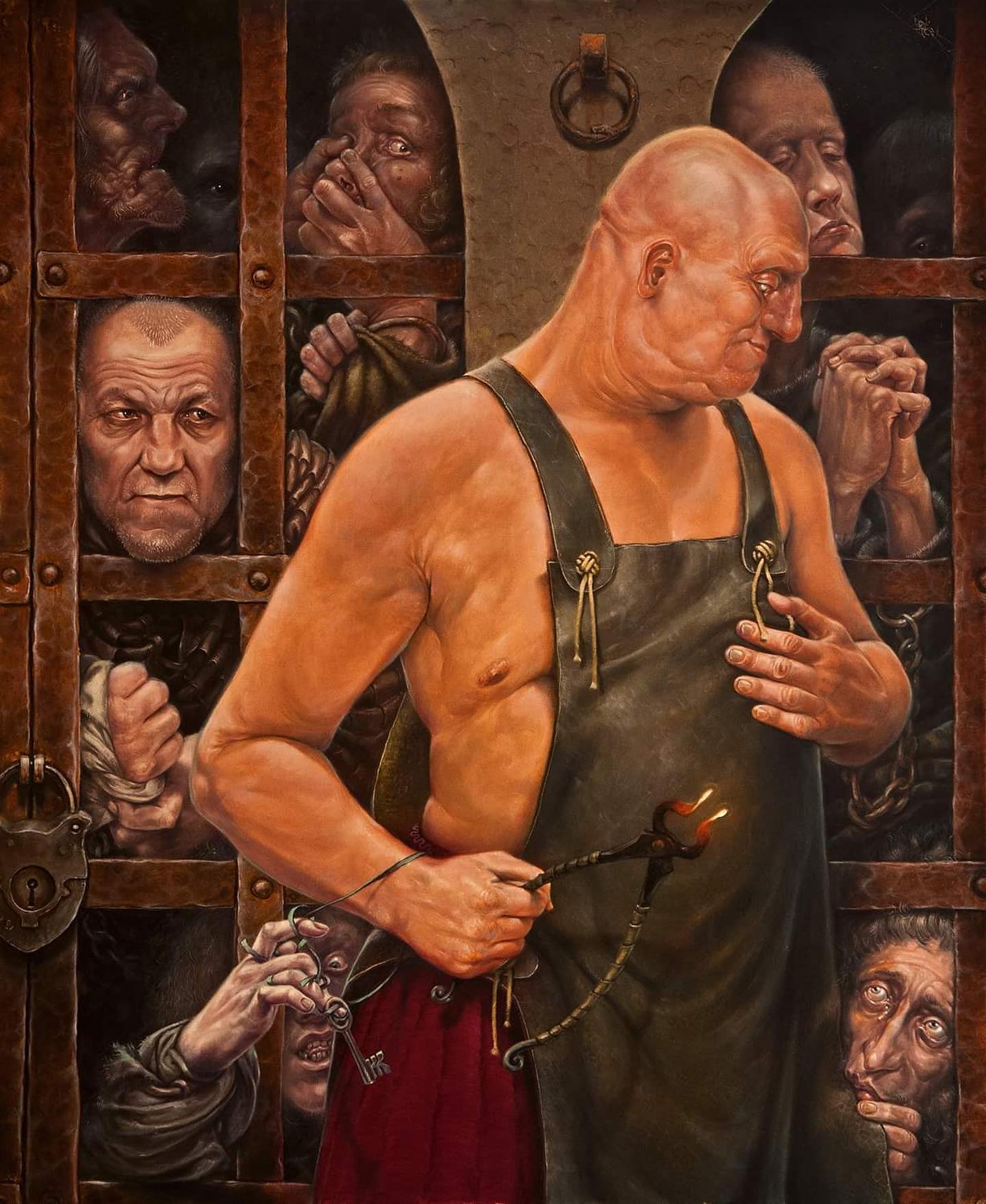
The Everyman archetype, called the Regular Guy/Gal in branding, is the pattern in the psyche that wants to belong, to be ordinary among equals and to be accepted without pretence. It comes from Carol S. Pearson’s twelve-archetype model, where it began as the Orphan. Psychologically it carries our empathy, realism and common touch, and also our fear of standing out.
Key takeaways
- The Everyman archetype, also called the Regular Guy/Gal, is the inner pattern that seeks belonging and acceptance as an equal among ordinary people.
- It comes from Carol S. Pearson’s twelve-archetype model, where it began as the Orphan, and was renamed by Margaret Mark and Pearson in 2001.
- Its gifts are empathy, realism and a lack of pretence; its shadow is conformity, self-deprecation and a fear of standing out.
- Jung’s ideas of the persona and of individuation as fuller humanity, and Adler’s social interest, describe the Everyman’s healthy and unhealthy forms.
- Therapy helps by working with the part that keeps a person small, the shame behind it and the body’s fear of exclusion.
What is the Everyman archetype?
An archetype, in Jung’s sense, is an inherited tendency to experience life in typical human ways. Jung described archetypes as forms without fixed content, filled in by each person’s history and culture.3 The Everyman names the tendency to seek a place among others as one of them. Its desire is connection, its fear is exclusion, and its gift is a plain, unpretentious decency that lets people feel at ease.
Jung himself never listed an Everyman. The figure comes from Carol S. Pearson, a scholar of literature and leadership. In Awakening the Heroes Within (1991) she set out twelve archetypes in three stages of a life’s journey, and the one in this territory she called the Orphan.1 The Orphan has lost the Innocent’s trust that the world is safe. Its task is to face disappointment honestly and to discover that people survive by banding together. Its gift, in Pearson’s account, is realism and interdependence: the knowledge that we are all in this together.
Ten years later Margaret Mark and Pearson adapted the twelve for marketing in The Hero and the Outlaw (2001), and the Orphan became the Regular Guy/Gal.2 They grouped it with the Lover and the Jester under the human need for belonging. Its core desire is to connect with others, its fear is to stand out, seem to put on airs and be rejected for it, and its trap is giving up the self to blend in. “Everyman” is the name most people now use for the same figure, and the two labels mean the same thing. The way these figures work in branding is covered in archetypes in brand psychology.
The twelve archetypes
In the branding version the Everyman sits beside the Innocent, the Explorer, the Sage, the Hero, the Outlaw, the Magician or Wizard, the Lover, the Jester, the Caregiver, the Creator and the Ruler. Each answers a different basic need: stability, belonging, mastery or independence. The full set is laid out in our overview of the 12 major archetypes.
How do parts-based therapies see the Everyman?
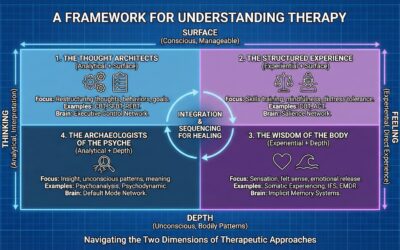
Parts-based therapies treat the mind as a community of sub-personalities rather than a single self. In that frame the Everyman is a part: an inner voice with its own job, history and fears, usually the one that keeps a person acceptable to the group.
Internal Family Systems
Richard Schwartz‘s Internal Family Systems model divides parts into exiles, which carry old pain and shame, and protectors, which keep that pain out of sight.5 A healthy Everyman part helps a person stay down to earth and easy to be around. When it is burdened, it works as a manager that polices difference: it keeps the person quiet in meetings, dims their talents, and makes jokes at their own expense before anyone else can. Behind it there is often an exile who was once mocked or excluded for being too much. IFS distinguishes all of these parts from the Self, the calm, curious core that can belong without disappearing.
Schema Therapy
Jeffrey Young’s schema therapy has no Everyman construct, but several of its schemas describe the archetype’s wounds closely.6 Social Isolation/Alienation is the conviction that one is different from other people and does not fit any group. Subjugation is the habit of surrendering one’s own wishes to avoid anger or rejection. Approval-Seeking makes acceptance by others the measure of one’s worth. Healthy belonging, the capacity to be with others as an equal, belongs to what Young calls the Healthy Adult mode.
Voice Dialogue
Hal and Sidra Stone‘s Voice Dialogue speaks of primary selves, the sub-personalities a person identifies with, and disowned selves, the ones pushed out of sight.7 The Everyman is often a primary self in people raised to avoid showing off, and its disowned opposite is the ambitious, visible, even grand self. The aim is an Aware Ego that can hear both voices, so the person chooses when to blend in and when to stand up, rather than one voice deciding for them.
What role does the Everyman play in the hero’s journey?
Joseph Campbell‘s The Hero with a Thousand Faces (1949) begins the monomyth with a hero who “ventures forth from the world of common day into a region of supernatural wonder.”4 The world of common day is the Everyman’s home. Many heroes start as ordinary people, a farm boy, a shopkeeper’s son, a hobbit, and their ordinariness is the point: the audience sees itself in them.
The Everyman also appears as the hero’s companion, the loyal friend who keeps the Hero archetype human and reminds them where they came from. At the end of the cycle the hero must return to the common world and share what they found. A hero who cannot come home has lost the Everyman. Campbell’s map is used clinically in just this way, as we describe in the hero’s journey in psychotherapy.
Where does the Everyman appear in prehistory and ancient history?
For most of human history people lived in small foraging bands, and those bands were strikingly egalitarian. The anthropologist Christopher Boehm argued in Hierarchy in the Forest (1999) that forager equality was actively enforced through what he called a reverse dominance hierarchy: the group used ridicule, criticism, ostracism and in the last resort violence to bring down anyone who tried to dominate.8 The historian Ian Morris makes a related case in Foragers, Farmers, and Fossil Fuels (2015), that foragers valued equality because their way of life rewarded it.
This is the Everyman’s deep root. The ordinary member of the band, contributing to the hunt and sharing the food, was the norm, and the urge to rise too far above the others was dangerous. The fear of standing out that the archetype carries today may be a very old social instinct.
When farming and cities produced kings and priests, the common person became the hero of folk tales. The folklorist Stith Thompson’s The Folktale (1946) catalogued the recurring types: the poor youngest son, the simple miller, Jack who trades the cow for beans, the soldier walking home from the wars. These figures win through wit, kindness and luck, not birth, and they kept the dignity of ordinary life alive in stories told by ordinary people.
The Everyman in literature and art
The archetype took its name from a play. Everyman is an English morality play of the late fifteenth century, closely related to the Dutch Elckerlijc. Death summons Everyman to his reckoning, and one by one Fellowship, Kindred and Goods refuse to go with him; only Good Deeds stays. He stands for every human being, which is why his name became the word for the type.
Shakespeare filled his plays with ordinary people who often see more truly than their betters: Bottom and the amateur actors of A Midsummer Night’s Dream, the gravediggers in Hamlet. The literary critic Ian Watt argued in The Rise of the Novel (1957) that the novel itself arose from a new interest in particular, ordinary individuals in particular, ordinary circumstances, a method he called formal realism, beginning with Defoe’s Robinson Crusoe (1719).9
Modern fiction keeps the type close to its heart. Mark Twain’s Huckleberry Finn (1884) is a poor, uneducated boy whose plain conscience outruns the morality of his town. Arthur Miller’s Willy Loman in Death of a Salesman (1949) brought tragedy to an ordinary man, and in his essay “Tragedy and the Common Man” the same year Miller argued that the common person is as fit a subject for tragedy as kings. Charles Schulz’s Charlie Brown, in Peanuts from 1950, keeps losing and keeps trying. Helen Fielding’s Bridget Jones’s Diary (1996) made an ordinary woman’s insecurities into comedy that millions recognised.
The Everyman in screenwriting and fiction plotting
For writers the Everyman is the audience surrogate: the character through whose eyes we enter the story. Hitchcock repeatedly threw ordinary men into extraordinary danger, and Frank Capra built It’s a Wonderful Life (1946) around George Bailey, a small-town man who thinks his life has amounted to nothing. The Everyman’s arc usually turns on a conflict between fitting in and stepping forward. The ordinary person is pushed into circumstances that demand courage, and the story asks whether they can rise to them without losing the decency that made us care about them.
What did Jung and Adler say about belonging?
Jung did not write about an Everyman, but two of his ideas describe it well. The first is the persona, the social mask a person wears to meet the world. Jung saw the persona as a compromise between the individual and society about how one should appear, necessary and useful, and dangerous when a person mistakes it for who they are.10 An over-identified Everyman lives inside the persona of being normal.
The second is Jung’s distinction between individuation and individualism. Individualism, he argued, stresses some supposed peculiarity against collective considerations. Individuation, becoming whole, means a fuller realisation of the collective qualities of the human being.10 On this view becoming yourself does not mean leaving common humanity behind. It means living your share of it more completely, which is the Everyman’s mature form.
Alfred Adler put belonging at the centre of mental health. In Understanding Human Nature (1927) he argued that feelings of inferiority are universal and that the healthy answer to them is Gemeinschaftsgefühl, usually translated as social interest or community feeling: a sense of being one member of the human community, contributing to it as an equal.11 Adler judged neurosis largely by its lack. The healthy Everyman is close to what he meant.
Carl Rogers added the theme of authenticity. In On Becoming a Person (1961) he described congruence, the match between what a person feels and what they show, and observed the paradox that change becomes possible when a person accepts themselves as they are.12 The Everyman’s invitation is to that kind of ordinary, unguarded self-acceptance.
Modern research supports the weight these thinkers gave to belonging. In a widely cited 1995 review, Roy Baumeister and Mark Leary concluded that the need to belong is a fundamental human motivation, and that lacking stable, caring relationships is linked to a wide range of harms to health and adjustment.13
What is the shadow side of the Everyman?
In Jungian terms the shadow holds what a person cannot accept in themselves. For the identified Everyman, the shadow usually contains ambition, specialness, anger and the wish to be seen. Disowned, these return as conformity, self-deprecation, envy of those who do stand out, and a stubborn resistance to change dressed up as being realistic.
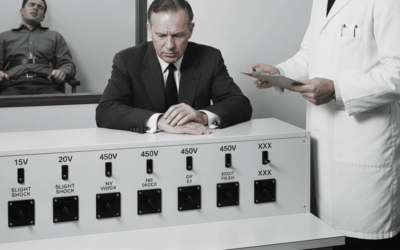
Solomon Asch’s conformity experiments show how strong the pull is. In his 1956 monograph, participants judged the length of lines after hearing a group of confederates give the same wrong answer. Across the critical trials, roughly a third of the answers went along with the obviously wrong majority, and most participants conformed at least once.14 The Everyman shadow is the part of us that would rather be wrong together than right alone.
Integration means holding two pairs of opposites: authenticity with the wish to grow, and individuality with the need for connection. The integrated Everyman can belong to a group and still disagree with it.
Trauma and the Everyman
Many people who over-identify with the Everyman learned early that being different was dangerous. Bullying, a family that shamed any show of pride, poverty in a status-conscious place, or growing up as an outsider in a community can all teach a child to make themselves small. The adult version includes fear of being noticed, difficulty asserting oneself, automatic self-deprecation, and the appeasing habits described in the “nice” trauma response.
The opposite adaptation also occurs. A person who was excluded may avoid the Everyman altogether, holding themselves apart, feeling alienated and inauthentic in ordinary company. Judith Herman‘s Trauma and Recovery (1992) describes recovery as moving through safety, remembrance and mourning, and finally reconnection with ordinary life, and she gives a closing chapter to commonality, the healing found in being among others who understand.15 That last stage is, in archetypal terms, the return of the Everyman.
The Everyman in relationships, careers and life
In relationships, the Everyman brings loyalty, steadiness and a lack of pretence. Partners usually feel accepted by them. Its difficulty is voicing its own needs, since asking for something can feel like asking to be special. Everyman-identified people may thrive in work that calls for empathy and a down-to-earth manner: teaching, nursing, social work, trades, community organising and customer service.
In daily life the Everyman finds meaning in ordinary things: a shared meal, a neighbourhood, a team, a routine kept well. It reminds a culture that most of life happens there.
How does the Everyman show up in the body?
Interpersonal neurobiology, the field Daniel Siegel helped found, studies how relationships shape the developing brain and how one nervous system regulates another. Belonging is felt in the body before it is thought about. Polyvagal theory describes a social engagement state in which the face softens, the voice warms and the body feels safe among others, outlined in the biology of safety.
The archetype shapes which emotions a person emphasises and which they avoid. Over-identification tends to bring a low hum of vigilance about how one is coming across, and with it feelings of stagnation and fear of standing out. Neglect of the archetype tends to bring a sense of disconnection from others and from everyday life.
Posture and somatic experience
Somatic therapists observe that a person at ease in the Everyman often has a relaxed, unassuming posture and reports comfort and groundedness in everyday activities and in company. When the same person feels overlooked or cut off from belonging, the body often shows it first: a sense of emptiness, physical fatigue, a general ache, a collapsed chest or eyes that drop when attention turns their way.
The Everyman in politics and religion
Politicians of every stripe invoke the Everyman to appear relatable. The language is old: in 1942 Henry Wallace, then American vice president, called for a “century of the common man,” and Aaron Copland wrote his Fanfare for the Common Man the same year. The shadow Everyman appears when the persona of the ordinary person is put on by the powerful to manipulate public opinion or to avoid accountability.
In religion the Everyman is the humble devotee whose faith is lived in daily tasks. The morality play Everyman made the ordinary soul the centre of the drama of salvation. The Christian gospels present a carpenter’s son and fishermen as the bearers of their message. In India the bhakti poets included a weaver, Kabir, and many saints of low caste who sang that devotion, not rank, opens the way to the divine.
Enneagram and MBTI correspondences
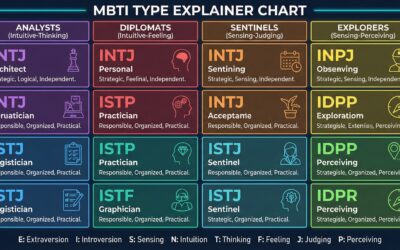
Pearson’s model stands on its own, but readers often map it onto other typologies. In the Enneagram, the Everyman most resembles Type 6, the Loyalist, who seeks security in trusted groups, and Type 9, the Peacemaker, who keeps harmony by not making waves. In Myers-Briggs terms, ISFJ and ESFJ are the types most often linked with the archetype’s warmth, practicality and attention to community. These are informal correspondences, useful as prompts for self-reflection. We discuss these systems in Jungian personality theories.
The Everyman in the modern world
The modern Everyman has a harder job than the forager did. Globalisation, technological disruption and widening inequality have weakened many of the local institutions where ordinary people once belonged: congregations, unions, clubs, main streets. In 2023 the United States Surgeon General issued an advisory on an epidemic of loneliness and isolation. Social media adds a constant comparison with people who seem anything but ordinary.
Against this, the balanced Everyman is a stabilising force. It values human connection and ordinary experience, keeps its sense of proportion, and treats other people as equals. It finds meaning in everyday life, connects across differences, and grows in empathy and authenticity.
How has the Everyman shaped human culture and consciousness?
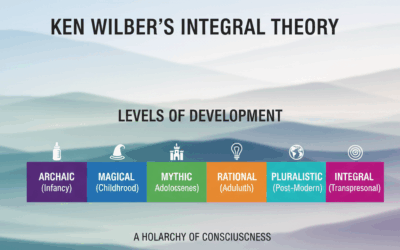
Writers on cultural evolution often put shared identity at the centre of the human story. Yuval Noah Harari argues in Sapiens (2014) that what let humans cooperate in large numbers was the ability to believe in shared stories. Jeremy Rifkin’s The Empathic Civilization (2009) traces the widening of empathy from kin to tribe to nation and beyond. Ken Wilber‘s integral psychology describes development as a widening of identification, from self to group to all people. In each account, the sense that “they are people like me” is what grows.
That is the Everyman’s contribution. Every time a culture extended dignity to ordinary people, through folk tales, the novel, democratic politics or religions of the humble, the archetype was at work, reminding us of our shared humanity.
Working with the Everyman in therapy
People rarely come to therapy to talk about being ordinary. They come with social anxiety, a career they have never let themselves pursue, a sense of invisibility in their own family, chronic self-deprecation, or loneliness in the middle of a busy life. The work starts by naming the pattern and asking when standing out first became unsafe.
At Taproot we approach the Everyman from several directions. In parts work we help the part that keeps a person small show what it fears would happen if they were seen, and we meet the exile it protects. In Jungian work we look at the persona, the disowned ambitions in the shadow, and the figures in dreams who are bolder than the dreamer. Because the fear of exclusion lives in the nervous system, we also use brain-based and somatic methods to process the early experiences of shame and exclusion that made blending in feel necessary.
The balanced Everyman that emerges does not stop being down to earth. It can stand out when that matters and belong without disappearing.
The power of the Everyman
The Everyman is the oldest and most democratic of the archetypes, the part of us that knows we are one of many and finds that a comfort. Understood well, it is a source of empathy, realism and connection, and a reminder that an ordinary life is not a small one. If your own Everyman has been keeping you small, Jungian therapy at Taproot is one place to start finding your full voice among others.
Frequently asked questions
Is the Everyman one of Jung’s archetypes?
Not directly. Jung wrote about archetypes in general and about the persona, the social mask, but the Everyman as a named figure comes from Carol S. Pearson’s 1991 book Awakening the Heroes Within, where it was called the Orphan. Margaret Mark and Pearson renamed it the Regular Guy/Gal in The Hero and the Outlaw (2001), and Everyman is the popular name for it.
What is the difference between the Everyman and the Regular Guy/Gal?
There is no difference in meaning. Regular Guy/Gal is the label Margaret Mark and Carol Pearson used in their 2001 branding book, and Everyman is the older literary name, taken from the medieval morality play Everyman. Both describe the archetype whose core desire is to belong and whose core fear is standing out and being rejected.
What are the signs of an unhealthy Everyman archetype?
An unbalanced Everyman archetype shows up as automatic self-deprecation, fear of being noticed, going along with the group against one’s own judgment, envy of people who stand out, and holding back talents or ambitions. In the body it can feel like fatigue, emptiness or shrinking when attention turns one’s way.
Which Enneagram type matches the Everyman archetype?
The Everyman archetype is most often compared with Enneagram Type 6, the Loyalist, who seeks security in trusted groups, and Type 9, the Peacemaker, who keeps harmony by not making waves. In Myers-Briggs terms ISFJ and ESFJ are the usual matches. These links are informal comparisons, not part of Pearson’s model.
Can therapy help someone who is afraid to stand out?
Yes. A therapist working with an over-identified Everyman explores when being visible first felt unsafe, helps the protective part that keeps the person small to relax, and works with the shame and nervous-system patterns underneath. Parts work, Jungian therapy and somatic or brain-based methods all address the fear of exclusion behind the habit of blending in.
Related reading
- Mindfulness and Mental Health
- The Psychology of Metal Gear Solid: War, Identity, and the Prophet in the Machine
- How to Heal After Leaving a Toxic Relationship and Reclaim Your True Self
- The Explorer Archetype: Adventure and Innovation
- The Innocent Archetype: Exploring Purity and Victimhood
- The Outlaw Archetype: Exploring the left hand path
References
- Pearson, C. S. (1991). Awakening the heroes within: Twelve archetypes to help us find ourselves and transform our world. HarperSanFrancisco.
- Mark, M., & Pearson, C. S. (2001). The hero and the outlaw: Building extraordinary brands through the power of archetypes. McGraw-Hill.
- Jung, C. G. (1969). The archetypes and the collective unconscious (R. F. C. Hull, Trans.; 2nd ed., Collected Works Vol. 9, Pt. 1). Princeton University Press.
- Campbell, J. (1949). The hero with a thousand faces. Pantheon Books.
- Schwartz, R. C. (1995). Internal family systems therapy. Guilford Press.
- Young, J. E., Klosko, J. S., & Weishaar, M. E. (2003). Schema therapy: A practitioner’s guide. Guilford Press.
- Stone, H., & Stone, S. (1989). Embracing our selves: The voice dialogue manual. Nataraj Publishing.
- Boehm, C. (1999). Hierarchy in the forest: The evolution of egalitarian behavior. Harvard University Press.
- Watt, I. (1957). The rise of the novel: Studies in Defoe, Richardson and Fielding. Chatto & Windus.
- Jung, C. G. (1966). Two essays on analytical psychology (R. F. C. Hull, Trans.; 2nd ed., Collected Works Vol. 7). Princeton University Press.
- Adler, A. (1927). Understanding human nature (W. B. Wolfe, Trans.). Greenberg.
- Rogers, C. R. (1961). On becoming a person: A therapist’s view of psychotherapy. Houghton Mifflin.
- Baumeister, R. F., & Leary, M. R. (1995). The need to belong: Desire for interpersonal attachments as a fundamental human motivation. Psychological Bulletin, 117(3), 497-529. https://doi.org/10.1037/0033-2909.117.3.497
- Asch, S. E. (1956). Studies of independence and conformity: I. A minority of one against a unanimous majority. Psychological Monographs: General and Applied, 70(9), 1-70. https://doi.org/10.1037/h0093718
- Herman, J. L. (1992). Trauma and recovery. Basic Books.











0 Comments