
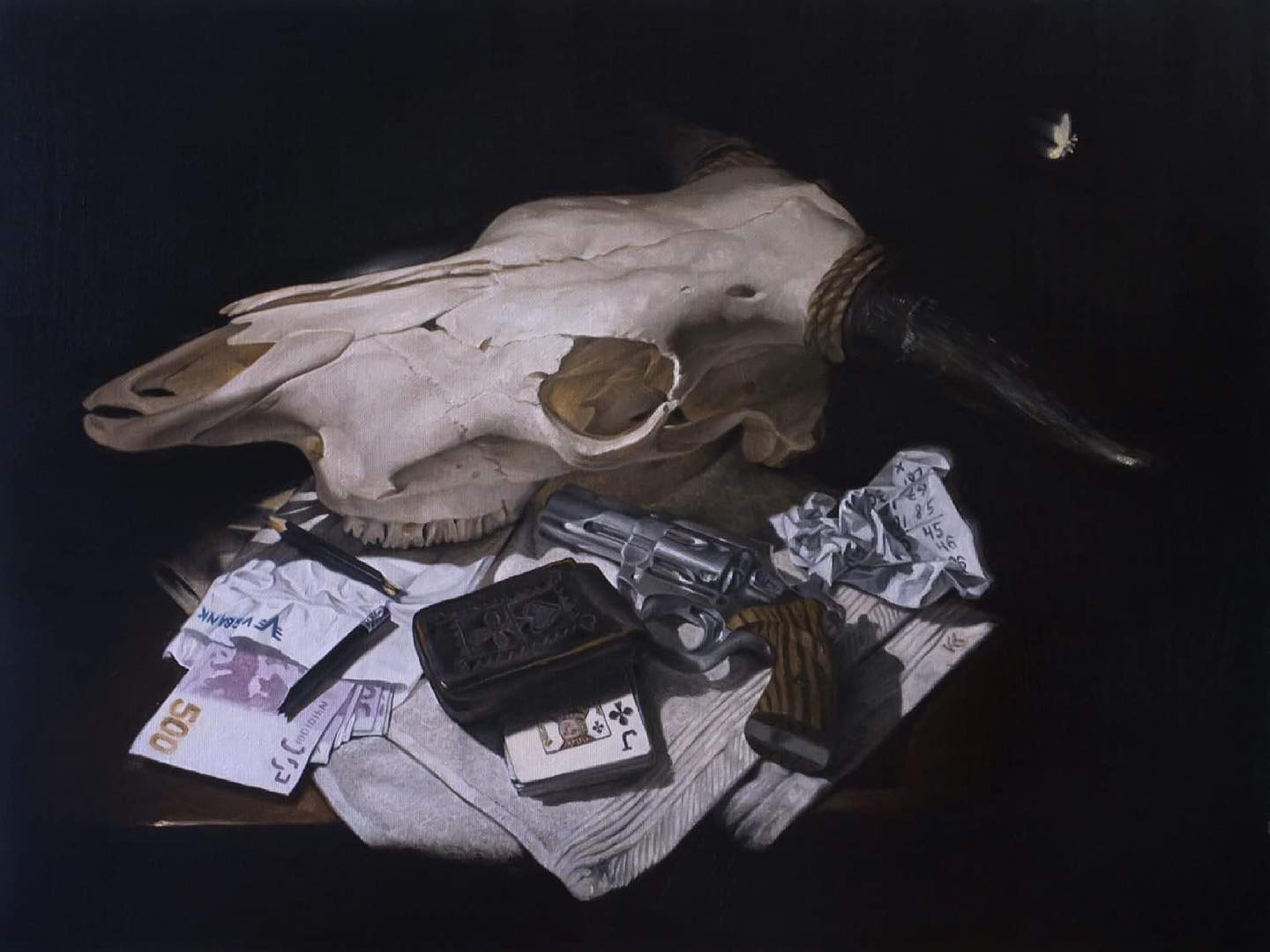
The Outlaw archetype is the pattern of the rebel: the part of a person, or the figure in a story, that refuses rules it experiences as unjust and goes its own way. The name comes from Margaret Mark and Carol Pearson’s twelve brand archetypes, but the energy is old. Psychologically it carries the drive for freedom and authenticity, and it turns destructive when it is cut off from relationship.
Key takeaways
- The Outlaw as a named type comes from Margaret Mark and Carol Pearson’s 2001 brand archetypes, while its psychology draws on Jung’s shadow, trickster and individuation.
- The left-hand path, from the Sanskrit vamacara, is an image of growth that goes through what is forbidden rather than around it.
- In Internal Family Systems the rebellious part is usually a protector, guarding older pain, and can keep its courage once its burden is released.
- Trauma can fuse the Outlaw with fear of authority and self-sabotage, or bury it under chronic powerlessness and compliance.
- Integrated, the Outlaw gives a person the courage to say no, challenge injustice and live by their own values.
What is the Outlaw archetype?
An archetype, in Carl Jung‘s sense, is an inherited pattern of perception and behaviour that shows up in myths, dreams and lives across cultures. Jung never listed an archetype called the Outlaw. What he described were the shadow, the trickster, the hero and the process he called individuation, and the Outlaw draws on all four.1
The Outlaw as a named type has a clear modern source. In Awakening the Heroes Within (1991), Carol S. Pearson set out twelve archetypes for personal growth: Innocent, Orphan, Warrior, Caregiver, Seeker, Destroyer, Lover, Creator, Ruler, Magician, Sage and Fool.2 Ten years later, Pearson and the marketing strategist Margaret Mark reworked that list for branding in The Hero and the Outlaw (2001). Their twelve are the Innocent, Everyman, Hero, Outlaw, Explorer, Creator, Ruler, Magician, Lover, Caregiver, Jester and Sage, and this is the set most people now mean by the twelve archetypes.3 The Outlaw, sometimes called the Rebel or Revolutionary, is closest to Pearson’s earlier Destroyer, the figure who breaks down what has outlived its use.
Mark and Pearson placed the Outlaw with the Hero and the Magician among the types driven by mastery and the wish to change things. Its brand promise is liberation from what is stale or oppressive. The psychology of brand archetypes works because people do respond to these figures: Faber and Mayer built a scale from archetypal characters in films, songs and images and found that what a person resonates with tracks their own life themes and media tastes.4
Origins and characteristics of the Outlaw
The Outlaw’s core desire is freedom from a system that has stopped serving life. Its typical gifts are courage, honesty about what is broken, a sharp eye for hypocrisy and a willingness to stand alone. Its typical fear is powerlessness: being swallowed by a role, an institution or a family script.
The Outlaw is close kin to the trickster archetype, which Jung described in his 1954 essay on the trickster figure as a boundary-crosser who breaks taboos and, by doing so, exposes how arbitrary they are.1 The difference is purpose. The trickster disrupts for the sake of disruption and often cannot help himself. The Outlaw rebels on principle and usually knows what he is against. It also differs from the Hero archetype, who fights for the community’s values, while the Outlaw fights against them when they have become a cage.
Why is the Outlaw linked to the left-hand path?
The phrase “left-hand path” translates the Sanskrit vāmācāra, a term from Indian Tantra for ritual practice that deliberately uses what orthodox Hindu custom forbids, such as wine, meat and sexual union, as a means of liberation. The right-hand path, dakṣiṇācāra, keeps to the conventional rules. Hugh Urban’s history of Tantra shows how Western writers, from Theosophists to Aleister Crowley, picked up and reshaped these ideas, and in twentieth-century Western occultism “left-hand path” came to mean any spirituality that seeks the self’s own power rather than submission to an outside authority.12
Read psychologically, the left-hand path is an image of the Outlaw’s route to growth. It goes through the forbidden rather than around it. That is close to what Jung meant by meeting the shadow: the parts of ourselves we were taught to disown hold energy we need, and wholeness comes from facing them consciously rather than living by approved rules alone.
The Outlaw archetype in parts-based therapies
Parts-based therapies treat the psyche as a community of subpersonalities. None of them uses the word Outlaw as a technical term, but each has a clear place for the rebellious part.
Internal Family Systems (IFS)
Richard Schwartz’s Internal Family Systems therapy sorts parts into exiles, which carry old pain and shame, and protectors, which keep that pain out of awareness.5 Protectors come in two kinds. Managers work ahead of time by controlling, pleasing or planning. Firefighters react once pain breaks through, often with impulsive or reckless moves. A rebellious, anti-authority part is usually a protector. As a manager it may keep everyone at a distance so no one can control us again. As a firefighter it may blow up a job or a relationship the moment we feel trapped. In IFS such a part is never the enemy. It took on its role, its “burden”, for a reason, and when the Self (the calm, curious centre Schwartz describes) gets to know it, the part can keep its courage and drop its extremes.
Schema Therapy
Jeffrey Young’s schema therapy describes early maladaptive schemas, such as Mistrust/Abuse, Defectiveness and Subjugation, and the coping styles people use against them.6 Rebelliousness appears there as overcompensation: someone who expects to be dominated fights every rule before it can bind them. In the language of schema modes, outlaw energy can show up as the Angry or Impulsive Child, and its healthy form, clear assertiveness and good boundaries, belongs to the Healthy Adult. The therapeutic aim is to move rebellion from reflex to choice.
Voice Dialogue
Hal and Sidra Stone, who developed Voice Dialogue, wrote about primary selves, the ones that run our lives, and disowned selves, which are equal and opposite and pushed out of sight.7 For a dutiful, rule-keeping person the rebel is often a disowned self. In the Stones’ psychology of selves the facilitator invites that voice to speak directly, so the person can build what they called an aware ego that hears both the rule-keeper and the rebel without being run by either.
What role does the Outlaw play in the Hero’s Journey?
Joseph Campbell’s The Hero with a Thousand Faces (1949) traces a monomyth of departure, initiation and return.8 Campbell does not name an Outlaw, but the break he describes, answering the call and crossing the threshold out of the known world, is an outlaw act. The hero must leave the village’s rules to find what the village lacks. Figures who carry that challenge, the herald, the threshold guardian or a rogue ally, often wear outlaw clothes, and the Hero’s Journey in psychotherapy treats the same crossing as the moment a client stops living by an inherited script.
The rebel in screenwriting and fiction plotting
Writers use the rebel as the maverick, the revolutionary or the misfit. The engine of the character is a desire to challenge authority, break with norms or fight for a cause, set against people in power who push back. Christopher Vogler’s adaptation of Campbell for screenwriters made these roles a working toolkit, and writing on parts-based psychology in screenwriting shows how a rebel part can drive a character’s arc from reckless defiance to principled freedom.
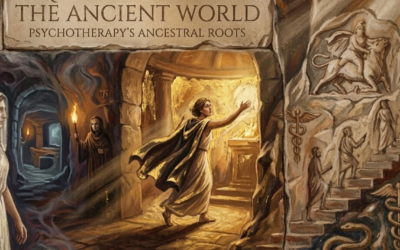
The Outlaw in prehistory and ancient history
The word itself is legal. In medieval English law, a person declared an outlaw was put outside the law’s protection: anyone could kill them without penalty. Long before that, the anthropologist Christopher Boehm argued, hunter-gatherer bands kept themselves equal through what he called a reverse dominance hierarchy, in which the group used ridicule, ostracism and in the end expulsion against anyone trying to bully the rest.15 The first outlaws may have been would-be tyrants pushed out of the band, which is a reminder that the archetype cuts both ways.
Prometheus is the oldest Western form of the principled rebel. In Hesiod’s Theogony (around 700 BCE) he steals fire from Zeus for humankind and is chained to a rock, and in Aeschylus’ Prometheus Bound he becomes the defiant sufferer who will not bow to a tyrant. Robin Hood is not ancient but medieval: the first clear mention of “rymes of Robyn Hood” is in William Langland’s Piers Plowman around 1377. Eric Hobsbawm made him the model of the “social bandit”, the outlaw whom ordinary people protect because he stands for a justice the authorities deny them.9 The folklorist Graham Seal has traced the same outlaw-hero tradition through Robin Hood, Ned Kelly and Jesse James.10
The Outlaw in literature and art
The Romantic poets made the Outlaw a cultural ideal. William Blake wrote in The Marriage of Heaven and Hell that Milton, in Paradise Lost, was “of the Devil’s party without knowing it”. Byron gave his name to the brooding, exiled Byronic hero, and Percy Shelley returned to the Titan in Prometheus Unbound (1820).
American literature has its own line. Mark Twain’s Huckleberry Finn (1884) decides to help the enslaved Jim escape even though he has been taught it is a sin: “All right, then, I’ll go to hell.” Jack Kerouac’s Dean Moriarty in On the Road (1957), modelled on Neal Cassady, became the image of Beat restlessness. Suzanne Collins’ Katniss Everdeen in The Hunger Games (2008) carries the Outlaw for a new generation: a reluctant rebel whose small act of defiance becomes a symbol for a whole oppressed people.
What did Jung and Rollo May say about rebellion and growth?
Jung’s idea of individuation is the psychological ground of the Outlaw. He described it as becoming the whole person one actually is, which means separating from the persona, the mask fitted to social expectation, and from unexamined collective norms. Jung was careful to say this is not individualism. The person who individuates becomes more themselves and, for that reason, more able to relate, rather than simply contrary.1
Rollo May gave the existential version. In Love and Will (1969) he described the daimonic as any natural function that can take over the whole person, a force that can be creative or destructive and is usually both.11 Anger, eros and the urge to assert oneself are daimonic in this sense. May argued that suppressing them does not make them go away: it makes them erupt later as violence or collapse into apathy. The healthy response is to own the force and give it form, which is exactly the task of the Outlaw. The older Greek root of the idea runs through the daimon as the authentic self. Late in life, in The Cry for Myth (1991), May argued that a culture without living myths leaves people without stories to hold such energies.
What is the shadow side of the Outlaw?
The shadow, in Jung’s terms, is what we refuse to see in ourselves. The Outlaw’s shadow is the rebel without a cause: someone who disregards the rights and well-being of others, treats every limit as oppression and mistakes cruelty for honesty. At its most extreme it shades into the antisocial personality. The anthology Meeting the Shadow (1991), edited by Connie Zweig and Jeremiah Abrams, gathers depth psychologists on how such energy becomes dangerous precisely when it is unconscious.
There is a second, quieter shadow: the Outlaw disowned. People raised to be good often project their rebel onto partners, children or public villains and then feel both fascinated and appalled. Integrating the Jungian shadow means balancing rebellion with responsibility and individuality with respect for others, so the energy is used rather than acted out.
The Outlaw in politics and religion
In politics the Outlaw appears as the revolutionary, the dissident and the activist who resists oppression and injustice. Its shadow appears when the cause justifies any means, and the rebel who overthrew a tyrant becomes one. Albert Camus explored this in The Rebel (1951), arguing that true revolt says both no to injustice and yes to a shared human dignity that limits what the rebel may do.
In religion the Outlaw is the heretic and the mystic who seeks direct experience over doctrine. Meister Eckhart had twenty-eight of his propositions condemned by Pope John XXII in 1329. Marguerite Porete was burned in Paris in 1310 for her book The Mirror of Simple Souls. The Gnostics and the left-hand path traditions belong here too: each insisted that the soul’s own experience of the sacred outranks the authority that claims to guard it.
How does the Outlaw show up in the body?
Archetypes are lived in the body as well as in stories. Interpersonal neurobiology and polyvagal theory give us a language for this. Stephen Porges describes three broad states of the autonomic nervous system: safe social engagement, sympathetic mobilization for fight or flight, and dorsal vagal shutdown.13 The Outlaw lives close to the mobilized, fight end of that range. A somatic guide to polyvagal theory explains how these states shape which emotions feel available.
People strongly identified with the rebel often carry a defiant, braced posture: chin forward, chest set, a readiness to push back. Many describe a surge of adrenaline and aliveness when they challenge authority. When the rebel feels powerless or suppressed, somatic therapists often see jaw tension, clenched fists, a tight upper back or a sense of burning rage held in the chest. Overidentifying with the Outlaw can leave a person stuck in anger, alienation or restlessness. Neglecting it often feels like collapse: a flat, compliant inauthenticity. The healthy middle is the body’s clean “no”, which writing on the wisdom of anger describes as a biological signal of a boundary.
Trauma and the Outlaw archetype
Trauma often bends the Outlaw out of shape. Judith Herman described psychological trauma as an experience of disempowerment and disconnection, and recovery as the restoration of power and connection.14 When authority figures were the source of harm, the rebel can become fused with the wound: a fear of all authority, difficulty trusting anyone, and a habit of sabotaging good things before they can be taken away. Enmeshment with the Outlaw may show as a rejection of every rule and boundary. Avoiding it may show as chronic powerlessness and conformity, the person who never says no.
Both patterns make sense as survival strategies. The child who learned that compliance was not safe, or that resistance was punished, built the rebel or buried it for good reasons. Treatment works with the protective intent first, then with the stored fear and fury underneath.
The Outlaw in relationships, careers and modern life
In relationships the Outlaw brings honesty and passion, and it can bring a fear of being tied down. People led by it are often drawn to partners who are steady, then chafe at that steadiness. In work, Outlaw-oriented people often thrive in activism, the arts and entrepreneurship, any field that rewards questioning how things are done, but they still have to balance their need for freedom with the demands of colleagues, money and love. Mark and Pearson’s best-known Outlaw brand is Harley-Davidson, which sells the open road as escape from a buttoned-down life.3
The balanced Outlaw
Balanced, the Outlaw lets a person stand up for their beliefs, challenge injustice and live authentically. It supports creativity, the ability to leave what no longer fits, and the nerve to change a family, workplace or community for the better.
Personality typing and the rebel
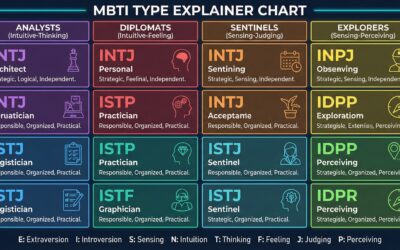
Popular typology often links the rebel with Enneagram Type 8, the Challenger, and Type 4, the Individualist, and with MBTI types such as ENTJ and ISTP. These links are associations rather than equivalences, but they help some people recognise the pattern in themselves.
The Outlaw in the modern world and the history of culture
Rapid technological change, globalization and social inequality give the modern Outlaw plenty to push against, from whistleblowers to the art collectives that turn advertising against itself. Some thinkers have read cultural history as a series of Promethean breakthroughs. Richard Tarnas, in Prometheus the Awakener and Cosmos and Psyche (2006), linked eras of revolution, sudden invention and liberation to the Promethean archetype. Whatever one makes of his astrology, the point holds: each widening of human freedom began with someone willing to be called an outlaw.
How do therapists work with the Outlaw archetype?
We meet the Outlaw most often in clients who are stuck at one of the two extremes. Some are in constant conflict with bosses, partners or the law and feel they have no choice. Others have never been able to say no and feel a deep, quiet rage at a life that does not belong to them. Both are relationships to the same archetype.
In Jungian depth therapy we look for the rebel in dreams, fantasies and the figures a client loves or hates, and ask what it wants. In parts work we get to know the rebellious protector, thank it for what it has done and learn which exile it guards. Because so much of the Outlaw is held in the nervous system, we also work below words. Brainspotting for trauma lets a client hold the felt sense of anger or powerlessness while the brain processes the experiences that froze it. The goal is not to tame the Outlaw but to free it from old fear, so its courage can serve the life the client actually wants.
The power of the Outlaw
The Outlaw stands for rebellion in the service of authenticity and justice. Understood and integrated, it becomes a source of inner strength that serves both personal and collective liberation, rather than a force that runs a person from the shadows. At Taproot we help clients come to terms with their rebels as well as their rule-keepers, and if this pattern feels familiar you are welcome to contact Taproot Therapy Collective.
Frequently asked questions
Did Carl Jung create the Outlaw archetype?
No. Jung described archetypes such as the shadow, the trickster and the hero, but never one called the Outlaw. The Outlaw comes from Margaret Mark and Carol S. Pearson’s book The Hero and the Outlaw (2001), which adapted Pearson’s earlier twelve archetypes for branding. Its psychology still rests on Jung’s ideas of the shadow and individuation.
What does left-hand path mean?
Left-hand path translates the Sanskrit vamacara, Tantric practice that uses substances and acts orthodox custom forbids as a route to liberation. Western occultists later used the phrase for any spirituality centred on the self’s own power rather than outside authority. Psychologically it pictures the Outlaw’s growth through the forbidden, much like Jung’s work with the shadow.
What is the difference between the Outlaw and the Trickster?
Both break rules, but for different reasons. The Trickster, as Jung described it, disrupts compulsively and exposes how arbitrary taboos are, often without a goal. The Outlaw archetype rebels on principle against a system it sees as unjust and usually knows what it is fighting. The Trickster unsettles order, the Outlaw tries to replace it.
How does the Outlaw archetype relate to trauma?
When authority figures caused harm, the Outlaw part can become fused with the wound, showing up as distrust of all authority, rejection of every boundary or sabotage of good things. Others bury their rebel and live in compliance. Judith Herman described trauma as disempowerment and disconnection, so recovery involves restoring a healthy capacity to say no.
Which famous characters are examples of the Outlaw archetype?
Classic Outlaw figures include Prometheus, who stole fire from Zeus, Robin Hood of medieval English ballads, Mark Twain’s Huckleberry Finn, Dean Moriarty in Jack Kerouac’s On the Road and Katniss Everdeen in The Hunger Games. Each defies an authority they experience as unjust, at personal cost.
Related reading
- Mindfulness and Mental Health
- The Enduring Relevance of Alice Miller’s Drama of the Gifted Child
- The Two-Million-Year-Old Patient: What the Evolution of Language Reveals About Jung, Trauma, and the Origins of Therapy
- The Innocent Archetype: Exploring Purity and Victimhood
- The Caregiver Archetype: Exploring the Nurturing side
- The Lover Archetype: Exploring Conection and Control
References
- Jung, C. G. (1969). The archetypes and the collective unconscious (2nd ed., R. F. C. Hull, Trans.; Collected Works Vol. 9, Part 1). Princeton University Press.
- Pearson, C. S. (1991). Awakening the heroes within: Twelve archetypes to help us find ourselves and transform our world. HarperSanFrancisco.
- Mark, M., & Pearson, C. S. (2001). The hero and the outlaw: Building extraordinary brands through the power of archetypes. McGraw-Hill.
- Faber, M. A., & Mayer, J. D. (2009). Resonance to archetypes in media: There’s some accounting for taste. Journal of Research in Personality, 43(3), 307-322. https://doi.org/10.1016/j.jrp.2008.11.003
- Schwartz, R. C., & Sweezy, M. (2020). Internal family systems therapy (2nd ed.). Guilford Press.
- Young, J. E., Klosko, J. S., & Weishaar, M. E. (2003). Schema therapy: A practitioner’s guide. Guilford Press.
- Stone, H., & Stone, S. (1989). Embracing our selves: The voice dialogue manual. New World Library.
- Campbell, J. (1949). The hero with a thousand faces. Pantheon Books.
- Hobsbawm, E. J. (1969). Bandits. Weidenfeld & Nicolson.
- Seal, G. (2011). Outlaw heroes in myth and history. Anthem Press.
- May, R. (1969). Love and will. W. W. Norton.
- Urban, H. B. (2003). Tantra: Sex, secrecy, politics, and power in the study of religion. University of California Press.
- Porges, S. W. (2011). The polyvagal theory: Neurophysiological foundations of emotions, attachment, communication, and self-regulation. W. W. Norton.
- Herman, J. L. (1992). Trauma and recovery: The aftermath of violence, from domestic abuse to political terror. Basic Books.
- Boehm, C. (1999). Hierarchy in the forest: The evolution of egalitarian behavior. Harvard University Press.



0 Comments